
Your cart
There are no more items in your cart
Spring nutrition in the vineyard: the key to a healthy vegetative recovery
Categories :
Chronology
, Screw
Index
Why is spring nutrition essential?
Supportive nutrition for even growth
How to protect the vineyard from late frosts?
Fertilization planning for a healthy vineyard
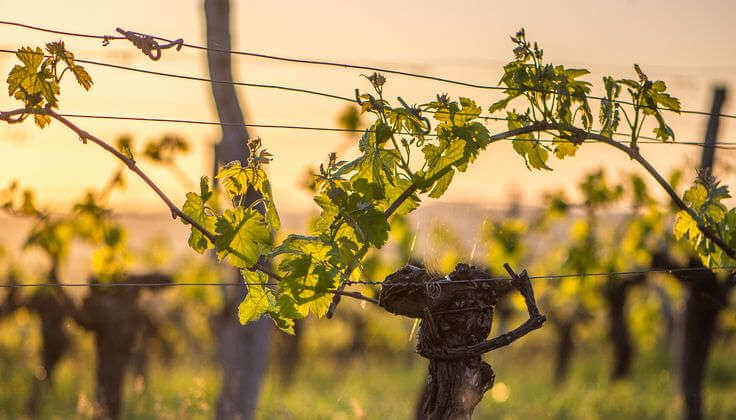 |
With the arrival of spring, the vineyard enters a crucial phase: vegetative awakening. Despite the increasingly unpredictable climate, with mild winters that do not always meet the cold needs necessary for the correct preparation of the buds, it is essential to better manage the nutrition of the vines to ensure quality production.
When average temperatures exceed 10°C, the plant quickly resumes its lymphatic activity, signaled by the characteristic "crying" of the vine, a phenomenon that indicates the rise of the linfa through the shoots. This moment is crucial for winegrowers, as it marks the beginning of a new cycle of growth and productivity.
Why is spring nutrition essential?
The "weeping" of the vine represents the transition phase between winter and spring, in which the plant begins to mobilize the reserves accumulated during the autumn. However, to ensure uniform and vigorous growth, it is crucial that plant nutrition is managed in a complementary way between autumn and spring fertilizations.
Would you like to receive our advice? Subscribe to our Newsletter - 8% discount now for you
|
|
In this first phase, an almost essential intervention to promote the activity of the cambium is foliar fertilization with a specific product:
Vitasève = 5 lt/ha (repeat after 7 days)
Main objectives of spring nutrition:
Uniformity of vegetative awakening: Avoid differences in growth between the plants in the vineyard.
Remobilization of accumulated reserves: Promote the release of sugars and amino acids necessary for growth.
Homogeneous flowering: Essential for good fruit set and uniform production.
Protection from late frosts: Strengthen the plant against sudden cold damage.
Supportive nutrition for even growth
To stimulate uniform growth after "crying", it is important to use specific products that act as real "boosters" of vegetative recovery. A well-established protocol involves the use of two fundamental products: organor N 12 and Calcisan Green, both applied by foliar application.
- Organor n 12 : A natural fertilizer based on stillage allowed in organic farming, ideal for accelerating the metabolism of the plant. Thanks to its lignocellulosic extracts, it maintains foliar efficiency and promotes the lignification of the shoots.
- Calcisan Green: A combination of calcium, magnesium and Macrocystis integrifolia algae, which improves nutrient absorption and resistance to frost, thanks to the natural polysaccharides it contains.
Recommended doses for treatment:
Organor N 12: 3 L/ha – Foliar application.
Calcisan Green: 5 L/ha – Foliar application.
These products promote rapid vegetative recovery, good lignification and uniform budding, key elements for vineyard management.
How to protect the vineyard from late frosts?
Late frosts pose a significant risk to the vineyard during the spring. Starting from the "separated bunches" phase, it is advisable to use products that increase the resistance of the plants to the cold and promote the regular development of the clusters and flower buttons.
Macys BC 28 is the ideal product for this purpose. Composed of 100% giant algae Macrocystis integrifolia, this natural biostimulant contains growth promoters, betaines and vitamins, which help the plant to withstand temperature changes and maintain a balance between root growth and aboveground vegetation.
Recommended doses for treatment:
Macys BC 28: 2-4 L/ha – Foliar or root application.
Fertilization planning for a healthy vineyard
It is essential to consider fall and spring fertilization as parts of a single nutrition plan to avoid overdoses or deficiencies. Proper planning will not only ensure a uniform restart, but will also help the vine to better withstand any climatic stress, ensuring homogeneous flowering and high-quality production.
Agronomic advice:
In the spring phase of the vine, it is important to provide balanced nutrition and support the plant in overcoming environmental stress. Here are a couple of recommended interventions, both by foliar application and by fertigation:
Foliar interventions
1) Biostimulant based on amino acids + Calcium:
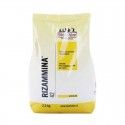
Recommended product: Rizammina + Folicist
Dose: Rizammine 42= 3 L/ha, Folicist= 1 L/ha
Objective: To stimulate vegetative growth, improve lignification and prevent calcium deficiency problems, promoting the balanced development of shoots and fruits.
2) Foliar NPK fertilizer with microelements:
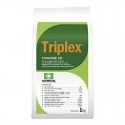
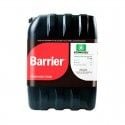
Recommended product: Triplex (20-20-20) + Barrier Si Ca
Dose: Triplex = 2 kg + Barrier Si Ca = 5 lt
Objective: To provide nitrogen, phosphorus and potassium in balanced proportions, together with essential elements such as calcium and silicon, to support photosynthesis and the development of new tissues.
Fertigation interventions
NPK fertilizer + trace elements:
Recommended product: Polyfeed 20.20.20
Dose: 25-30 kg/ha
Objective: To support the accumulation of potassium for the future quality of the fruit, while also providing nitrogen and trace elements for balanced growth.
Phosphoric acid + calcium:
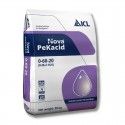
Recommended product: Nova Pekacid
Dose: 25 kg/ha
Objective: To improve the availability of phosphorus, which is essential for cell division and flowering, and to ensure a constant supply of calcium for proper cell wall formation and better resistance to environmental factors.
These interventions combine biostimulation, balanced nutrition and support for the plant structure, helping the vine to develop optimally in the spring phase.
Share this content




 Chronology
 Citrus fruits
 Turf
 Stone fruit
 Olive tree
 Ornamental
 Vegetables
 Actinidia (Kiwi)
 Screw
 Hobbies and insights
 Pome Fruit


