
Your cart
There are no more items in your cart
Vine treatment and fertilization calendar
Categories :
Chronology
, Screw
Index
3- Branch 10 cm, temperatures 10 °, humidity 10 mm
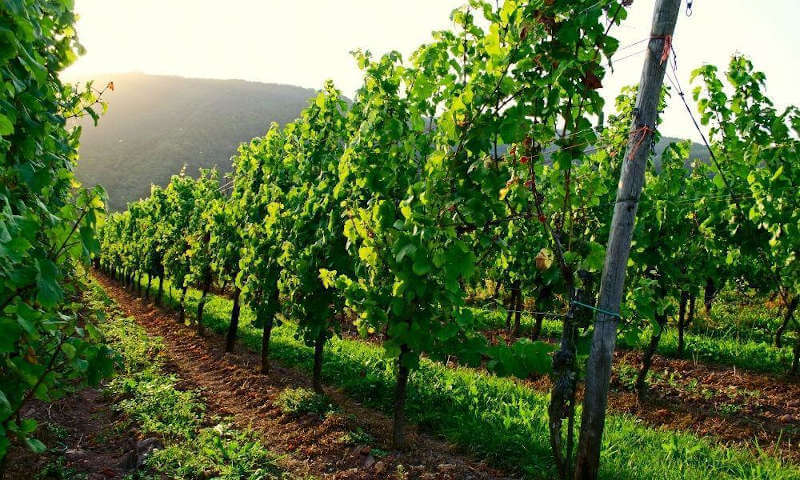
The cultivation of the vine
When we talk about vine cultivation we must make distinctions between wine grapes and table grapes. If we refer to quality, for example, we must think that it has different meanings between the two types:
Good grain, delicate and thin skin, good color, good texture and crunchiness, adequate brix degree, and great shelf life are the intrinsic characteristics of a table grape. Good sugar content, distinguished by Babo degree at harvest and brix degree, acidity degree and precisely the right balance between malic acid and tartaric acid, are essential characteristics of a good wine grape.
It is not easy to obtain all these characteristics, a role of primary importance is played by the soil and its chemical-physical structure, then the exposure, the right environmental humidity and, most of all, the good technique of the winemaker.
To make a good grape, as well as good agriculture, however, it is not necessary to rely solely on technique, you need first of all love for nature, sensitivity and the ability to interpret the signals that the plants send; make use mainly of good agricultural practice first and then of chemistry, remembering, where possible, to prefer eco-sustainable practices.
Fertilizing the vineyard
Many users ask us the following question: what is the best fertilizer for vineyards? Below we will list our selection.
It starts with an adequate bottom fertilization of the vineyard that takes into account any deficiencies in the soil, the needs of the crop and any particular varietal needs. Organic fertilization is always advisable because organic matter is the vehicle with which the plant is able to absorb that large amount of microelements, in addition to macroelements, which are essential for the health of the plant and the richness of the bouquet of the fruit. Bouquet that can be perceived by tasting it as a grape or even more so as a wine.
After harvesting
After harvesting, it is essential to take care of the vineyard soil to maintain its fertility and ensure its vitality in the following seasons. The recommended action plan includes the following key actions:
1. Distribution of organic matter: It is essential to replenish organic matter, especially in areas with weak vegetation, in young vineyards or those subject to water stress, on poor soils or eroded areas. The use of certified compost is recommended, produced by reputable companies and with a low moisture content, ideal for improving soil fertility and structure. Integration with self-produced compost on the farm, obtained from shoots, stalks and pomace, represents a sustainable and effective strategy, capable of closing the production cycle.
2. Decompacting the roadways: The use of a two-anchor subsoiler-aerifier, operating at a depth of about 20 cm, is essential in all vineyards. This intervention promotes better penetration of water and roots, preventing stagnation and compaction and improving soil aeration.
3. Grassing: Autumn sowing of crops such as field beans or mixtures of brassicas and grasses is a simple but extremely effective practice. The fasciculated roots of grasses help to improve soil structure, increase humus content and, thanks to the production of phytosiderophores, help prevent problems of ferric chlorosis. In addition, grassing offers additional benefits, such as protection from erosion and enhancement of biodiversity within the vineyard.
Additional benefits:
• The supply of organic matter and the reduction of compaction promote more vigorous plant growth and make the soil richer in useful microorganisms.
• Grassing acts as a natural mulch, reducing water and nutritional competition with the vine during critical phases of the season.
This integrated soil management not only improves yield and crop quality, but also contributes to the long-term sustainability of the vineyard.
- Orga-Kem 10-5-5 - dose 6-8 ql/ha
February-March : for table grapes and very vigorous varieties
- Orga-ken 6-11-8+11 CaO - dose 5 ql/ha
- Polysulphate at a dose of 6 - 8 ql/ha
For table wine grapes with low vigorous varieties
- Orga-ken 6-11-8+11 CaO - dose 5 ql/ha
- Polysulphate at a dose of 6 - 8 ql/ha
Those listed are all fertilizers allowed in organic farming, and are organic and mineral fertilizers chosen to allow the vine a gradual and constant feeding.
Screw treatments
You can easily make a program for a period until the end of June, then, unless you want to carry out treatments on the calendar, (a choice that is neither economic nor environmentally friendly), you have to rely on the climate forecast, and plan and intervene as needed. The first treatments indicated are aimed at giving the plant the right boost that will allow it a vigorous recovery and a good and uniform flowering.
Rather than indicating a period, we indicate a phenological phase
1. At vegetative resumption
- Vitaseve = 500 - 600 ml/hl
- Agroleaf 31-11-11 = 300 - 400 gr/hl
- Welgro Complex = 200 - 250 gr/hl
- Cabrio Top = 300 - 400 ml/hl against excoriosis (in this period the volumes of water must be reduced, so it is good to keep the concentration a little higher)
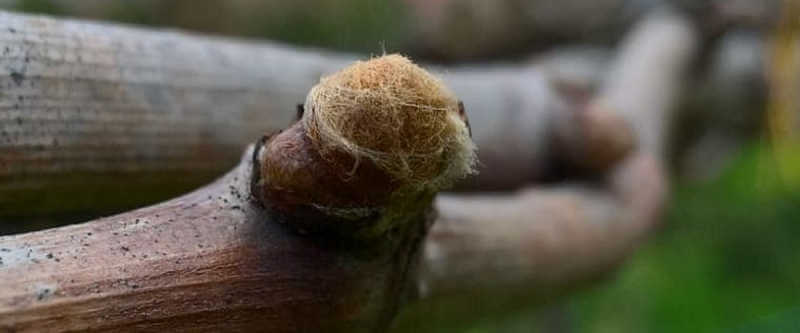
2. A puffy-cottony gemstone
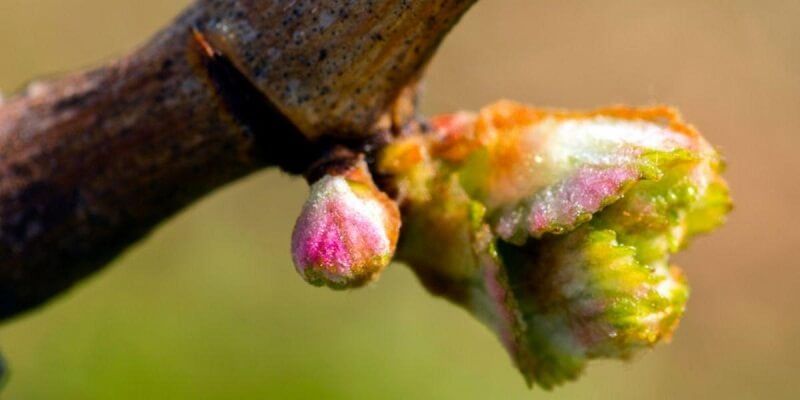
3. Shoot 10 cm, temperatures 10 °, humidity 10 mm
It is the rule of 3 tens: it indicates that the conditions have been created for an attack of downy mildew.
In the case of varieties susceptible to Ascoriosis, treat with:
- Top Convertible at 300 gr/hl
- Lecithin 80 Ms at 150 ml/hl to be repeated after 7/10 days
With a differentiated bunch 3 - 4 cm long, to promote the elongation of the spine, it is advisable to treat once or twice with:
- Folicist at 100 ml/hl
- Triplex 19 - 19 - 19 to 250 gr/hl
once or twice.
Would you like to receive our advice? Subscribe to our Newsletter - 8% discount now for you
|
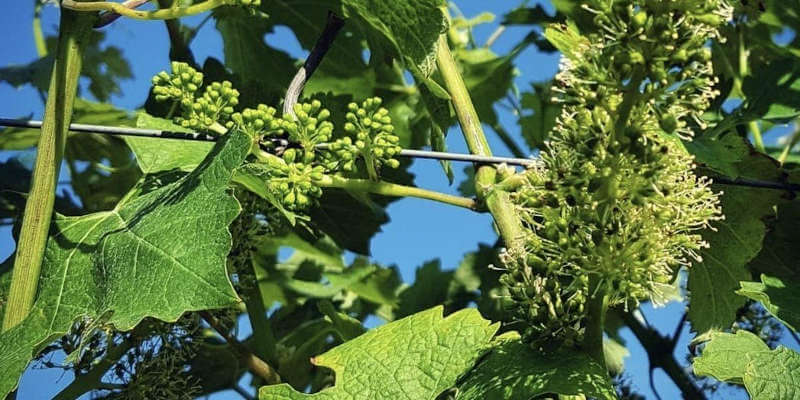
In the following days, the climatic conditions will guide us on any anti-downy mildew treatments, and in the flowering phase it will be necessary to keep the tripod and Oziorrhynchus under control with:
- Control Dmp at 50 - 60 ml/hl (to correct acidity and limescale in the water)
- Laser at 30 - 40 ml/hl (up to 250 ml/ha)
- Attracker at 200 ml/hl (minimum 1 liter/ha)
In June moth carpophagous generation:
- Control Dmp at 50 - 60 ml/hl (to correct acidity and limescale in the water)
- Affirm at 200 - 250 gr/hl (at 1.5 kg/ha)
- Foliar Agrialgae at 300 ml/hl i.e. 2 lt/ha
The fight against the moth will be usefully guided by monitoring through the installation of 2 - 3 traps/ha with Super track wing pheromones at the beginning of flowering.
4. Attached Cluster
To even out the grain of the berries
- Triplex 19 - 19 -19 to 250 gr/hl
- Maxi grow at 150 ml/hl
- Fosfacel 800 at 150 ml/hl
A couple of interventions 7 - 10 days apart also in combination with fungicides. In case of strong pressure of fungal attacks, or in anticipation of rain:
- Enervin Duo from 0.8 to 1 lt/ha
- Sercadis at 150 ml/hl
can be alternated with
- Enervi Duo at 0.8lt/ha
- Serifel at 0.5 lt/ha (serifel, antibotrytis and antipowdery mildew allowed in bio.)
It can be alternated with contact products:
- Welgro Cu Zn at 200 gr/hl
- Gyve Supreme at 300 ml/hl
- Lecithin 80 Ms at 100ml/hl
The mortal enemy of grapes is gray mold; Before closing the bunch, it is advisable to intervene with the first pre-closure treatment of the bunch:
- Serifel at a dose of 80 cc/hl, i.e. 0.500 cc/ha
- Barrier SiCa at 150 ml/hl, i.e. 1 kg/ha
- Bio-help at 150 gr/hl, i.e. 1 kg/ha
or
- Switch to 100 - 120 gr/hl, about 0.8 gr/ha
- Barrier SiCa at 150 ml/hl
- Bio Help at 150 gr/hl, i.e. 1 kg/ha
The addition of Bio-Help is useful for evening out the color of the grapes on black grapes. A second anti-mold treatment, with the same solutions, should be repeated at the beginning of veraison, and in both cases 300 ml can be added, with two liters per hectare of Sunred, which aims to accelerate ripening (if desired) and after 7 - 8 days repeat a treatment with
Share this content


 Chronology
 Citrus fruits
 Turf
 Stone fruit
 Olive tree
 Ornamental
 Vegetables
 Actinidia (Kiwi)
 Screw
 Hobbies and insights
 Pome Fruit


