
Your cart
There are no more items in your cart
Fight against moth larvae with Bacillus Thuringiensis
Categories :
Chronology
, Vegetables
Index
What is Bacillus Thuringiensis?
Cabbage control with Bacillus Thuringiensis
A natural ally against cabbage
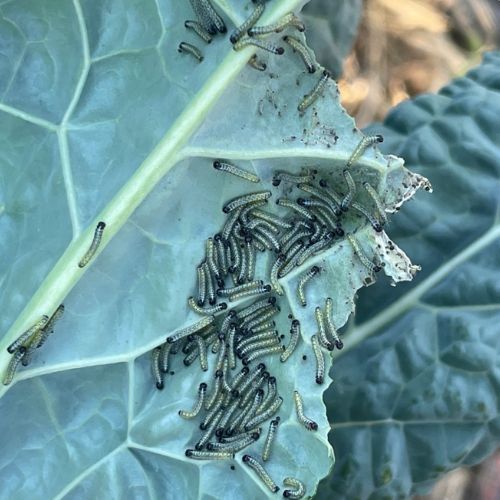
Lepidopteran larvae, also commonly known as "cabbage" (Pieris brassicae), are insects capable of causing serious damage to crops, in particular cruciferous vegetables such as cabbage, broccoli, and cauliflower. By feeding on the foliage, these larvae can reduce the foliage, compromising the physiological conditions of the plant and making many fruits unmarketable.
The fight against moth larvae is crucial especially in the larval phase, when insects reach their maximum degree of voracity. Among the main biological control tools, Bacillus Thuringiensis (Bt) is an effective and environmentally friendly solution, particularly suitable for cabbage larvae.
What is Bacillus Thuringiensis?
Bacillus thuringiensis is a bacterium naturally present in the soil, known for its ability to produce spores that are toxic to insect larvae. This bacterium is used in organic farming as a selective insecticide, particularly effective against lepidopteran larvae, including cabbage.
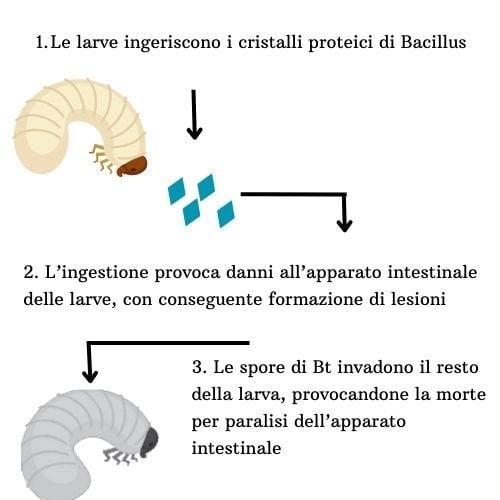
Its action is specific: the proteins produced by the bacterium block the digestive system of the larvae, leading to their death within 72 hours. This mechanism makes it not only effective but also safe for the environment and for beneficial insects such as bees and ladybugs.
Why use Bacillus Thuringiensis against cabbage?
One of the main advantages of using Bt against cabbage is its selectivity: it does not cause harm to beneficial insects and does not leave toxic residues on plants or in the soil. In addition, it is a sustainable solution that respects the balance of the agricultural ecosystem.
Many field experiences have shown that treating cabbage-infested crops with Bacillus Thuringiensis products, such as Xentari or Biobit, leads to a significant reduction in leaf damage without compromising crop quality.
Cabbage control with Bacillus Thuringiensis
The success of biological control of cabbage depends on two key factors:
- Toxin profile: the toxins produced by Bacillus are specific to lepidopteran larvae and particularly effective against cabbage.
- Formulation: the quality of the formulation of Bt-based products affects their effectiveness in the field. Well-formulated products guarantee good adhesion to the leaf, even in rainy or irrigation conditions, and are able to evenly cover the leaf surface.
Field experience
Farmers who have used Bacillus Thuringiensis as a preventive and curative measure against cabbage have observed that the larvae stop feeding just a few hours after treatment, although they can remain on the plant for a few days before dying. Timely treatments with Bt have shown excellent results, especially when applied when the larvae are still young and in the early stages of development.
Would you like to receive our advice? Subscribe to our Newsletter - 8% discount now for you
|
|
Recommended products
In our experience, the following products have proven to be particularly effective against cabbage and other lepidopteran larvae:
- Xentari WG (Bacillus thuringiensis var. aizawai): particularly effective against cabbage and spodoptera larvae, with a broad spectrum of action.
- Biobit (Bacillus thuringiensis var. kurstaki): selective towards beneficial insects, ideal for treating crops where a cabbage infestation has occurred.
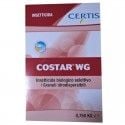
- Costar WG: residue-free, ideal for crops intended for sale without residue concerns.
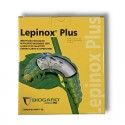
- Lepinox Plus PFNPE: specific for lepidopteran larvae, including cabbage. It works by blocking the feeding of the larvae just a few hours after treatment.
... THE ADVICE OF THE AGRONOMIST...
In order to function at its best, Bacillus Thuringiensis needs water with an adequate Ph.
Therefore, before introducing the active ingredient into the water, we always recommend the use of an acidifying product, such as Control dmp

Conclusion
Bacillus Thuringiensis is a powerful and environmentally friendly tool in the fight against cabbage and other lepidopteran larvae. Choosing the right product and applying it at the right time can make all the difference in protecting crops, ensuring high yields and quality products.
... DEEPENING...
How does the Bacillus Thuringiensis protein work?
Bacillus thuringiensis products show their maximum effectiveness when the larva is in its early stages of development.
In this phase, in fact, the larva manifests its maximum degree of voracity and, for this reason, there is a greater probability of ingestion of bacillus crystals
Share this content


 Chronology
 Citrus fruits
 Turf
 Stone fruit
 Olive tree
 Ornamental
 Vegetables
 Actinidia (Kiwi)
 Screw
 Hobbies and insights
 Pome Fruit


