
Your cart
There are no more items in your cart
pH acidification: how and why to use Control Dmp
Categories :
, Chronology
The European Green Deal has set 2050 as the deadline for achieving what is called climate neutrality and in this major project, agriculture is called into question at the forefront.
For the agricultural sector, in fact, the European Union has already defined 2030 as the year in which it will work to reduce the use of chemical pesticides by 50%, responsible, among other things, for the loss of biodiversity.
To date, most of the highly toxic and aggressive molecules have already been eliminated from the market and in such a context, you farmers find yourselves working to adopt scrupulous practices, which at the same time allow you to contain your investments and still make your interventions effective.
With this in mind, one of the practices that has become of vital importance is to act with specific actions on the pH of the water, to ensure that the products currently on the market guarantee maximum effectiveness.
pH acidification: the change in colouring
As we have already mentioned, highly toxic molecules are no longer commercially available. To date, active ingredients with a selective function are available only on target insects.
In order to optimize their effectiveness and avoid having to repeat treatments, these active ingredients need the right pH grade.
.jpg)
Which product to choose to acidify the solution?
As you well know, the success of the application of foliar products, in particular pesticides, biostimulants and fertilizers, depends largely on the correct and adequate preparation of the mixtures and there are various products on the market capable of carrying out the acidification activity.
Our experience leads us to recommend the use of a particular product, by virtue of its specific characteristics and, above all, the results that our own agronomists have been able to verify in the field:
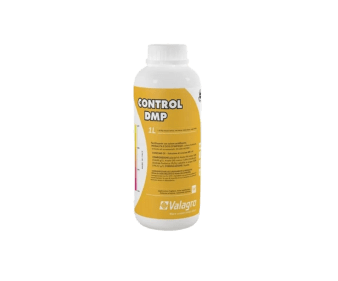
- DMP Control
|
|
It is an acidifying fertilizer, which provides nitrogen and phosphorus immediately available to plants. Unlike other acidifiers, Control DMP guarantees a surfactant action. Thanks to this last effect, you will be able to increase the wettability of the leaf, improving the absorption capacity of the solution you want to administer. A further feature that distinguishes Control DMP is its emulsifying effect, which optimizes the result of the application of pesticides and, by making the solution more homogeneous, reduces the phytotoxicity of the intervention. This acidifying fertilizer also differs from its other competitors for another important characteristic: the need for a lower dosage: 50-80 ml/hl are generally needed to reach pH values of 6-6.5. To be precise, you can observe the change in color of the water, comparing it with the color scale affixed to the packaging.
Would you like to receive our advice? Subscribe to our Newsletter - 8% discount now for you
|
|
.jpg)
How to use Control DMP?
Its method of use is very simple: just pour the product directly into water, in order to reach the most appropriate pH value based on the intervention you have to carry out. After that, you can proceed with the mixture of other products.

If you have any questions about the operation of Control DMP, you can visit the product page - Questions section or contact our technicians directly.
***
Plants and nutrient uptake
As you know, crop nutrition is one of the fundamental operations for their yield and for the future return on your investments and, in terms of the plants' ability to absorb nutrients, pH plays a fundamental role.
In the presence of a pH that is too high or too low, in fact, nutrients risk not being assimilated optimally: this condition is to the detriment not only of your crops (which will demonstrate problems in their growth and yield and will be more vulnerable to various diseases and attacks by pathogens), but also of you farmers, because you may find yourself forced to repeat the treatment, wasting your time as well as your resources.
And it is precisely in the broader context of the effectiveness of treatments that the pH of the water used in solution plays a very important role: some products, for example, need an acidic pH in order to work, otherwise, coming across the phenomenon of alkaline hydrolysis, they deactivate all or part of the effectiveness of their active ingredient, thus losing their effectiveness against the pathogen they were supposed to fight.
Share this content


 Chronology
 Citrus fruits
 Turf
 Stone fruit
 Olive tree
 Ornamental
 Vegetables
 Actinidia (Kiwi)
 Screw
 Hobbies and insights
 Pome Fruit


