
Your cart
There are no more items in your cart
The weevil and circular lesions on the leaves
By :
LA FROSCIA -
Categories :
, Chronology
, Ornamental
Index
What are the stages in which an idler attack is possible?
How do you fight the idlerrhynchus?
Fight against adults of oziorrhynchus
Fight with granular insecticide for weevils
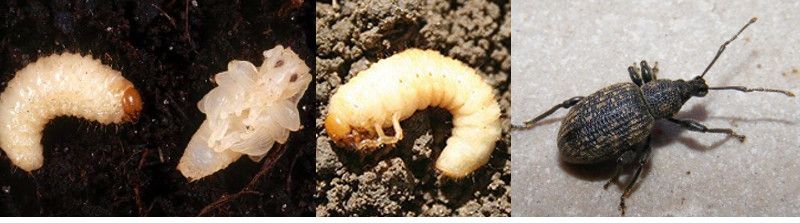
How to eliminate weevilbird larvae?
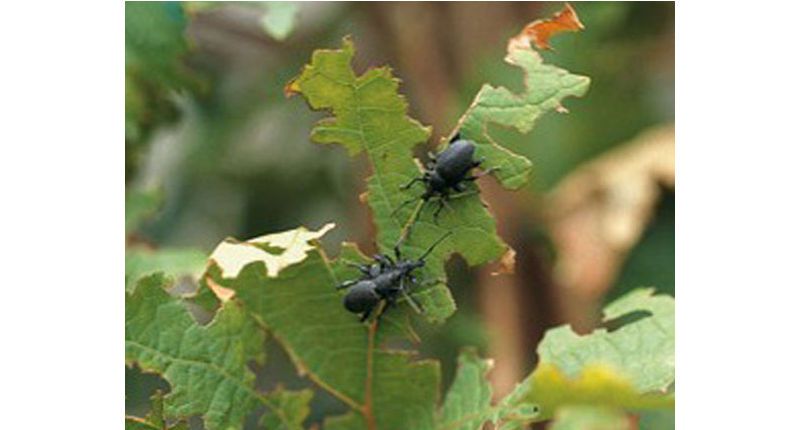
The weevilbird is a parasite with a shiny black color, with reddish-brown legs and antennae. It is a very insidious insect, due to its nocturnal habits. Acting at night, in fact, identifying its presence is very difficult. Certainly, however, you will be able to see the consequences of his attack in the morning. What?
Its eating habit is to feed on healthy leaves, which after the attack will have eroded edges in a semi-circular shape, a typical effect of the weevil bite.
1. What are the stages in which an oizzrhynchus attack is possible?
The weevilbird is a parasite that attacks both the larval and adult stages.
Larval stage
Famous for their insatiable voracity, weevil larvae prefer to feed on the roots of plants (including herbaceous and horticultural plants). The attack period is summer or close to autumn. What is the mode of action of these parasites? The larvae of the weevilbird live in the soil for a very long period (up to 3-4 years), during which they feed on bulbs, roots and lower parts of the plant, even causing desiccation and, therefore, the total death of the plants.
Adult stage
During its adult stage, the greatest damage from a possible weevilbird attack occurs mainly in spring: the leaves will have the crescent-shaped rosures typical of an adult weevilbird attack. In this case, however, the effect of an attack is mainly aesthetic, but involves the non-marketability of the plant.
Would you like to receive our advice? Subscribe to our Newsletter - 8% discount now for you
|
2. How do you fight the idlerrhynchus?
The fight against weevil larvae is possible at any time, whether you are certain of their presence or suspect their attack. In both cases, you can proceed either with biological control, or a granular insecticide.
Biological control against the weevilbird is a very effective method, which can also be carried out through soil interventions. For biological control we recommend:
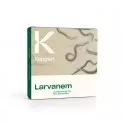
- Larvanem (September-October; March-April)
It is a soluble substance, with a high number of entomoparasitic nematodes. Nematodes enter the larvae of oziorrhynchus through its anterior or posterior orifices to feed and reproduce within it. Thus the larva of oziorrhynchus, now paralyzed, will die in a very short time, introducing a huge amount of nematodes on the ground that will start looking for new larvae of oziorrhynchus to parasitize.
How to use Larvanem?
You can distribute the product with a hose or with a watering can at the base of the plants and follow this operation with an irrigation intervention, to convey the nematodes into the soil.
Strategy with Metarhizium A. and Bauveria Bassiana products
As an alternative to Larvanem and in periods when soil temperatures are below 10°C, a strategy put in place in recent years is the use of Metarhizium A. and Bauveria Bassiana fungi, commonly present in the soil, but which in certain concentrations act by parasitizing insects living at their expense.
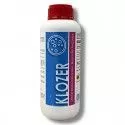
The product we recommend is Klozer, an inoculum of fungi with entomopathogenic properties that live in symbiosis with the roots. These fungi parasitize the larvae of the weevils to feed on them and cause their death. The product is available in both liquid and granular formulations and performs its action at all times of the year:
- Granular Klozer (dosage: 1kg/100sqm) . We prefer this formulation in turfs, as well as in all those situations where you want to implement a preventive fight by acting at all times of the year. Its action is improved on moist soils with a sufficient percentage of organic matter. It is advisable to carry out periodic applications, in order to always ensure a sufficient presence of the fungus, repeating the interventions after 15-30 days.
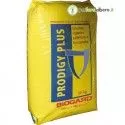
The granular Klozer improves its activity when mixed with Prodigy Plus (dosage: 7kg/100sqm)
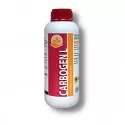
- Liquid Klozer (dosage: 2-3 lt/ha) It is used for fertigation (all year round) or by watering can for small areas. Also in this case, we recommend it mixed with an organic fertilizer that enhances its activity: Carbogen (dosage: 2-3 lt/ha)
Our advice is to prepare the stock solution 24 hours before treatment. In this way, the mushrooms will be activated, which will act immediately after administration. For a complete action, we suggest repeating the intervention at half dose and always in the same way.
3. Fight against adults of oziorrhynchus
Once the presence of adult weevils has been verified, our recommendation is to intervene immediately with killing products:
It is important to act promptly because if the intervention is done at the first appearance of the parasite, you will eliminate the risk of the presence of eggs (and, therefore, also larvae) and you will be able to save the intervention on the ground.
Idler trap
Against this parasite, especially in the adult stage, an excellent remedy is represented by the traps for oziorrhynchus. The one we recommend is the trap:
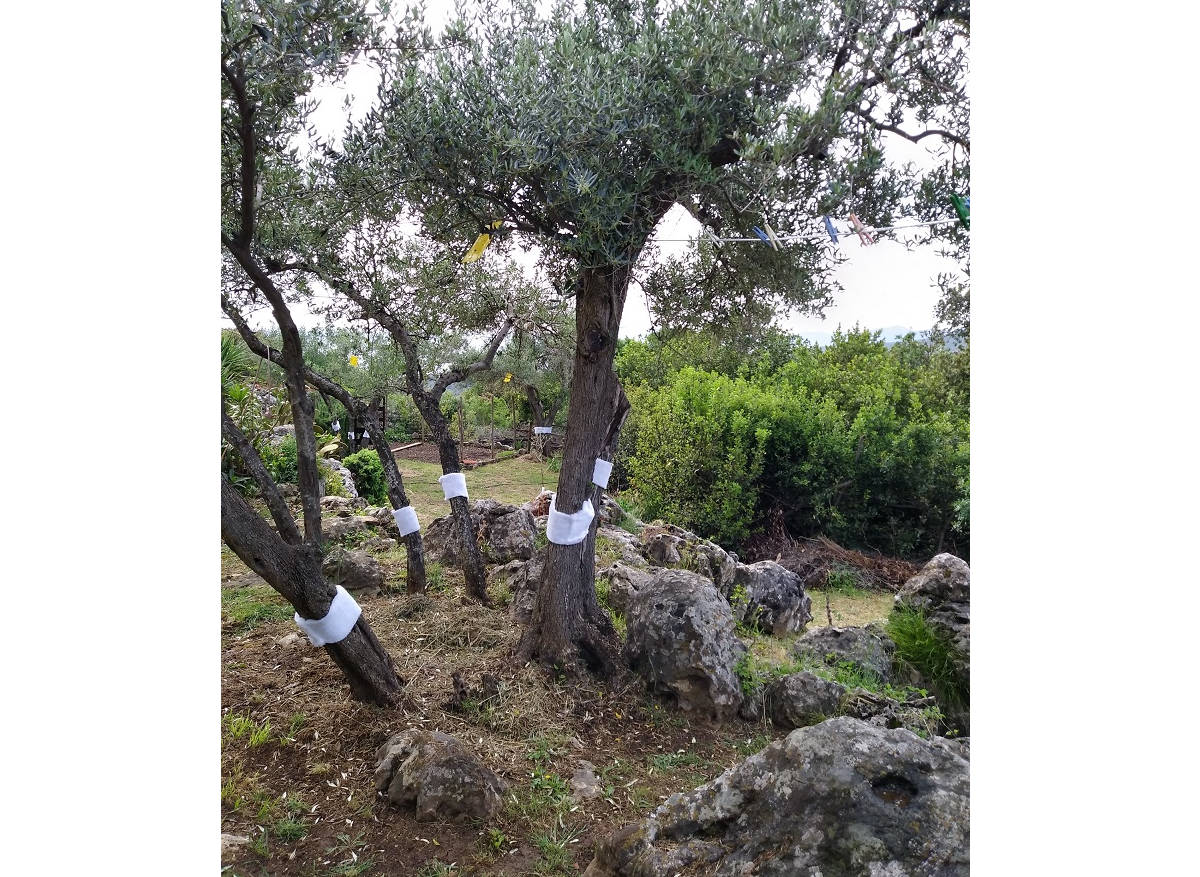
- Rincotrap: mechanical trap (rolls of glass wool) to be applied around the stem of the plants. Thanks to these traps for weevil, the ascent of the adults of the parasite and the ants are prevented, which remain trapped. This type of trap has no toxicity and can be used on all types of tree and shrub plants.
Another useful tool for the fight against weevils is represented by Pegafit : a brushable glue to be applied to the trunk. This glue has a shelf life of about 8-10 weeks and prevents the rise of the weevil, which remains trapped in the liquid.
4. Fight with granular insecticide for weevils
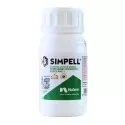
You can start the fight with granular insecticide as early as sowing or transplanting. At this stage, we recommend using:
Share this content



 Chronology
 Citrus fruits
 Turf
 Stone fruit
 Olive tree
 Ornamental
 Vegetables
 Actinidia (Kiwi)
 Screw
 Hobbies and insights
 Pome Fruit


