
Your cart
There are no more items in your cart
Pistachio: management program
Categories :
, Chronology
Over time, pistachio has become a species of great value all over the world. To date, the Italian region with the largest cultivation of Pistachio is Sicily, followed by Basilicata, Puglia and the other regions of central Italy.
How to manage pistachio crops? In this article we will talk about a pistachio management program, through the most important phases of profitable agronomic management.
We will start talking about our program from the beginning of a new agricultural campaign, so just after the harvest. We will start by recommending a series of interventions for correct and profitable agricultural management.
These practices are also valid in the case of new plants.
Index
The problem of alternating production
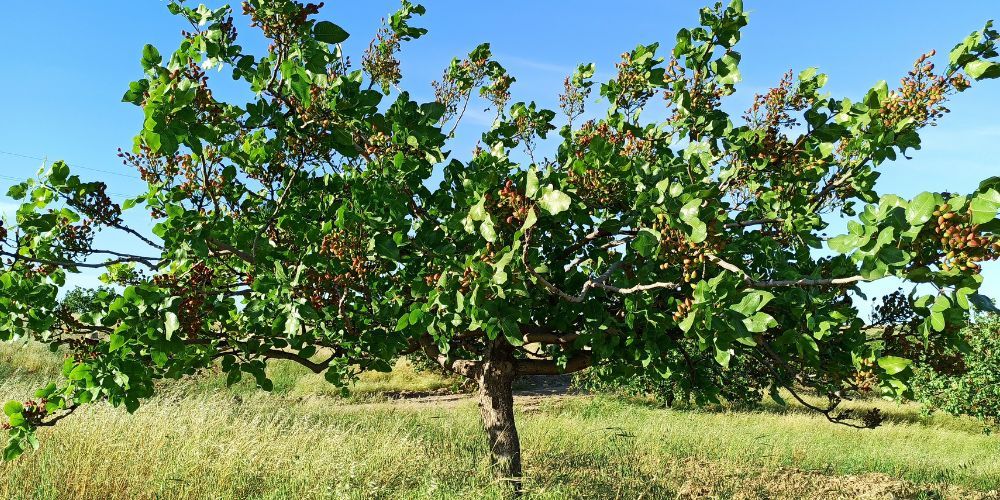
The problem of alternating production
Alternation of production is a genetic characteristic found on different fruit crops, so the plant, after a year of abundant production, drastically reduces its yield the following year, causing farmers significant losses not only in terms of harvest, but also in economic terms.
Over the years, we have realized that this particular phenomenon tends to occur especially for all those crops for which we have not been accustomed to intervening with agronomic strategies aimed at optimizing production.
Our experience has taught us that, if we proceed with the right agronomic practices, we will be able to foster a vegetative sprint that will increase the yield and, consequently, the final harvest each year.
The entire management program that we are going to propose to you, therefore, will be completely based on providing the plant with general nourishment and energy, when it needs it most. Through these strategies we will be able to drastically reduce the phenomenon of alternation, ensuring constant and greater production from year to year.
*
September/October bottom fertilization
As you know, to carry out their vegetative and productive phase in the best possible way, plants remove most of the nutrients from the soil. In fact, it is precisely from this phase that we would like to start, to give our plants a good part of the nutritional elements that they will use during the season. Before fully assimilating the fertilizer, plants go through two phases:
- absorption (normally by radical route)
- assimilation (which involves the transformation of inorganic substances into biological compounds)
Before the fertilizer is absorbed, the plant needs "its own time" to be able to assimilate the nutrients provided by the bottom fertilization. This is why, in our opinion, providing the necessary nutrients is the first of the strategic steps for the management of pistachio.
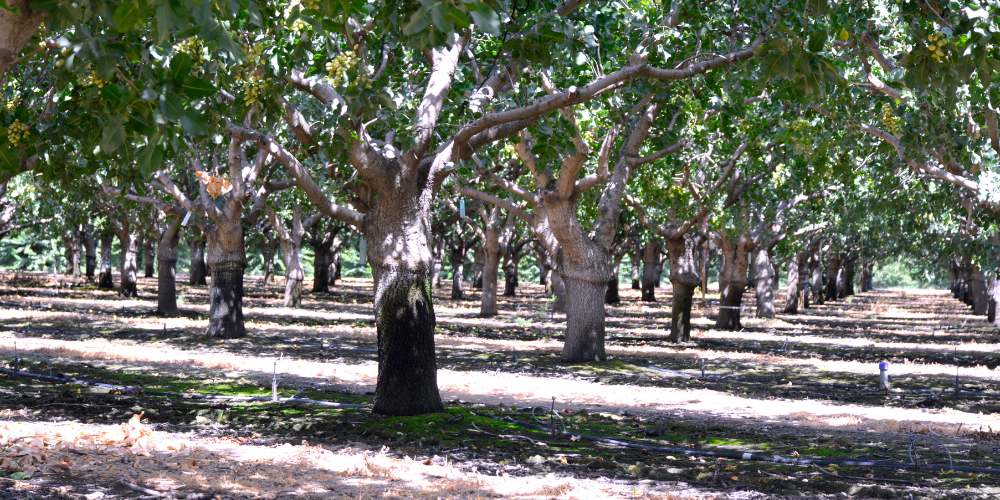
In this way, the pistachio tree will have all the time it needs for a perfect assimilation of the fertilizer and will be able to benefit from the nutrients at the time of vegetative recovery, when the plant will need them. The product we recommend you use is an organo-mineral fertilizer:
Dosage for non-irrigated systems: 1 kg/plant, under the canopy.
For irrigation systems, we recommend using Agrofert MB at a dose of 500-700 gr/plant, preferably in the area intercepted by water from drippers or butterflies, where the root system has developed greater vigor. This will allow the root system to better absorb nutrients.
Would you like to receive our advice? Subscribe to our Newsletter - 8% discount now for you
|
October-November: copper-based treatment
In the autumn months, we recommend the use of a treatment with a copper-based product, which will act as an inducer of resistance against fungal attacks:
- Kyprion (200 ml/100lt)
*
February: introduction of microelements as support
Before entering the pre-flowering phase, our advice is to ensure that the plant is supplied with the necessary elements to provide it with the right input and to ensure nourishment and reinforcement. The product we recommend you use in a foliar treatment is:
- Kendal Tea (200 ml/100lt)
Let's start by saying that this product contains copper inside , an extremely functional element when the plant is more subject to abiotic stress.
Thanks to the manganese and zinc contained within it, then, Kendal Tea is able to promote the production of auxins, one of the natural hormones essential for plant growth and for their more luxuriant development
*
At this stage, we recommend using a blend of products that will support a key phase of the season. In fact, thanks to this intervention, we will provide macro and microelements (with a foliar treatment ) that will improve and intensify the flowering phase:
- Fylloton (dosage: 200g/hl), bio-growth promoter rich in Tryptophan, a natural precursor of auxins, able to stimulate the vegetative development of the plant. In addition, this organic fertilizer is able to promote the metabolism of plants under stress conditions
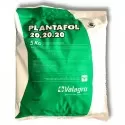
- Plantafol 20.20.20 (dosage: 300ml/hl), containing macro elements
- Nutri Gemma (dosage: 200ml/hl), boron and zinc-based microelements
*
April: flowering phase
As is well known, pistachio is a very strong plant which, for this reason, does not need any particular interventions. However, to help it overcome the dormancy of the winter phase, we found it useful to intervene to improve its vitality and guarantee a starter effect. In particular, we acted through foliar fertilization with the mixture of two products:
*
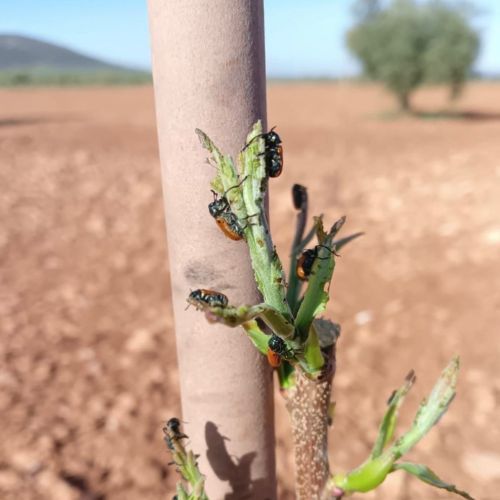
May is the month in which the leaves of young or growing pistachio plants are most susceptible to attack by a particular type of beetle: the pistachio Clytra. Thanks to its chewing apparatus, this parasite feeds on the leaves of the pistachio tree, weakening it and, in the most extreme cases, leading to its death.
Our advice is to intervene with a foliar treatment:
- Kaimo (50 ml/hl)
- Plantafol 20 20 20 (30 gr/hl)
- HAIFA Micro COMB (100 gr/hl)
Repeat the surgery after a week.
Pistachio Clytra is mainly present in the Etna area, where the largest number of pistachio cultivation is concentrated. It is precisely in these areas that Clytra has caused the greatest damage, prompting local farmers to find new and effective solutions:
The farmer's experience:
Giovanni, Sicilian agricultural entrepreneur
"Towards the end of April, I saw beetles eating the leaves of my pistachio trees for the first time. I inquired and found out that it was Clytra from pistachio. I decided to choose a product that acted by contact and I used Kaimo. I had excellent results, thanks both to its knockdown effect and because I did not see new attacks".
*
Septoria is caused by a particular type of fungus: septoria, which spends the winter season on the residues of infected plants and spreads to plants during the growing season. Septoria infection is favored by humid temperatures and is recognizable by the presence of circular or angular spots on the leaves, which, then they will fall from the tree. In this case, the strategy we propose is (foliar treatment) :
These are just some of the interventions that, in general, should be carried out on a pistachio plant. However, weather conditions or other unforeseen adversities must always be treated carefully and responsibly. As you know, our technicians are always available for any problems you may encounter during the season.
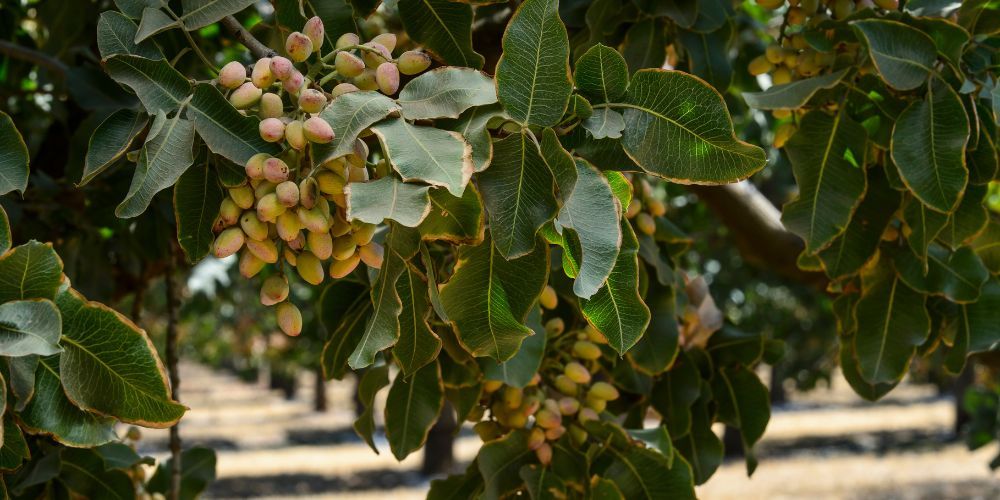
DEFENSE AGAINST MEGASTIGMUS PISTACIAE
In the period between flowering and fruit set of the plant, the pistachio could be subject to the attack of Megastigmus Pistaciae, also known as pistachio worm. The larvae of Megastigmus Pistaciae feed on the pistachio pulp and pierce the fruit, causing a depreciation of the final product. In the event of large attacks, it is also possible that premature fruit drop occurs. In this case, our advice is to proceed with (foliar treatment) : Trebon Up, (dosage: 500-750ml/ha. It is recommended to use the higher dosage). |

Share this content













 Chronology
 Citrus fruits
 Turf
 Stone fruit
 Olive tree
 Ornamental
 Vegetables
 Actinidia (Kiwi)
 Screw
 Hobbies and insights
 Pome Fruit


