
Your cart
There are no more items in your cart
Apricot treatment calendar
Categories :
Chronology
, Stone fruit
Index
Apricot treatments after harvesting
From autumn to the end of March
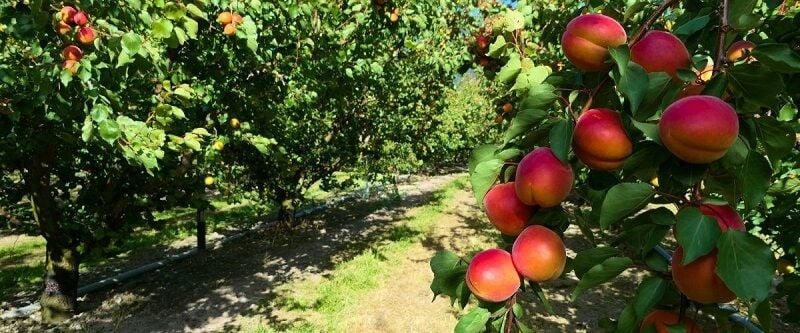
Cultivation of apricot trees (Prunus Armenica):
Professional program
The apricot is a plant of Chinese origins, present in Italy since Roman times, and belonging to the Rosaceae family.
It is a plant capable of reaching heights of 8 meters, but it is never allowed to develop up to that height. It is usually left to grow up to a maximum of 3 meters, to facilitate and economize harvesting operations. This constraint ends up causing a short period of life of the plant, which is however appropriate, given the swirling varietal turnover.
In fact, there are many varieties of apricot grown, many recently selected to try to intercept the various preferences of consumers.
Nutrition is the basis of good production:
After harvest July - August
With the aim of replenishing energy reserves, favoring the differentiation of fruiting and wood buds. It is advisable to administer nitrogen to the soil or in fertigation with Ammonium Nitrate 34%, at 100 - 150 per hectare, a necessary practice if the production has been abundant or there are signs of fatigue.
And at the same time by foliar application:
- Hyberol at 200 ml
- Coptrel at 60 ml
- Lecithin 80 Ms at 150 ml
Late Autumn - Early Winter:
- Agromaster 30 - 10 - 0 at a dose of 500 gr/plant if located under the foliage, increase significantly if spread along the row
- Prodigy Plus at 1 kg/plant if located along the row, significantly reduce if located under the canopy.
Would you like to receive our advice? Subscribe to our Newsletter - 8% discount now for you
|
Apricot winter treatments
January-February:
- Agromaster 12-12-22 dose 1 kg/plant (if full-field 6 - 8 ql/ha)
If growing in heavy, calcareous soil
- Agromaster 15 - 20 -15 to 500 gr/plant
- Polysulphate at 1kg/plant
The proposed fertilization should be sufficient to guarantee the plant the energy necessary for production, but there are many variables that influence and it will be necessary to constantly monitor the good vegetative progress of the plant and make rescue interventions in case of need.
At the beginning of flowering, a rescue and a nutritional boost will certainly do good:
- Pekacid at 25 kg/ha + Cal-Mag at 50 kg/ha.
In fertigation, it is a robust integration of Nitrogen, Phosphorus and Potassium, Magnesium and Calcium.
Pekacid has a strong acidifying and corrective power of the limestone of the soil. This intervention can be repeated after a week or more, and further fertilization interventions will be decided later if necessary. A different importance, however, is given to foliar fertilization before vegetative restart, namely:
End of January – February carry out an intervention with:
- Phylen at 600-800 cc +
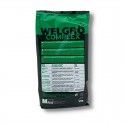
- Welgro Complex at 200 gr +
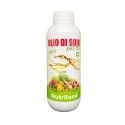
- Soybean Oil at 200 cc
After a week, carry out a routine treatment with
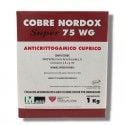
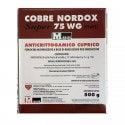
- Cobre Nordox at 200 gr/hl +
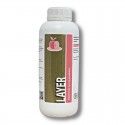
- Layer at 200 cc/hl
A bud moved :
To combat moniliosis and corineo, provide microelements, mitigate and correct winter stress.
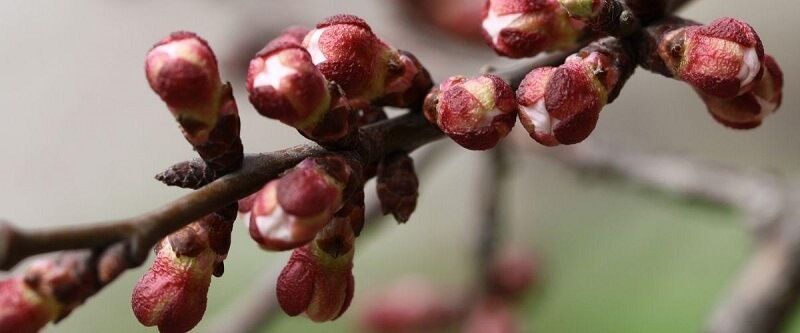
Apricot Spring Treatments
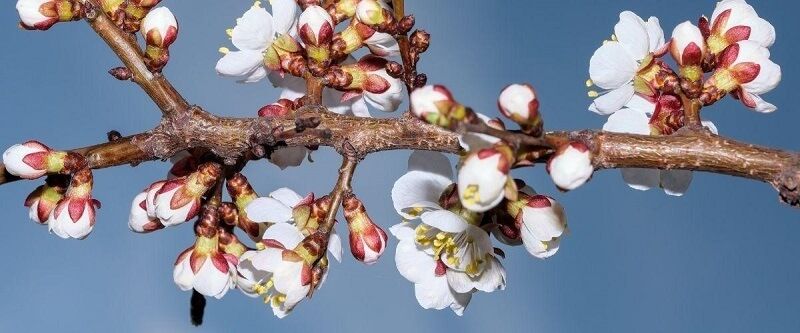
At the beginning of flowering:
- Merpan at 150 gr/hl +
- Glibor Ca at 200 gr/hl +
- Agroleaf power 31.11.11+ TE 300 gr/hl
Attached fruit:
- Serenade Aso at 500 ml/hl or
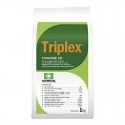
- Triplex at 200 gr/hl +
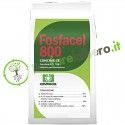
- Phosphacel at 200 gr/hl +
- Maxigrow Excel at 100 cc/hl
The same treatment, without fungicide, with the intention of enlarging the fruits and improving the texture and flavor can be repeated after 7-10 days:
- Triplex at 200 gr/hl +
- Phosphacel at 200 gr/hl +
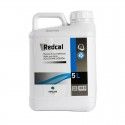
- Redcal at 200 cc/hl +
- Maxigrow at 100 cc /hl
If the climatic conditions are adverse, it is very important to protect the vegetation and stimulate the creation of self-defenses by adding a fertilizer with a specific action such as Silver at 200 ml/hl.
A subsequent nutrition and defense treatment:
- Serenade Aso at 500 gr/hl+
- Triplex at 200 gr/hl +
- phosphacel at 200 gr/hl +
- MC Extra at 100 gr/hl.
Up to this point we have adequately defended and nourished abundantly, and we can consider that the most is done; however, it will be necessary to monitor the seasonal trend, intervene against powdery mildew and rust:
- Tiovit at 300 gr/hl
- Welgro Cu Zn at 150 gr/hl
- Xentari at 100 gr/hl against Lidia and anarsia. To be replaced close to ripening with after monitoring the presence and danger of fruit fly attack by means of monitoring traps or mass capture
- Trebon UP at 50 ml/hl
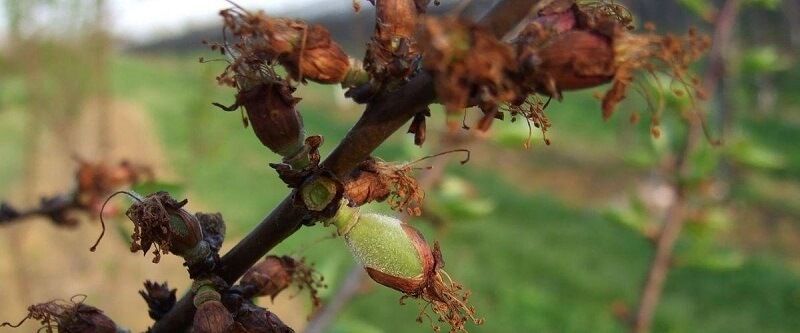
Apricot treatments after harvesting
Falling leaves :
- Cobre Nordox at 200 gr/hl +
- Layer at 200 cc/hl
Professional Ethics
The purpose of any business is to make an income, and we can only accompany and support the just requests of the agricultural entrepreneur, but with particular attention to the use of synthetic chemicals, limiting their use to the bare minimum and favoring nutrition with high quality products that have the advantage of being very stable, be easily absorbed by the roots and less attacked by bacteria and limescale. Convinced that a well-nourished plant requires less care against fungal diseases and animal parasites, and produces fruits rich in sugars, vitamins and nutrients rich in nature, more storable and more beautiful. And while we care for and respect the health of plants, we respect the health of the producer, the consumer and Our Mother Nature.
Hobbyist program
Our program follows a logic of respect for the health of the grower first and then of the consumer, taking into account that while doing this we have respected Nature.
This is the philosophy and deontology that governs our work.
The doses reported are per 10 lt of solution (dl).
From autumn to the end of March
Autumn: falling leaves
Treatment:
- Welgro Cu+Zn at 25 gr in 10 lt +
- Soybean Oil Max at 25 ml
Fertilization:
- Orga-Kem 10-5-5 at 1-2 kg/plant depending on its size
February first half:
Treatment:
- Welgro Cu+Zn at 25 gr in 10 lt +
- Soybean Oil Max at 25 ml
Fertilization:
- Orga-Kem 6-11-8 at 1 kg/plant +
- Polysulphate at 1 kg/plant
February 2nd mid-March:
Treatment:
- Kendal Te at 20 cc/10 lt +
- Welgro Complex 20 gr/10 lt +
- Agroleaf 31-11-11 at 30 gr/10 lt
Repeat twice until flowering.
After flowering - Pinache
For fruit enlargement, texture, flavor and aroma :
- Triplex 19-19-19 at 20 gr/10 lt +
- Phosphacel at 20 gr/hl +
- Benefit Pz to 30 ml
twice, alternating with two treatments to defend against rust, powdery mildew, monilia:
- Kendal Tea at 20 ml/10 lt +
- Gyve Suprem at 30 ml/10 lt
When the fruits have reached a good size, a further treatment can be carried out to promote ripening, increase the sugar content and the consistency of the fruits.
- Rizammina 42 a 30 gr/10 lt +
- Glibor Ca at 20 ml/10 lt
Remember that it is possible to have aphid attacks; In this case, the only product allowed is:
- Epik Sl at 15 ml/10 lt or beneficial insects
From June onwards
From veraison to ripening, against possible fruit fly attacks, you can defend yourself with Ceratrap capture traps, one trap every 2 trees if they are placed no more than 5 meters away.
Share this content










 Chronology
 Citrus fruits
 Turf
 Stone fruit
 Olive tree
 Ornamental
 Vegetables
 Actinidia (Kiwi)
 Screw
 Hobbies and insights
 Pome Fruit


