
Your cart
There are no more items in your cart
Hazelnut Treatments Calendar - Hazelnut Grove Program
Categories :
, Chronology
Index
Introduction
Fertilizing a hazelnut grove
Defense against fungi
Insect Defense and Nutrition to Prevent Diseases
Hazelnut Cochineal: Identification, Life Cycle and Defense Strategies
Preventive Copper Treatments
Core Nutrition: The Importance of Boron and Zinc
Improving the Effectiveness of Layer Treatments
Frequency of Cupric Treatments
Introduction
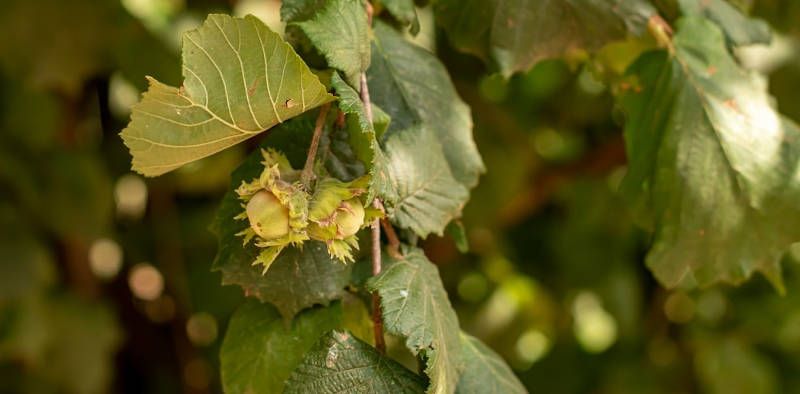
In recent years, in view of the strong demand from the food sector and more specifically from the confectionery sector, there has been an increase in the area invested in the cultivation of hazelnuts.
In Italy, therefore, the hazelnut grove is gaining increasing attention, despite the fact that it is historically present in all areas of our boot, think for example of the renowned Giffoni hazelnut.
It is a plant characterized by a shrubby-bushy habit, with a high sucker-bearing attitude, which can however be reduced through the use of specific rootstocks. It adapts well to drained, loose soils well endowed with organic matter, while it fears tenacious soils and water stagnation
The core responds well to a high temperature range. However, thermal extremes such as temperatures below -8° C or much higher temperatures can compromise our plants and consequently the yield of the hazelnut grove.
It is important to underline that, to date, the genotypes present are self-sterile, i.e. incapable of self-fertilization. Therefore,in the design phase of a hazelnut grove plantation, it will be necessary to insert pollinators.
Fertilizing a hazelnut grove
In the pre-fall period of leaves, our advice is to carry out interventions based on boron and zinc, elements necessary for the differentiation of reproductive structures. The products we recommend are:
- Nutri bud (dosage: 250 ml/hl)
- Soybean oil max 85 (dosage: 150 ml)
During the ripening phase of the leaves and the beginning of the fall, to facilitate this process and disinfect the micro-lesions due to phyloptosis, it is advisable to distribute copper-based products, through a mixture composed as follows:
- Kendal TE (dosage: 200 ml /q.le)
- Soybean Oil max 85 (dosage: 150 ml/hl)
By proceeding with this intervention, we will also have the opportunity to act against fungi and bacteria.
November
As we have already mentioned, the hazelnut prefers fresh, deep soils rich in organic matter. At the same time, it fears water stagnation and, for this reason, the administration of organic matter is of fundamental importance for an optimal yield and for the well-being of our plants. The product we suggest is:
- Prodigy Plus (dosage: 0.5 - 1.5 kg/plant)
The quantities needed vary according to the size of the plants, the quality of the organic matter used and the cyclical nature with which it is distributed.
January- February
At this stage, it is possible to proceed with mineral fertilization, through slow-release fertilizers:
- Agromaster 14.7.14 (dosage: 1.2 kg/plant)
In the case of organic cultivation (organic hazelnuts), we suggest you use:
- Orga-Kem 10-5-5 (dosage: 2-3kg/plant)
FOLIAR INTERVENTION DURING THE FLOWERING PHASE:
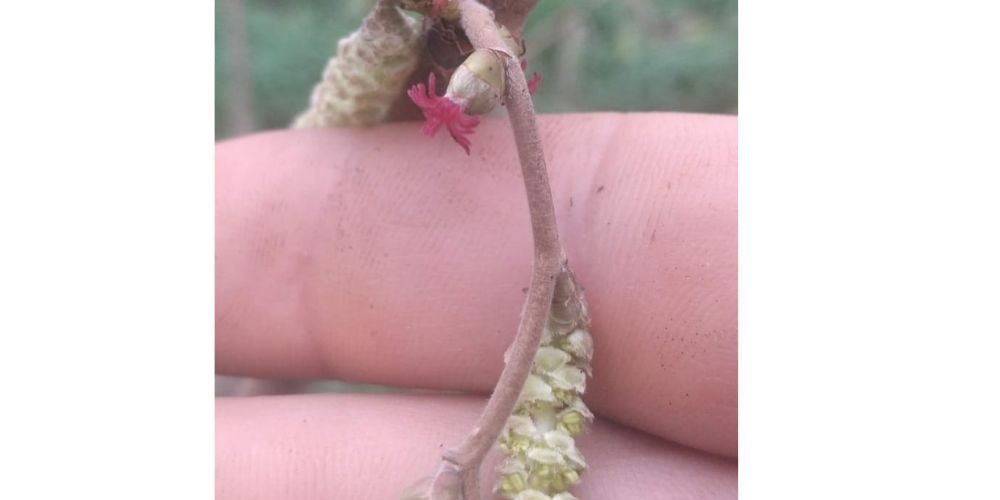
At this stage, we recommend that you proceed with:
- Inex-A (dosage: 30ml/100l)
- Control (dosage:50ml100l)
- Molibor (dosage: 150ml/100l)
- Folicist (dosage: 100ml/100)
10-12 days after this intervention, you can proceed with a second foliar intervention:
- Inex-A (dosage: 30ml/100l)
- Control (dosage: 50ml/100l)
- Bio help Plus (dosage: 100ml/100l)
- Glibor Ca (dosage: 200ml/100hl)
When the fruit is formed, to promote enlargement and reduce the phenomenon of empty shells, we recommend proceeding with:
CONVENTIONAL TREATMENT
- Inex-A (dosage: 30ml/hl)
- Triplex (dosage: 250 gr/hl)
- Fosfacel 800 (dosage: 200 gr/hl)
- Maxi-Grow (dosage: 50-100 ml/hl)
We suggest that you repeat the treatment once or twice, 7-10 days apart.
BIOLOGICAL TREATMENT
- Soybean oil max 85 (dosage: 150 ml/hl)
- Mc-extra (dosage: 0.5-1kg/ha)
If you deem it necessary, you can continue with further foliar fertilization, one or more times at your discretion, with:
CONVENTIONAL TREATMENT
- Inex-A (dosage: 30ml/hl)
- Triplex (dosage: 150 gr/hl)
- Welgro Complex (dosage: 150 gr/hl)
- Maxi-Grow (dosage: 50 ml/hl)
BIOLOGICAL TREATMENT
- Soybean oil max 85 (dosage: 150 ml/hl)
- Maxi-Grow (dosage: 50-100 ml/hl)
- Ener 26 (dosage: 250g/hl)
Would you like to receive our advice? Subscribe to our Newsletter - 8% discount now for you
|
Defense against fungi
Although the hazelnut tree may seem to be a plant with a marked hardiness, it is highly likely that it is prone to fungal attacks.
Among these, we can mention powdery mildew, which tends to manifest itself with whitish efflorescence on the underside of the leaves. Generally, this disease is easily controlled and does not create major problems. However, in "extraordinary" years such as the one that is about to end (2023 vintage), where rainfall and high humidity characterized late spring/early summer, a powdery mildew attack could cause quite a few problems.
For this reason, our advice is to intervene with
- Red Block SW (dosage: 250 ml/hl)
Thanks to its ability to alkalize the plant surfaces with which it comes into contact, Red Block creates an environment hostile to the pathogen, blocking sporification and devitalizing the spores already present.
A further disease that usually affects the hazelnut tree is the so-called Grey Necrosis, caused by a complex of pathogens (Alternaria spp., Colletotrichum spp., Phomopsis spp., Fusarium spp.).
In this case, you can proceed, starting from the flowering phase, with:
CONVENTIONAL TREATMENT
- Signum (dosage: 10 g/hl)
- Soybean oil max 85 (dosage: 150 ml/hl)
BIOLOGICAL TREATMENT
- Soybean oil max 85 (dosage: 150 ml/hl)
- Serenade Aso (dosage: 400-800ml/hl)
Insect Defense
Insect defense must be carried out by intervening at the first appearances of the latter. Preventive treatments, in fact, risk being useless. Among the most dangerous parasites for the hazelnut grove, we can certainly mention the stink bug, against which we recommend intervening through the use of:
The use of Frankyl improves the action of the insecticide, adhesion and persistence, because it protects the active ingredient from oxidation. This also results in an increase in the duration of action. In addition, Frankyl has a repellency action against numerous pests and mites.
Hazelnut Cochineal: Identification, Life Cycle and Defense Strategies
Hazelnut Cochineal (Eulecanium coryli) is a pest that, although not yet reported in some regions, poses a threat to hazelnut cultivation. This insect completes only one generation per year, presenting an evident sexual dimorphism: the female, about 5 mm long, appears brownish and convex, while the male, about 2.5 mm, is winged.
Biological Cycle of the Hazelnut Cochineal
During the winter, mealybugs overwinter as nymphs on the woody organs of the plant. In spring, between April and May, mature females lay eggs, which remain protected by the mother's body. The nymphs then migrate to the leaves and remain there until autumn, when they return to the branches to overwinter. Severe infestations cause the twigs to dry out and produce honeydew, favoring sooty molds that reduce photosynthesis.
Defense Strategies for Hazelnut Cochineal
The defense against cochineal makes use of treatments with mineral oils, to be applied in autumn/winter before vegetative restart, to hinder the migration of nymphs.
A second intervention is recommended at the end of winter with oils such as Polithiol, taking into account the temperature conditions (above 5°C) and the phenological stage of the plant.
Alternatively, biological control via the predatory beetle Brachytarsus fasciatus, which feeds on mealybug eggs, is effective between April and June.
Preventive Copper Treatments
The hazelnut tree is an important plant for both nut production and farmland management, but it is also prone to several fungal and bacterial diseases. Among the most common pathologies that affect the core are gleosporiosis, copper cancers and detachment sickness. To prevent and protect plants, copper treatments are essential. In this article, we will explore how to properly carry out treatments and which products to use to best protect your core.
Cupric Treatments: When and How to Perform Them
Copper-based treatments are essential during the winter period, when the plant is in the vegetative rest phase and environmental conditions can favor the development of fungal and bacterial diseases. Using copper-based products such as Cobre Nordox is ideal for preventing infections and disinfecting plants. Here are some practical tips:
- Cobre Nordox (160 g/hl): This copper oxychloride is particularly effective against diseases such as gleosporiosis and copper cancers. It is recommended to apply it in dormant phases to disinfect plants and prevent the onset of infections.
- Welgro Cu/Zn (180 g/hl): For those who want to optimize the treatment in a single intervention, this product offers a combination of copper and zinc, useful both for protection against pathogens and for plant nutrition. In this way, you can avoid having to carry out several separate treatments.
Core Nutrition: The Importance of Boron and Zinc
In addition to copper treatments, it is essential to maintain proper nutrition of hazelnut plants, especially through the contribution of Boron and Zinc, which support the correct development of flowers and fruits, improving the plant's resistance to environmental stress. However, it is advisable to administer Boron and Zinc separately from copper to avoid unwanted interactions.
Improving the Effectiveness of Layer Treatments
A useful tip for optimizing copper treatments is the use of a surfactant wetting agent as a Layer. This product improves the adhesion and distribution of copper on plant surfaces, increasing coverage and treatment effectiveness. Layer is particularly suitable for winter treatments, where it is essential to ensure uniform protection of the plant.
Frequency of Cupric Treatments
The frequency with which copper treatments are carried out depends on the climatic conditions and the state of health of the plants. Generally, a winter treatment in late autumn-early winter, followed by an intervention in late winter-early spring, is a good preventive strategy.
Core management requires a holistic approach that combines disease prevention with targeted nutrition. Cupric treatments are essential to prevent diseases such as gleosporiosis and copper cancers, while the contribution of Boron and Zinc helps to improve the overall health of the plant. By adding a surfactant as a layer to treatments, optimal product distribution and increased plant protection can be ensured. Following these guidelines will help you achieve a healthy and productive hazelnut cultivation.
... Author's considerations...
We realize that the set of operations suggested may seem demanding and, above all, expensive. However, the goal of each of our tips within the article is to try to ensure an excellent yield, in terms of both quality and quantity.
We would like to emphasize, then, that the success is certainly conditioned by a correct and punctual application of technical means. A further decisive aspect has to do with irrigation and pruning operations and the use of phytosanitary treatments for the hazelnut tree:
A well-nourished plant, with well-managed pruning and rational irrigation in terms of shifts and quantity, resists abiotic agents much better.
The defense, therefore, will be easier.
Share this content


 Chronology
 Citrus fruits
 Turf
 Stone fruit
 Olive tree
 Ornamental
 Vegetables
 Actinidia (Kiwi)
 Screw
 Hobbies and insights
 Pome Fruit


