
Your cart
There are no more items in your cart
How to fight red rhodiwood and yellow rhodiwood
Categories :
, Chronology
, Citrus fruits
Index
Differences between red rhodiwood and yellow rhodiwood
Recommended products for the fight against rhodiwood
Would you like to receive our advice? Subscribe to our Newsletter - 8% discount now for you
|
Fight against red rhodiwood (Cossus Cossus) and yellow rhodiwood (Zeuzera Pyrina)
Introduction
Among the insects that eat wood we certainly find the wood rhodium. It is a moth belonging to the cossidae family.
Cossus cossus and Zeuzera Pyrina are polyphagous insects, which attack a large number of cultivated and ornamental species. These insects are xylophagous, that is, they feed on the wood by digging tunnels inside it.
Differences between red rhodiwood and yellow rhodiwood
The red rhodiwood creates tunnels in the trunk and in the main branches, causing significant mechanical damage to the plant and consequently generating a slow and progressive deterioration of the same.
Yellow rhodiwood, on the other hand, is distinguished from red rhodiwood by the type of damage and the organs affected. It prefers branches positioned at the top, digging tunnels in the center of the shoots.
Remedies against yellow rhodiwood and red rhodiwood
Chemical control is not always effective for several reasons:
- There are no effective and registered phytosanitary formulations against these insects.
- It is difficult to identify and reach the larvae when they are in the xylophagous phase, that is, when they dig tunnels within the medullary zone of the wood.
- The adult flickering period is quite long and therefore the identification of the egg-laying period is complicated.
In spring, when the first damage appears on the shoots, it is possible to fight the larvae with an insecticide for rhodiwood:
- Biobit (Licence required) at a dose of 150 g/hl. (often the damage caused by yellow rhodiwood on newly formed shoots can also be confused with that caused by Cydia molesta or Anarsia lineatella).
Use of traps and pheromones
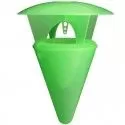
In order to identify the best time to carry out the treatments, it is useful to place sex pheromone traps.
- Siatrap: 3-4 traps per hectare with relative
- Red Rhodiwood pheromone
- Yellow Rhodiwood Pheromone
Recommended products for the fight against rhodiwood
For both rhodiwoods, treatments should be carried out 15 days after the start of flights and repeated after about 7-10 days. At this stage, to counteract the activity of rhodiwood, we recommend intervening with products based on Beauveria bassiana and Metharizium anisopliae:
In the presence of tunnels dug into the wood, it is possible to eliminate the larvae using mechanical means such as iron wires.
However, the best strategy to combat rhodiwood is to carry out mass capture (a strategy allowed in organic farming). In this sense, it is necessary to place at least 10-15 Siatrap traps per hectare with the relative sex pheromone, taking care to place them at eye level, within the vegetation. It is also advisable to place the traps by the month of May and take care to replace the pheromones once a month.
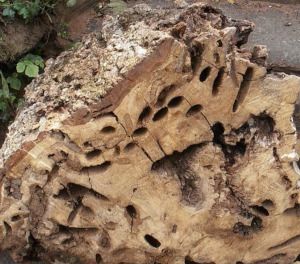
Damage caused by rhodiwood
In the photo below we can see the damage from rhodiwood:
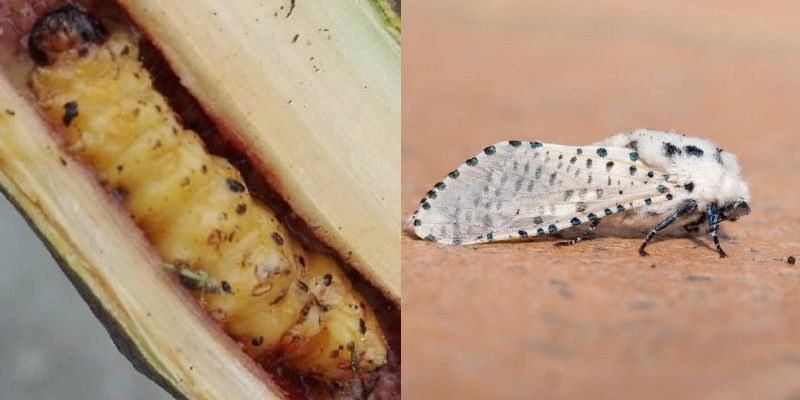
In the following photo we can see on the left a larva and on the right an adult of yellow rhodiwood Zeuzera Pyrina:
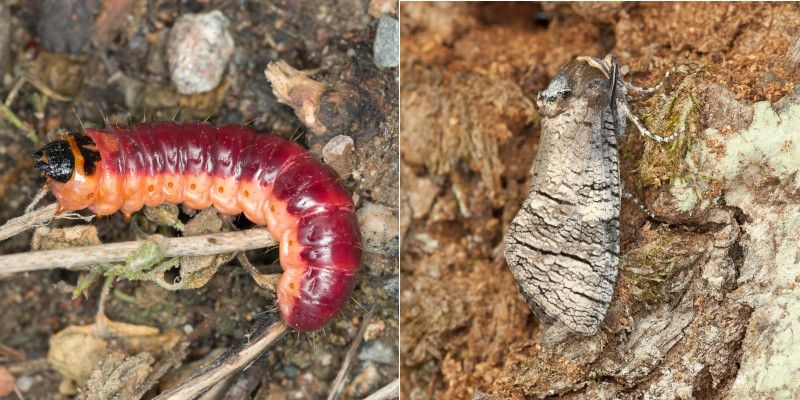
In the following photo we can see a larva on the left and an adult of red rhodiwood Cossus Cossus on the right:
Share this content



 Chronology
 Citrus fruits
 Turf
 Stone fruit
 Olive tree
 Ornamental
 Vegetables
 Actinidia (Kiwi)
 Screw
 Hobbies and insights
 Pome Fruit


