
Your cart
There are no more items in your cart
Tomato cultivation: guide, tips and treatments
Categories :
Chronology
, Vegetables
In this article you will find useful tips on how to fertilize tomatoes, with treatments dedicated to each phase.
Index
Cracking or splitting tomatoes
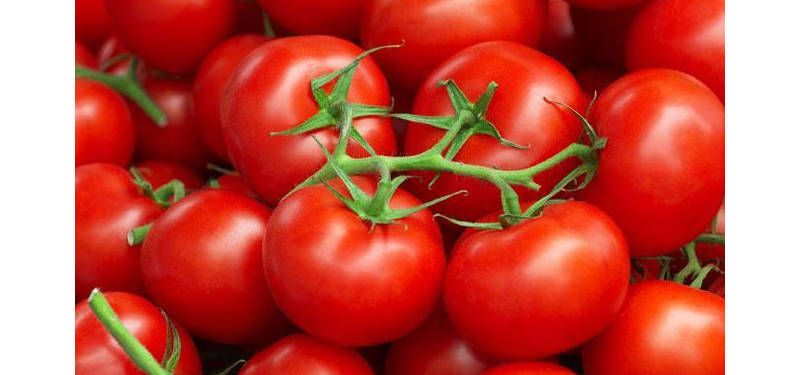
How to grow tomatoes
After numerous requests from customers who asked: how is the tomato grown? We have decided to offer this guide to tomato cultivation, from transplanting to ripening.
Phase 1 - Transplantation
At this stage, attention must be paid to pathologies that can attack the root system and the collar. It is also necessary to ensure that the plant forms a healthy and well-structured root.
To achieve this goal, we recommend the following fertigation interventions (doses per hectare):
After 5 days, intervene with:
-
VIVA Valagro 15-20 liters
-
MICOSAT F MOWP 5 kg
After 7/10 days, intervene with:
-
FURIA10 kg
-
HAIFA MAP N/P 12/61 50 kg
-
FERRUMXQ 3 kg
Now let's analyze one by one the products we have mentioned and their function:
BLACKJAK : HUMIC AND FULVIC ACIDS suitable for this phase as they are of high quality and easily assimilated.
ALIETTE : FOSETIL-AL fungicide, or rather more correct to say inducer of resistance to phytoflora, rot in the collar and other various telluric diseases.
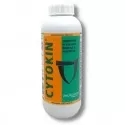
CYTOKIN: ORGANIC SUBSTANCE that induces the production of cytokinins. Cytokines stimulate rooting and slow down the vegetative apex by injuring the lateral buds (root hairs, flower antlers).
VIVA: HIGH QUALITY ORGANIC SUBSTANCE that does not tend to make the plant grow only in height but to make it develop uniformly in all vegetative parts.
FURIA : organic organic from algae with the presence of plant growth regulators of natural origin. It has great power in inducing flowering.
MICOSAT MO : pool of mycorrhiza, trichoderma, bacillus and other symbiotic fungi, which will protect and help expand our roots.
HAIFA MAP N/P 12/61 : mineral fertilizer that gives little vegetative thrust but which greatly favors rooting.
IRON and MICRO: they have the function of improving photosynthesis, fruit set and all the activities that the plant performs.
Would you like to receive our advice? Subscribe to our Newsletter - 8% discount now for you
|
Phase 2 - Growth phase
As you can see from the rooting phase, we try to keep the plant with low vigor, because especially on indeterminate tomatoes it is important to maintain a short internode. This will ensure us greater production and fewer problems with pathologies. In fact, fungi such as powdery mildew and insects such as aphid and whitefly prefer plants with a lot of vigor. So even during the growth phase we must always aim for a short internode, so we can intervene in fertigation with the following treatments (doses per hectare):
-
CALCIUM NITRATE 25 kg
-
PEKACID 25 kg
After a week and alternating treatments:
-
CALCIUM NITRATE 25 kg
-
MAGPHOS 25 kg
Every now and then between one and the other it would be good to retort:
-
FURIA 5kg
-
FERRUM XQ 1 kg
-
HAIFA Micro COMB FULL 1 kg
Phase 3 - Fruit set
Already keeping the plant compact good results are obtained, in addition, the use of pollinating insects and propolis is very important.
A foliar mixture (doses per quintal of water) that always gives us excellent results is:
-
GLIBOR CA 250 ml +
-
ALIKA 250 ml +
-
DUNG GLOBAL SPRAY 100 ml
Stage 4 - Ripening and harvesting
At this stage, the things you need to pay attention to are the "cracking", the color and flavor of the fruits.
For cracking: you need to irrigate as frequently as possible.
-
In sandy soils, every day.
-
In clayey soils, every other day, depending also on the climatic conditions.
Just think that in sandy soils in early summer we do up to two irrigations a day.
A foliar treatment that certainly helps us is:
-
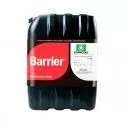
BARRIER 150 ml x qle (calcium silicate that fortifies cell walls)
-
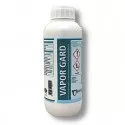
VAPOR GARD 400 ml x qle (pine resin that creates an antiperspirant membrane that limits thermal stress).
To be repeated every 7 days.
For color and flavor: we know how important it is to increase the conductivity of our fertigation, in fact we recommend:
-
Foliar: K-BOMBER 56 300 g+ SUNRED 300 ml (per 100 litres of water)
-
QUICK-Mg 100 kg per hectare (potassium chloride + Mg), will give us color, flavor and crunchiness
-
CALCIUM NITRATE 25 kg per hectare
Blotchy ripening on tomato
"Blotchy ripening" on tomatoes is a physiopathy, i.e. a lack of particular nutrients useful and necessary in the ripening period of the tomato. There is no literature on the subject, there are currents of thought that attribute the problem to any excess of nitrogen and in any case of luxuriance. This should therefore be read as an imbalance and therefore the hypothesis of nutrient deficiencies is strengthened even more.
The soil must have an adequate acidity that allows a balanced absorption of all the elements, between pH 6 and pH 7. Calcium and boron must be provided before and during flowering together with all the microelements.
The absorption of calcium through the roots can be conditioned by various factors related to the endowment of the soil; it is advisable to carry out foliar treatments with chelated calcium and boron. A bottom fertilizer rich in phosphorus and nitrogen and a subsequent constant NPK nutrition from the beginning of flowering onwards is important, Multitec 7-15-35 is a water-soluble fertilizer that has the right ratio between macroelements and an adequate acidity that allows absorption.
Cracking or splitting tomatoes
Tomato splitting can be attributed to an inadequate supply of calcium and boron. These elements must be administered from the beginning of flowering onwards. It is also necessary to ensure that the plant does not suffer stress from water discontinuity and inconstant vegetation.
Share this content


















 Chronology
 Citrus fruits
 Turf
 Stone fruit
 Olive tree
 Ornamental
 Vegetables
 Actinidia (Kiwi)
 Screw
 Hobbies and insights
 Pome Fruit


