
Your cart
There are no more items in your cart
Nitrogen fertilizer directly from the air with Bluen Corteva
Categories :
, Chronology
, Hobbies and insights
Index
Introduction to Nitrogen in the Atmosphere
The biostimulant BlueN: a revolution for agriculture
Advantages of using BlueN over chemical fertilizers
The importance of nitrogen for plants
The sustainable future of agriculture
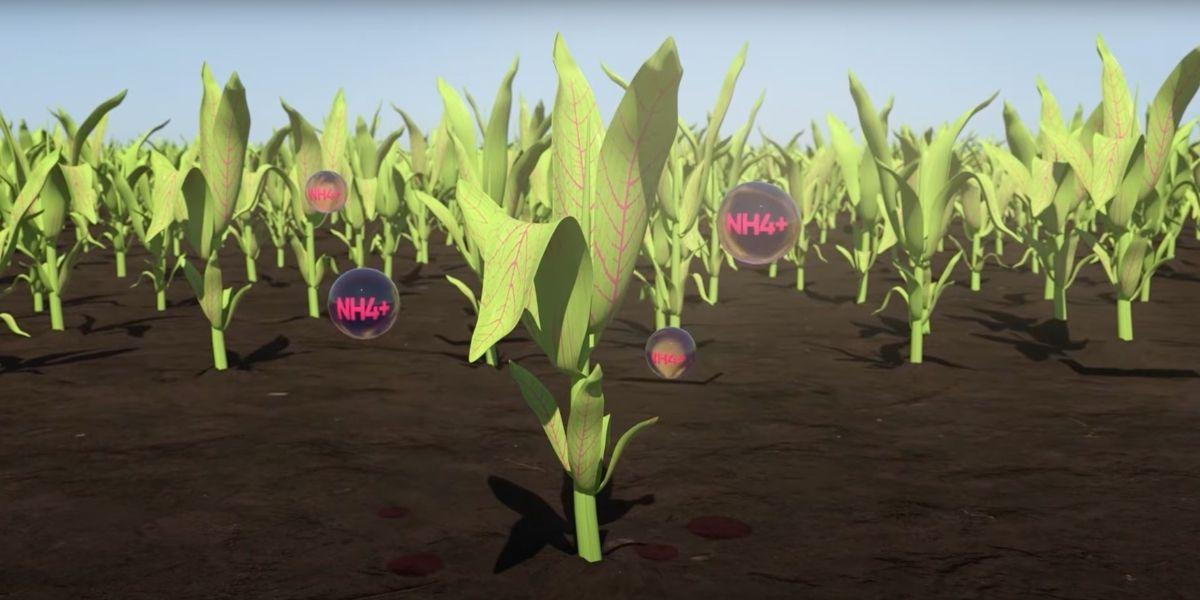
Introduction to Nitrogen in the Atmosphere
We live immersed in a gaseous ether and the air we breathe is nothing more than a set of chemical elements: Oxygen for 21%, Argon 1% and Nitrogen for 78% as well as water vapor.
We are therefore immersed in an infinite mine of nitrogen from which the chemical industry draws to manufacture nitrogen fertilizers. But why not shorten the supply chain by giving plants help so that the supply of atmospheric nitrogen is increased to the point that they no longer need chemical nitrogen fertilizers? Among other things, pollutants and impacting the aquatic environment and the rhizosphere.
All this is possible today.
The biostimulant BlueN: a revolution for agriculture
Scientific research in agriculture and technological progress have made it possible to produce a biostimulant composed of Methylobacterium symbioticum SB23. A nitrogen-fixing endophytic bacterium capable of spreading within the plant tissues of plants, fixing and metabolizing atmospheric nitrogen and processing it in a form that can be readily used by the plant organs responsible for the absorption and processing of this indispensable element that is always useful for plant life.

The real innovation behind the birth of BlueN, by Corteva, lies in the use of nature for nature.
Would you like to receive our advice? Subscribe to our Newsletter - 8% discount now for you
|
|
Advantages of using BlueN over chemical fertilizers
It is estimated that, in a wheat field, with a foliar intervention of 333 gr/ha of BlueN, plants are able to synthesize and use up to 40 kg of nitrogen readily usable by the plant.
If we consider that generally on one hectare of wheat during spring nitration, 50 to 75 kg of nitrogen is distributed, and that more than 50% is not used by the plant due to the effect of leaching, leaching, evaporation, attack by bacteria, and if we consider the cost of the unit of nitrogen on the market today, it is easy to calculate and understand the great economic as well as agronomic and environmental convenience deriving from the use of BlueN instead of nitrogen chemical fertilizers.
The importance of nitrogen for plants
Nitrogen is the most important and indispensable element. It enters the production of proteins with a 16% share, in the production of chlorophyll, amino acids and nucleic acids. Nitrogen deficiency becomes apparent very quickly, especially with the reduction of development and with the reduction of the production of chlorophyll, of which it is a primary element. This is evidenced by the loss of color of the leaves, especially young leaves.
The sustainable future of agriculture
In addition to these manifestations, a more or less small size of the plant, a reduction in longitudinal growth of the shoots and the diametrical development of the stems are very evident. Repercussions also on the production of flowers and their fruiting, as there is a lower predisposition to flower and a lower fertility of the flowers themselves. The leaves, as a result of the reduction of chlorophyll and chloroplasts, take on a pale green color and then, as the nitrogen deficiency continues, yellow and finally whitish.
Share this content



 Chronology
 Citrus fruits
 Turf
 Stone fruit
 Olive tree
 Ornamental
 Vegetables
 Actinidia (Kiwi)
 Screw
 Hobbies and insights
 Pome Fruit


