
Your cart
There are no more items in your cart
Fertilization and Peach Treatments Calendar
Categories :
Chronology
, Stone fruit
Index
Late March-April : pink buttons
When fruit set and scamming is complete
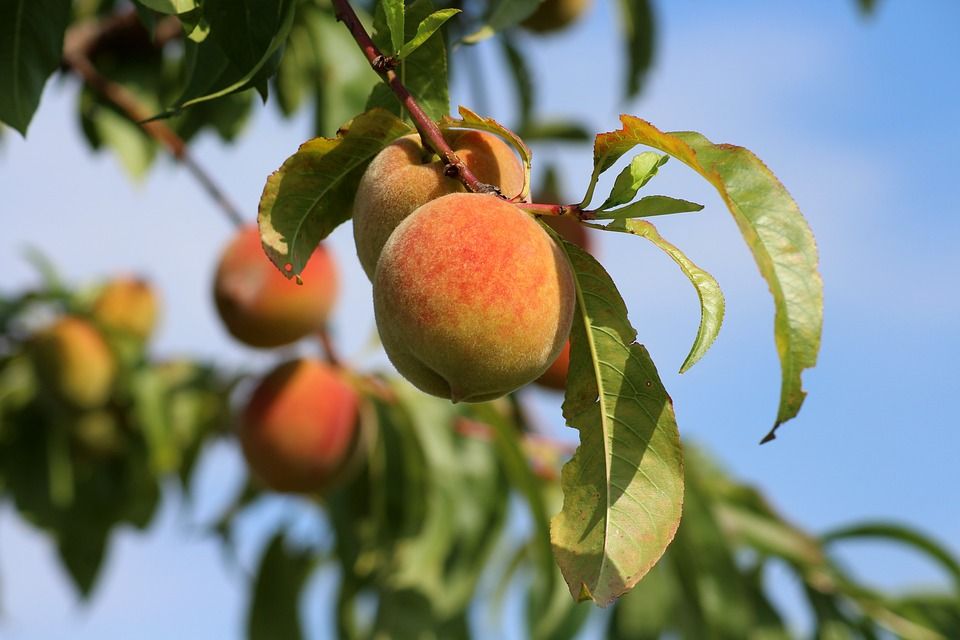
Completepeach tree treatment calendar
1. July - August
After harvesting, nutritional reserves should be supplemented and bud differentiation promoted; treatment with trace elements and nitrogen is useful, as well as coryneal defense action
2. September
Fruit bud nutrition, prevention from bacterial diseases, virosis, fungi (dose per 100 liters of water):
Would you like to receive our advice? Sign up for our newsletter - 8% discount right away for you
|
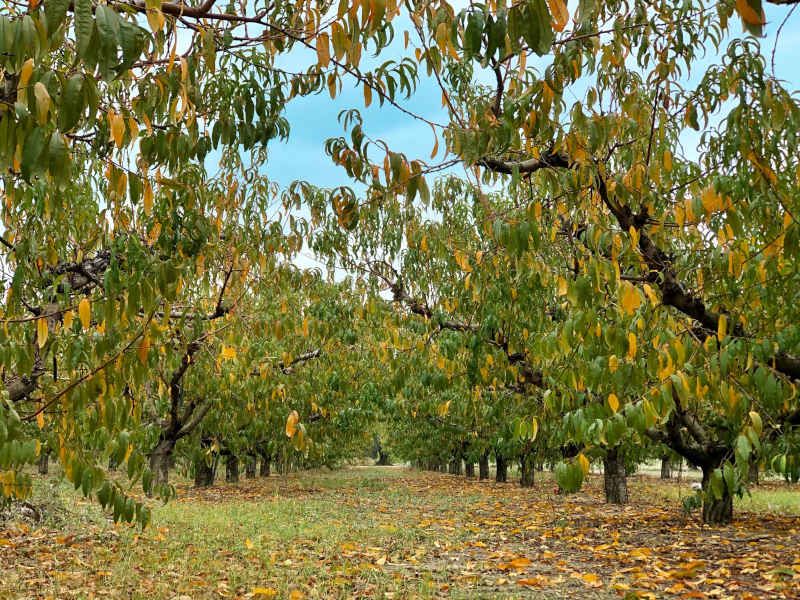
3. September - October
Fertilizing peach trees to replenish nitrogen and phosphorus reserves.
The lower dose is intended for localized sub-hiome distribution.
4. November - December
Brushings to logs with:
This practice is very useful in curing any gummosis emissions. If this problem, however, is not evident, it will be useful to move this practice to late January-February and will serve to prevent fungus and bacteria from rising from the soil along the trunks.
Vegetative Rest, against peach tree moniliasis, peach blister, coryneus (dose per 100 liters of water)
6. January - February
Background fertilization (dose per hectare):
The lower dose is intended for localized sub-hiome distributions.
7. February 1st decade
Against overwintering eggs of aphids, mealybugs, mites (dose per 100 liters of water)
Oliocin Plus, a new, highly penetrating and coating formulation, acts by asphyxiation and physical action on the scudetto or chitin of insects and the overwintering eggs with which it comes in contact. Therefore, total wetting and uniform coverage of the entire plant is necessary to have a safe and effective result. Employ 2000 liters of water per hectare with cross treatment
8. March swollen bud
Against blister, coryneous and nutrition (dose per 100 liters of water)
This intervention will provide the plant , in addition to defense, with a ready dose of nitrogen , phosphorus and boron; very important elements in the formation phase of the reproductive organs that will promote a fast and full fruit set to the advantage of vigor and size of the small fruits, as well as magnesium and potassium essential for photosynthesis and synthesis of sugars necessary for the development of leaves and fruit.
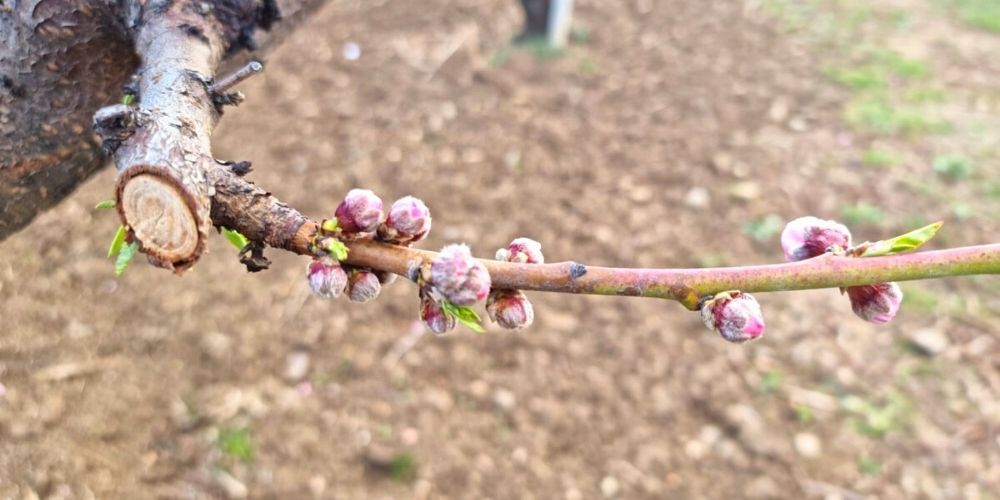
9. Late March - April: pink buttons
Against blister and coryneus, nourish flowering buds and enhance fruit set.
One or two treatments with:
N.B.: It may seem exaggerated to make several treatments of foliar fertilizers in such a short period of time; but this makes sense: by nourishing the buds first and the flowers later, a strong impetus is given to the organs of production that privileges and favors the upper hand of the fruits over the vegetation of leaves and twigs, and thus, much of the plant's energy will be reserved for the best growth and quality of the fruits, thus avoiding vegetative luxuriance that forces drastic green pruning.
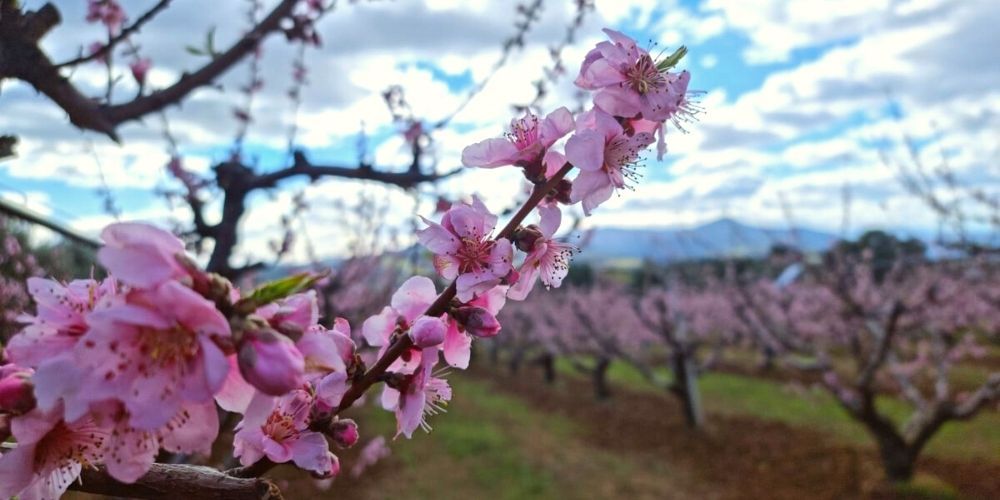
10. Flowering and fruit set
Against blister and coryneal, and nutrition
In addition to NPK macro-nutrients, calcium is also important at this time because it needs to be absorbed by the plant and made available to support the strong and rapid growth of the fruitlets resulting in differentiation and natural dropping of the weaker ones.
11. When fruit set and scamming is complete
For fruit swelling, make two or three treatments 7-10 days apart with
12. Fruit swelling phase
Care must be taken to ensure that there are no mealybug or aphid attacks, which may not appear if a good treatment has been done, as recommended, in the second decade of February. However, in case of appearance
- against mealybugs and aphids (dose per 100 liters of water)
- Thrips: intervene with (*)
13. Enlarged fruit - veraison
To prevent Monilia fructigena, powdery mildew.
Latest treatments against monilia and to promote shelf life (*)
(*) It is advisable to acidify the solution beforehand with Control DMP, and add a good Inex-A primer and dispersant. They are not allowed in organic, in which case you can acidify with Citric Acid, and as an adhesive Max 85 Soybean Oil.
This program is designed to make broad suggestions; however, the timing is related to the phenological phase, which almost never follows the time schedule.
Keep in mind that we cannot predict all the variables in the field. Any diseases or nutritional corrections resulting from the nature of the soil and its infinite diversity cannot be predicted.
In any case, we make ourselves available to view any soil, leaf, and irrigation water analyses.
Share this content


 Chronology
 Citrus fruits
 Turf
 Stone fruit
 Olive tree
 Ornamental
 Vegetables
 Actinidia (Kiwi)
 Screw
 Hobbies and insights
 Pome Fruit


