
Your cart
There are no more items in your cart
Peach Bubble Remedies and Treatments
Categories :
Chronology
, Stone fruit
Index
Peach bubble treatments: conventional management
What to do for the peach bubble in organic farming
The peach bubble: how to cure it
Of all the existing peach diseases, the peach bubble is among the most widespread. It is a very aggressive fungus which, in addition to creating serious problems for production, can irreversibly damage the life of peach plants, but also almond and cherry trees.
The causes are due to the classic climatic conditions typical of the winter season, such as cold, rain and humidity.
The fungus responsible (Taphrina deformans) mainly attacks the green organs of the plant, such as leaves and shoots, especially on more sensitive varieties such as nectarines. In rather rainy and humid years, damage can also be found on flowers and fruits.
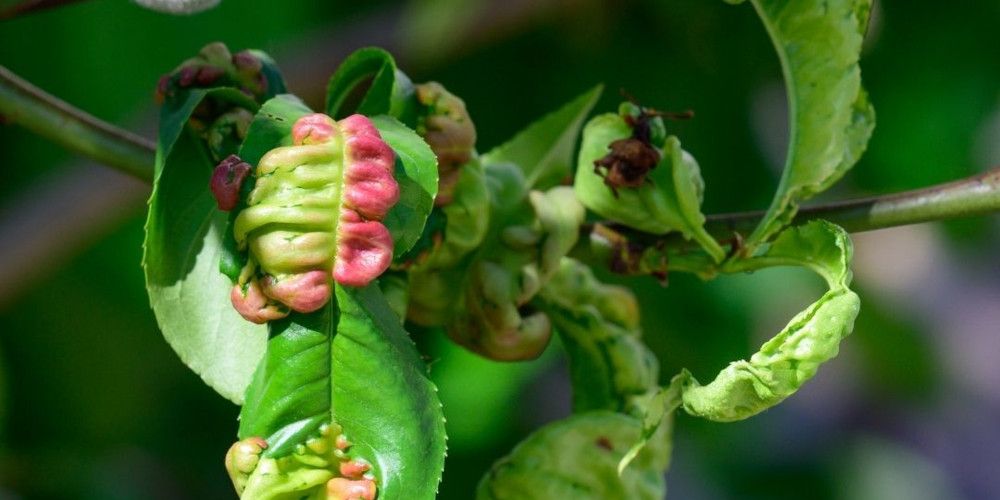
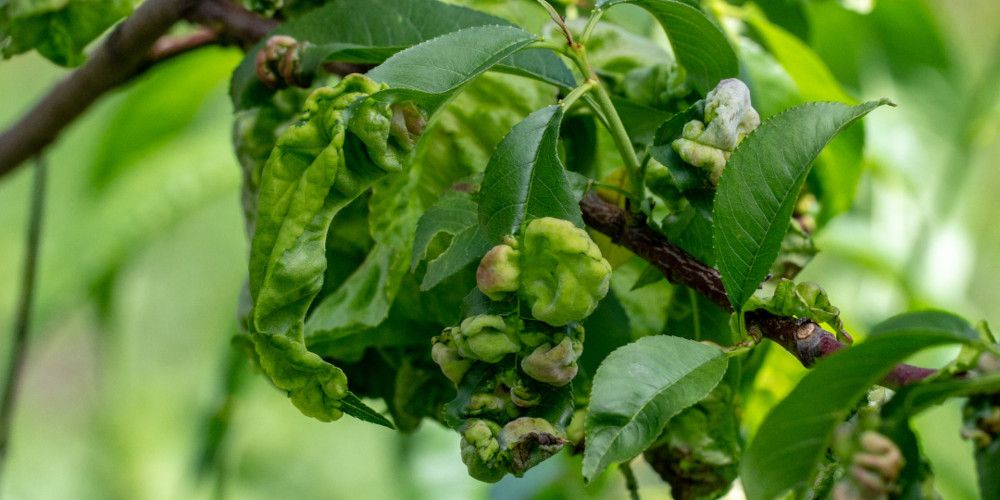
The symptoms are obvious: the leaves deform and take on a blistering appearance (hence the name), a red or dark green color. The affected shoots become a confused mass of deformed leaflets resulting in the death of the bud itself.
The affected leaves will no longer perform their function of chlorophyll synthesis and will dry out prematurely until they fall. The plant will have a bare appearance and the enlargement of the fruits will slow down or stop. The consequences will also be felt in the following campaign due to the weakness of the plant which will not have metabolized sugars, will not have created reserves and will not have sufficient darts and toasts useful for production.
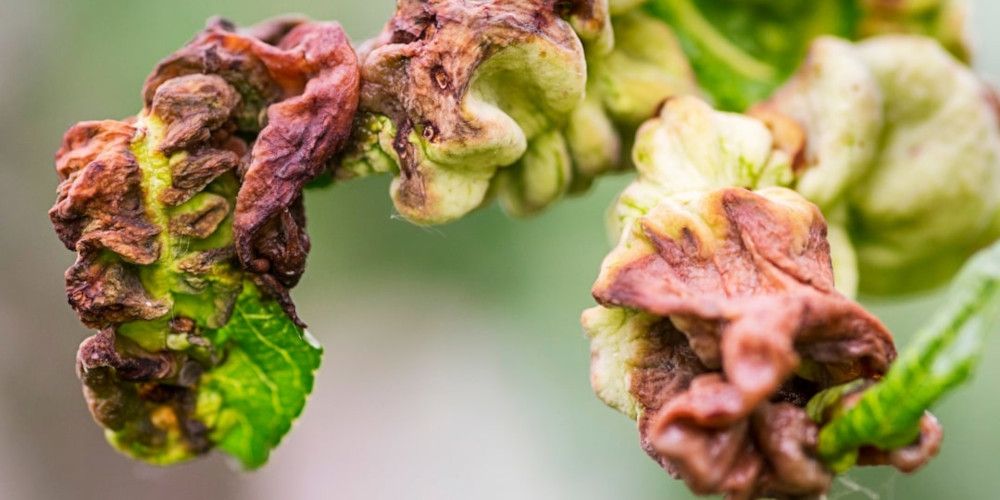
The attacks can occur both very early, on the young leaves, and later, when there are conditions of humidity and rainfall favorable to the development of the fungus.
Many users interested in the topic often search search for "peach bubble curative treatments" on search engines. In reality, once the attack has started, it will be very difficult and expensive to block it. The damage cannot be restored so the only real fight remains prevention.
We recommend targeted treatments in the winter, straddling the opening of the buds and in the spring until temperatures rise above 18 degrees centigrade, as the vital processes of the mushroom will be interrupted with the increase in temperatures.
Peach bubble: when to treat
The treatments must be carried out according to a calendar capable of hitting the most favorable moments for the development of the parasite. We will proceed to provide you with two treatment calendars, depending on whether you prefer to proceed with:
- Conventional management
- Organic management
Peach bubble treatments: conventional management
In a conventional management against the peach bubble there are several solutions for defense. Preventive control must be carried out in the winter period until the buds break, with treatments formulated with copper salts or Ziram-based products. Subsequently, with the increase in temperatures, therefore in the vegetative recovery phase, we will use products based on Captan, Dodina and Difenoconazole.
LEAF FALL
At least 1000 liters of solution per hectare must be distributed with:
- Cobre Nordox: 200 gr /100 lt
- Layer : 200 ml / 100 lt
The treatment against the peach blister will have a multiple function. In addition to the wintering spores of Bolla, it will also act on Corineus, Moniliosis.
JANUARY: BROWN TREATMENTS
- Cobre Nordox: 150 gr
- Triscabol: 500 gr
- Layer: 200 ml
FEBRUARY: FIRST DECADE
- Polithiol: 5 lt/hl (1500-2000 lt of solution per hectare)
We recommend abundant wetting and compliance with these doses, to be distributed with two cross-treatments or in an inverted direction, so as to obtain a radical action against Aphids, Mealybugs, Mites and overwintering spores of fungi.
GEM OPENING
It is advisable to repeat this intervention after 7 days, also based on the climatic conditions.
This intervention will also have a defensive action against other pathologies such as Monilia and copper cancers and with the support of the Barrier we will thicken the cell walls as well as provide decisive calcium in this phenological phase.
TO BUD BREAKAGE (2 INTERVENTIONS UP TO AND NO LATER THAN FLOWERING
FROM FALLING PETALS:
This intervention will have a decisive action against both the peach bubble and the corineo .
We recommend repeating after 10-15 days in case of adverse weather conditions and favorable to the proliferation of both the bubble, of which further late attacks are possible, and against the corineo.
The most favorable phenological conditions or phases can be summarized in:
- Breaking of gems,
- Temperatures above 6 degrees,
- Rains that keep the plant wet for a minimum of 6 hours.
If the proposed calendar is applied in a timely and diligent manner, our cultivation of peaches (almond, cherry, plum) will be free from attacks of fungal diseases: bulla, corineo, monilia, and from many animal parasites that are very dangerous and harmful to stone fruits; and, not least, we will have kept the consumption of copper metal allowed by the PAN per hectare and per year well below the limit.
Would you like to receive our advice? Subscribe to our Newsletter - 8% discount now for you
|
What to do for the peach bubble in organic farming
The organic management against the peach bubble has greater difficulties as it is known that the means at our disposal are limited. With good prevention, however, and by setting the treatments at the right time, without leaving the plant uncovered from possible attacks, it is certainly possible to achieve this.
We remind you that this is a technical tip for professional management, therefore for obtaining the maximum result in qualitative and quantitative terms. If we were to turn to hobbyists, who care first and foremost about the healthiness of the product, surely many of these interventions could be eliminated.
After harvest, we recommend a treatment to be repeated a couple of times to speed up leaf fall and strengthen the plant from pathogenic attacks:
- Kendal Tea 200ml/qle
LEAF FALL (distribute at least 1000lt of solution per hectare)
- Cobre Nordox 200 gr/qle
- Soybean Oil Max 85 200 ml/qle
The treatment will have a multiple function: Against the overwintering spores of Bulla, Corineum, Moniliosis.
JANUARY: BROWN TREATMENTS (1000 liters of solution)
- Cobre Nordox 200 gr/qle
- Soybean oil Max 85 200 ml/qle
FEBRUARY: FIRST DECADE
- Polithiol 5 lt/hl (1500-2000 lt of solution per hectare)
Respecting these doses to be distributed with two cross-over treatments or in an inverted direction, a radical action against Aphids, Mealybugs, Mites and overwintering spores of fungi will be obtained.
A SWOLLEN GEM:
- Welgro Cu/Zn 200 gr/qle
- Nu-Film 200 ml/qle
BREAK-GEM-PINK BUTTONS:
- Welgro Cu+Zn 150 gr/qle
- Serenade Aso 500 cc /qle
- Nu-Film 100 ml /qle
FALLING PETALS:
- Calcium polysulphide (Dose per hectare: 16-39 kg/ha - Dose per hectolitre: 2-5 kg/hl)
Carry out treatments through spring-summer uses. For spring treatments (pre-floral), from bud enlargement to flower buttons, use the product at a dose of 5 kg/hl (39 kg/ha). Instead, for post-floral treatments, use the preparation at a dosage of 2-3 kg/hl (24 kg/ha). Finally, for treatments subsequent to those indicated above, use a dose of 2 kg/hl (16 kg/ha). Do not administer the fungicide at temperatures above 30 °C. Risks of harmfulness: the product, if used correctly, is not harmful to beneficial insects, pets and livestock.
after 7 days depending on weather conditions
- Welgro Cu+Zn 100 gr/qle
- Serenade Aso 500 ml/qle
- Nu-Film 100 ml/qle
Then adjust to the climatic trend to assess whether to continue by repeating and alternating with the last two treatments.
Another product that can be used in the strategy against the peach bubble is potassium bicarbonate
Everything is proposed by our technicians in absolute good faith and is not absolute. In agriculture there are many variables and therefore it is always necessary to monitor the progress of the crop and watch for the onset of problems in order to adopt the appropriate measures.
Copper can be reduced by 30% of the dose on the label, mixing it with Propolis, a corroborating element that stimulates the natural defenses of the peach tree against the blister disease.
As a heavy metal, it must be limited, since it accumulates in the soil and blocks the activity of microorganisms used to transform organic matter into humus.
Share this content


 Chronology
 Citrus fruits
 Turf
 Stone fruit
 Olive tree
 Ornamental
 Vegetables
 Actinidia (Kiwi)
 Screw
 Hobbies and insights
 Pome Fruit


