
Your cart
There are no more items in your cart
Kiwi treatments: Guide to growing kiwi (actinidia)
Categories :
Actinidia (Kiwi)
, Chronology
Calendar of fertilization and treatments of actinidia (kiwi) in conventional and organic
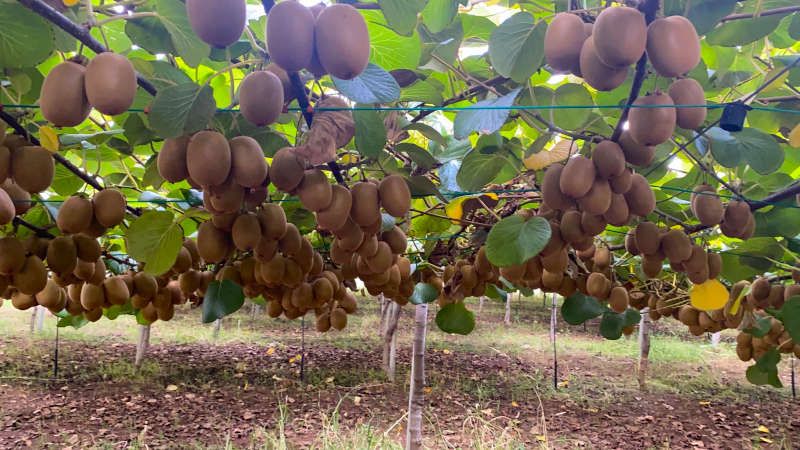
Kiwifruit fertilization and cultivation program
INDEX - Kiwi fertilization plan
Although there are different varieties of actinidia: green pulp (Actinidia deliciosa), yellow pulp (Actinidia chinensis) and red pulp (Actinidia arguta), the cultivation technique is the same.
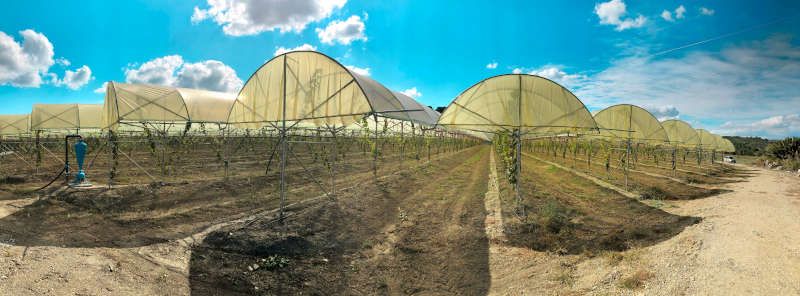
Actinidia or kiwi is a species sensitive to water stagnation and root rot (Phytophtora spp, Rhizoctonia solani, Armillaria mellea) and therefore prefers permeable and draining soils. A good agronomic practice is to plant on beds that allow you to avoid stagnation at the foot of the plants, but when this is not possible, or in any case the plant is already existing, it is necessary to manage the soil in order to avoid, as mentioned, stagnation of water. For this purpose, it is very useful to rip between the rows, in the center at about one and a half meters (approximately) from the plants and in the direction of the possible slope of the field, to facilitate the drainage of excess water, eliminate soil compaction and, at the same time, promote soil oxygenation. Back to index.
Irrigation in kiwi cultivation is a fundamental practice for this crop: without a constant availability of water in the period of late spring, summer and part of autumn, kiwi would not survive. By its nature, the kiwi needs constant and surface moisture since its roots mainly explore the surface part of the soil, the first 25-30 cm, which is the part of the soil that dries very quickly both by wind and gravity. It is therefore necessary to carefully monitor this layer and provide timely relief to avoid stress that causes interruption of fruit growth, necrosis at the edges of the leaves, likelihood of rapid aggression by bacteria, as well as the manifestation of gummosis. An irrigation system is needed that allows the maximum possible area to be watered and create the maximum space for exploration (and therefore occupation) by the roots. You need the right and constant humidity which must be greater than the field capacity. All this is possible with adequate irrigation systems that allow a wide and light sprinkling that allows the water to penetrate and not runoff, considering that it is probably necessary to wet the baulated soil. Useful for achieving the best result is constant monitoring of humidity with the use of tensiometers, or humidity sensors that must be placed at variable depths, 20 cm and 30 cm, irrigate when the humidity reported by the probe at 20 cm is approaching the field capacity, while the probe at 30 cm must always be beyond the field capacity. |
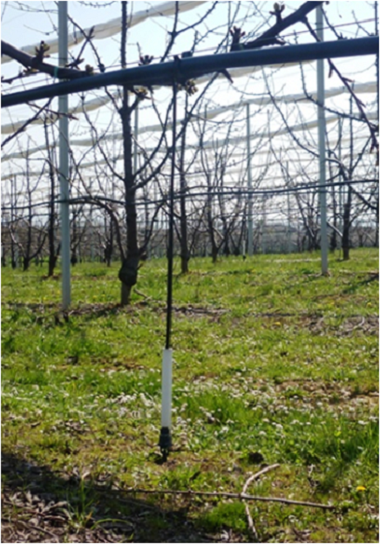
The choice of the depth at which to place the probes depends on the conduction. If it is tilled soil, it is clear that the roots live in a lower layer and therefore a deeper layer, between 30 and 50 cm, must be monitored. How much water to give, on the other hand, depends a lot on the structure of the soil, which allows a greater or lesser lowering of the water towards the lower layers. Consider that to water dry soil up to 10 cm deep, about 20-25 liters of water per square meter are needed, which corresponds to 200-250 cubic meters per hectare. Obviously, the field cannot and must not be totally dry, so the quantity needed is much less, no more than 100 cubic meters that can be divided into 2 interventions of 50 cubic meters every 2 days, as long as they are sufficient not to lower the first probe to the field capacity.
Moisture sensors are instruments that allow you to quickly and accurately measure the force with which water is retained in the soil (field capacity). Connected to a SIM , they allow an alarm signal in the event that the humidity falls below the field capacity, a threshold below which the plant would not be able to absorb water and provide timely irrigation. Back to index.
Would you like to receive our advice? Subscribe to our Newsletter - 8% discount now for you
|
Kiwi post-harvest
Immediately after harvesting it is very useful to intervene both by foliar application and by fertigation in this way: foliar intervention to recharge the plant, through the leaves that are still vital, with important elements to better carry out flowering in the following year.
| Conventional agriculture | Organic farming |
|
Nutri-bud = 250 ml/hl Coptrel = 50 ml/hl Last-N = 300 ml/hl |
Nutrigemma = 250 ml/hl Kendal TE = 200 ml/hl Organor N 12 = 300 ml/hl |
This is a very special phase for the plant. The detachment of the leaf leaves an open wound from which bacteria and fungi enter, so it is necessary to intervene to hinder the transit of these parasites, in particular bacteriosis. A copper-based treatment will suffice:
| Conventional agriculture | Organic farming |
|
Welgro Cu+Zn = 250 gr/hl Layer = 200 ml/hl |
Welgro Cu+Zn = 250 gr/hl Nu Film P = 200 ml/hl |
Taking care to wet all parts of the plant well. Return to the index finger.
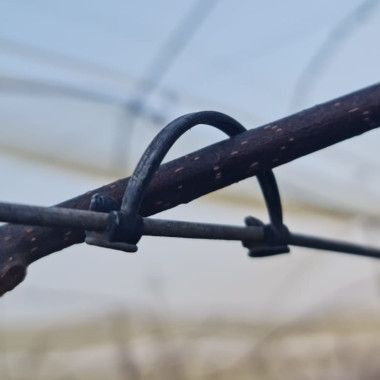
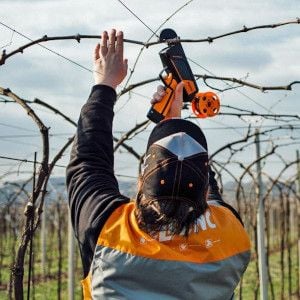
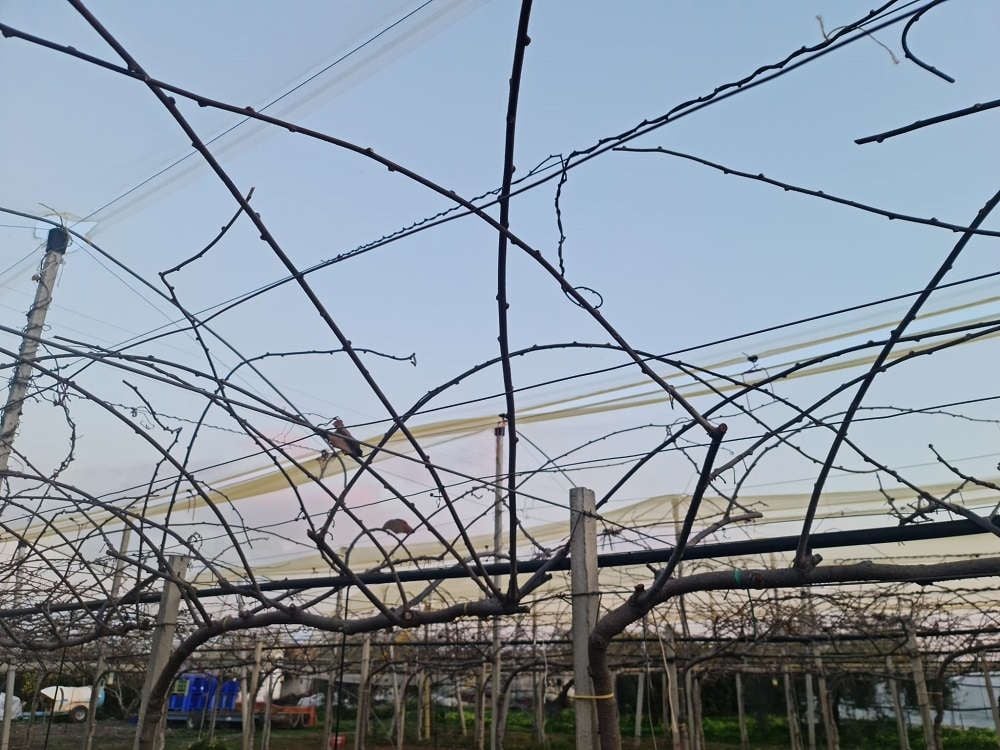
At this stage, you may need plastic hooks to tie the shoots or an automatic battery-powered tying machine.
| Conventional agriculture | Organic farming |
|
Welgro Cu+Zn = 250 gr/hl Layer at 200 = ml/hl |
Welgro Cu+Zn = 250 gr/hl + Nu Film P = 200 ml/hl |
Autumn kiwi nutrition and fertilization
Autumn: October-November :
| Conventional agriculture | Organic farming |
|
Prodigy Plus = 4-6 ql/ha Superseeding 18-20-0 = 4- 6 qL/ha |
Prodigy plus = 4-6 quintals/ha Orga-kem 10-5-5 = 8-10 ql/ha |
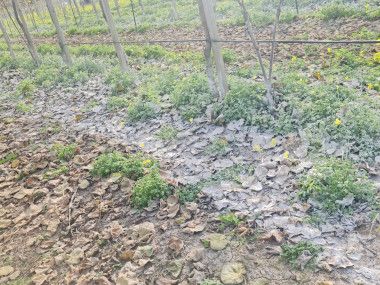
Agricultural Chalk on kiwi - JanuaryThe practice of administering agricultural gypsum in the period of mid-January has many advantages: The most important is certainly the calcium reserve that we are going to provide on the ground. Among the different characteristics that agricultural gypsum contains there are also:
|
February
| Conventional agriculture | Organic farming |
|
Agromaster 12-12-22 +Ca+Mg = 6-8 ql/ha |
Orgakem 6-11-8 + Ca = 5 quintals/ha Orgakem 10-5-5 = 5 ql/ha Polysulphate K+Ca+Mg+S = 6 ql/ha |
They are organic and mineral fertilizers, which should be buried with a light milling. It may seem that you have loaded too much fertilizer during this period and some may object that it is very early. But let's start from the awareness that of course plants mainly spend their reserves to carry out all vital and productive processes and that a good start is a guarantee of satisfactory results.
During what is called vegetative rest, then, the plant does not rest at all. Instead, it continues to absorb nutrients as long as the average soil temperature is above 6-7 degrees Celsius and stores nutrients that it will use in the spring vegetative explosion. For this reason, we believe it is advisable to start fertilizing as early as October. Back to index.
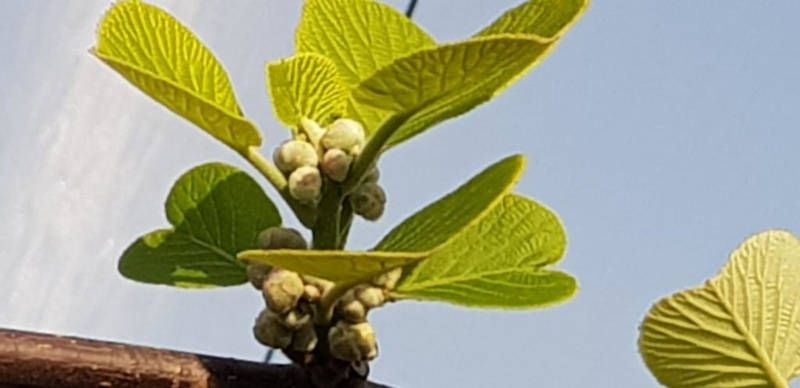
Vegetative awakening - Kiwi spring cunning
About 15-20 days before the swelling of the buds, a treatment with :
| Conventional agriculture | Organic farming |
|
Vitaseve = 500 ml/hl Welgro Complex = 200 gr/hl Kendal TE = 200 ml/hl Phylen = 500 ml/hl |
Organor N 12 = 300 ml/hl Mobo = 300 gr/hl Kendal TE = 200 ml/hl |
Surgery to be repeated with swollen bud by adding:
| Conventional agriculture | Organic farming |
|
Barrier = 200 ml/hl |
Barrier = 200 ml/hl |
It is advisable in this phase to stimulate the rhizosphere, correct limescale, oxygenate and contain viruses and bacteria that with the increase in temperatures will rise along the trunks to the aerial parts, in fertigation:
| Conventional agriculture | Organic farming |
|
Pekacid = 25-50 kg/ha Calmag = 50 kg/ha |
Biozon Professional = 15-20 lt/ha Use about 30 cubic meters of water. |
With shoots 5-10 cm long, to promote flowering and fruit set and prevent bacteriosis:
| Conventional agriculture | Organic farming |
|
Organor = 300 ml/hl Welgro Complex = 200 gr/hl Barrier = 200 ml/hl Surgery to be repeated after about 7-10 days |
Organor = 300ml/hl Mobo = 300 gr/hl Barrier = 200 ml/hl Surgery to be repeated after about 7-10 days |
After producing a good flowering, a good and uniform fruit set is important and, with the help of bees or bumblebees, there will certainly also be a uniformity of fruit size.
The flowering period varies from variety to variety: The red kiwi is the first to bloom, 1st decade of April.
The yellow kiwi blooms between the 1st and 2nd decade of April.
The green kiwi blooms during the 1st decade of May.
At the beginning of flowering, a foliar intervention with
| Conventional agriculture | Organic farming |
|
Pronu Sprint Bio = 200-300 ml/hl |
Pronu Sprint Bio = 200-300 ml/hl |
which stimulates the activity of bees and bumblebees bombus terrestris, which it will be advisable to place in number of 4 Triple stations.
Remember that flowering and fruit set are the periods of maximum effort for the plant, so it will be more subject to attacks by abiotic agents and it will be necessary to feed to ensure good flowering, uniform fruit set and to lay the foundations for a satisfactory production.
From the beginning of flowering onwards a couple of interventions:
| Conventional agriculture | Organic farming |
|
Triplex 19-19-19 = 250 gr/hl Phosphacel = 200 gr/hl Redcal = 200 ml/hl Trazex = 100 gr/hl |
MC Extra = 100 gr/hl Kriss bio = 200 ml/hl Trazex = 100 gr/hl Barrier = 200 ml/hl |
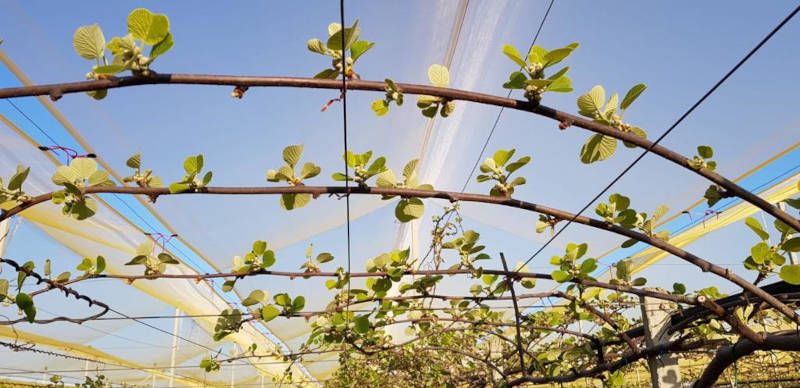
kiwi Fruit enlargement
Immediately after flowering, in order to have swelling and uniformity of the fruits, it will be advisable to carry out two or three treatments at a distance of 7-10 days with
| Conventional agriculture | Organic farming |
|
Maxi grow = 100 cc/hl Triplex = 19-19-19 250 gr/hl Phosphacel = 200 gr/hl |
Maxi grow = 100 cc/hl Mc Extra = 100 gr/hl Barrier = 150 cc/hl |
In the meantime, support fertigation can be carried out, always with the intention of stimulating maximum vigor for the plant, swelling, dry matter and sugar content for the fruits:
| Conventional agriculture | Organic farming |
|
Betabio Active = 25 kg/ha PG1 Fluid = 25 kg/ha Micosat F MO = 10 kg/ha |
Betabio Activ = 25 kg/ha PG1 Fluid = 25 kg/ha Micosat F MO = 10 kg/ha |
After one or two weeks, follow a subsequent fertigation with
| Conventional agriculture | Organic farming |
|
Agrolution 15-13-25 = 25-50 kg/ha Oxyclean = 20 lt/ha |
PG1 Fluid = 25-50 kg/ha HAIFA SOP Bio Potassium sulphate = 25-50 kg/ha (also and preferably in two 25+25 solutions spaced about a week apart) |
All of the above recommended is valid as a general line and should be sufficient for a good agronomic result (except in cases of soils or particular climatic situations to be evaluated on a case-by-case basis). In addition, as mentioned above, in the event of climatic events such as hail, strong winds, or agronomic operations such as green pruning, it is necessary to act against bacteriosis:
| Conventional agriculture | Organic farming |
|
Silver = 200 cc/hl Vitaseve = 500 cc/hl |
Kendal TE = 200 ml/hl Serenade Aso = 500ml/hl |
Phytosanitary defense - Kiwi treatments
The pathologies that affect kiwi are relatively few: Bacteriosis, Kiwi dieback, White cochineal.
Kiwi die-off: it is called the "kiwi die-off phenomenon" because the possible pathogen has not been identified. There are several "theories" that want to explain the cause of the "Kiwi die-off". We also allow ourselves one of our own, which is solely of an agronomic nature:
- The constant and sufficient availability of water in the soil explored by the roots,
- the richness of roots and capillaries,
- the richness of nutrients and their availability,
- soil oxygenation ,
- the balance between the aerial part and the root system,
- the richness in humus of the soil.
These are all factors that affect the well-being of plants. Their insufficiency creates weakness in the plant and therefore sensitivity and receptivity to the phenomenon of Kiwi Dieback.
These same negativities are also favorable conditions for the attack of bacteria and viruses, among the most dangerous.
Kiwi bacteriosis (ASF): it is caused by the bacterium Pseudomonas syringae pv actinidiae., and as such it is sensitive to copper salts, silver salts, Bacillus Subtilis, which thrive on plants debilitated by abiotic agents such as drought, nutrient imbalances or deficiencies, strong winds, hailstorms etc. Autumn-winter treatments with copper products, as well as other interventions included in the foliar nutrition program, will be more than sufficient to control bacteriosis.
The white mealybug (pseudaulacapsis pentagona): it is placed on trunks, branches and fruits, depreciating or worse making the crop unmarketable. Migration takes place between July and August and the fight must be mainly of a preventive nature, through winter treatments, at the end of January-February, with
| Conventional agriculture | Organic farming |
|
Oliocin Plus = 4-5 lt/hl, (or Polithiol = 4-5 lt/hl) taking care to wet all parts of the plant, since perfect wetting is a guarantee of results. |
Oliocin Plus = 4-5 lt/hl, (or Polithiol = 4-5 lt/hl) taking care to wet all parts of the plant, since perfect wetting is a guarantee of results. |
In the summer period the massive attack occurs in August. It will be good to place the monitoring traps as early as June, to plan a possible treatment. In case of capture, it will be possible to intervene with two or three foliar treatments spaced out for about 7 days.
| Conventional agriculture | Organic farming |
|
Movento = 300 ml/hl Inex-A = 30 ml/hl Recommended dose per hectare 4.5 lt Movento |
Biozon Professional = 600 gr/hl With a strong bactericidal action typical of ozone. |
These are the most dangerous enemies of the kiwi and much prevention is implemented with adequate agronomic practices that allow you to keep the plants in good health, in order to guarantee sufficient energy for the production of vegetative mass, adequate fruiting and an increase in the self-defenses of the plant itself.
It is therefore necessary to:
- guarantee the plants an adequate vegetative-productive balance;
- ensure drainage and elimination of water stagnation;
- limit accidental wounds to the collar and torso;
- during pruning operations, use tools disinfected with Cutosan, preferably after each plant.
- avoid piling up pruning shoots inside or near the plant;
- treat with suitable products (Kendal TE ) following hailstorms, wind, pruning operations.
We consider everything indicated in this program sufficient for a satisfactory harvest in quantity and quality. We do not presume to believe that it is valid in every case and that the results are guaranteed regardless. In crop management, the primary and dominant factor is the human factor, then the particular nature of the soil and the microenvironment in which the field itself is located. These are special cases that require special attention and care. Our technical service is however available for personalized suggestions and a foliar, water and soil analysis service. Back to index.
Share this content


 Chronology
 Citrus fruits
 Turf
 Stone fruit
 Olive tree
 Ornamental
 Vegetables
 Actinidia (Kiwi)
 Screw
 Hobbies and insights
 Pome Fruit


