
Your cart
There are no more items in your cart
Cherry treatments calendar - full program
Categories :
Chronology
, Stone fruit
Index
July - August
September - October
October - November
January - February
First decade of February - Defense
March
A Broken buds
A scampering
Fruit enlargement stage
Beginning of veraison, in pre-harvest
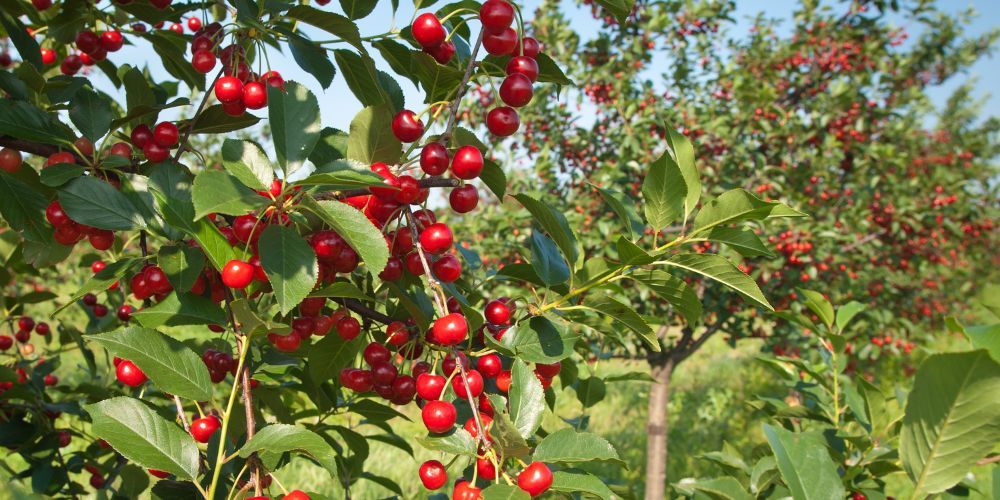
How to fertilize the cherry tree
1. July - August
As we know, plants spend large reserves of energy on production, and if not properly supplemented, the following year's production is likely to fall short of expectations and not be economically viable. It should also be remembered that a tired plant is always very vulnerable to attack by abiotic and parasitic agents.
Therefore, we believe that supplementation with nitrogen, microelements and biostimulants is very helpful in avoiding such attacks. In this case, our advice is to proceed with the use of the following products:
- Welgro Complex (dosage: 200 gr/hl) (N=4%+K=14%+Mg+B+Fe+Zn)
-
Coptrel (50 ml dosage: 50ml)
-
Phylen 500 (or Plantafol 30.10.10 for small areas/unprofessional)
At a time like this, of accumulation and formation of both woody and fruiting buds, nitrogen, the primary element in all plant life processes, must be present and in good quantity. A good supply of nitrogen during this period, in fact, reduces or zeroes out the formation of buds that will give flowers and twin fruits. For this reason, we recommend using:
- Tionamm (dosage: 500 g/plant by fertigation or scattering under the canopy)
Would you like to receive our advice? Sign up for our newsletter - 8% discount right away for you
|
2. September - October
Also in the logic of nourishing, defending and promoting lignification of the twigs, at this time it will be necessary to intervene with:
-
Kendal Te :(dosage: 150 ml/100l), which promotes leaf maturation and fall, as well as the elimination of spores, fungi, monilia and coryneal; it also counteracts gummosis.
3. October - November
During these months, there comes a time to give fertilizer to the soil to create nitrogen reserves in order to make available the amount needed for flowering (the soil, in fact, uses up to 80 percent of the 'reserve nitrogen) and to encourage, in addition, the formation of leaf mass. The product we recommend is:
-
Agri bio aktiv (dosage: 1 kg/plant). This dosage is to be considered for localized fertilization under the canopy; a higher dose, on the other hand, should be considered for administration along the whole row)
During this period, fungi and bacteria tend to lurk and then attack when the plant wakes up. For this reason, we recommend foliar treatment with:
- Cobre Nordox (dosage: 250 gr)
- Layer (dosage: 100 ml)
4. January - February
At this time, we recommend that you proceed with background fertilization through the use of:
- Agromaster 15.7.15 (OR 14.7.14) (Dosage: 1-2 kg per plant depending on plant size. The minimum dose is for localized fertilization)
Where you want to proceed with anorganic alternative and particularly with heavy, calcareous soils, then we recommend:
- Polysulphate (dosage: 1 kg/plant)
5. First decade of February - Defense
-
Oliocin Plus (dosage: 4-5l/100l), or White vegetable soybean oil for small areas/unprofessional)
Distribute 2000 liters of water/ha in two passes, either by crossing or reversing the direction of advance. Timely execution of this treatment ensures safe prevention from aphid, mealybug and mite attacks.
6. March
Although the proposed fertilizations have certainly provided considerable nutrient availability, in the logic of sustaining very satisfactory production in quantity and quality, a nutrition and defense treatment will be useful:
- Phylen(dosage: 500ml/100l) or Plantafol 30.10.10 for small areas/unprofessional
- Welgro complex (dosage:200g /100l)
- Kendal Te(dosage : 50g/100l)
- Inex-a(dosage: 30cc/100l)
7. A Broken buds
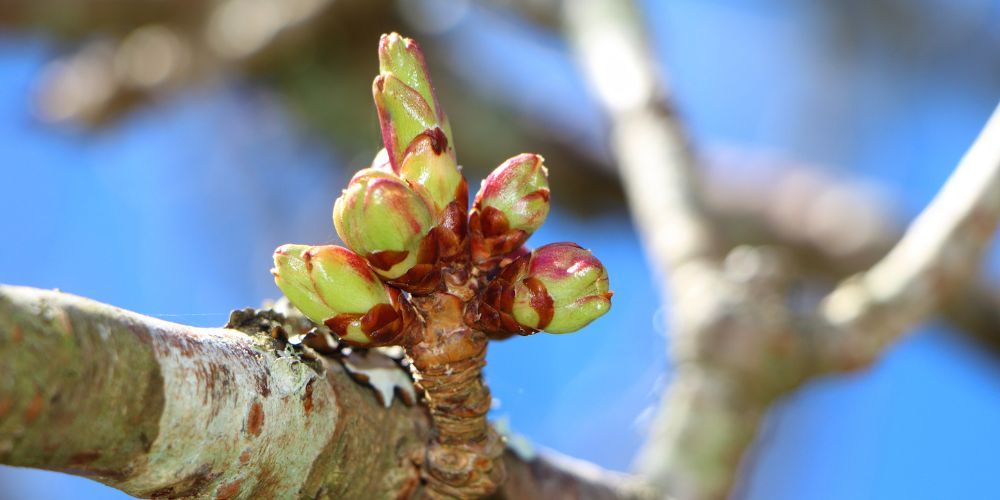
-
Inex-a (dosage: 30cc/100l), add this product first in water
-
Triplex (dosage: 300g/100l)
-
Seranade aso (dosage: 500 ml/100l). Alternatively, Zeolite + Kyprion for small surfaces/unprofessional)
-
Redcal(dosage: 200cc/100l)
The intervention can be repeated 2-3 times 6-7 days apart until full flowering.
8. A scampering
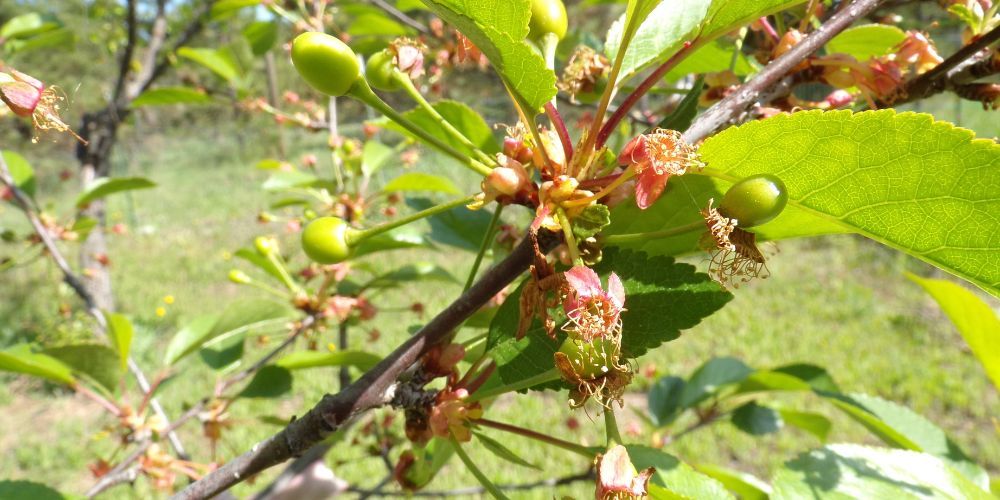
- Inex-a(dosage: 30 ml/100l), first add this product in water
- Triplex(dosage: 250g/100l)
- Switch (dosage: 30g/100l)
- MaxiGrow (dosage:100g/100l)
- Loess Ca (dosage:100ml/100l)
Calcium is absorbed by the plant in the pre-flowering stage and then during the flowering and fruit set stages. Switch, in addition to its action against monilia laxa, promotes the detachment of petals that attack the fruiting and result in the onset of mold. Until this stage, the plant holds up very well to the strain of flowering and fruit set, thanks to the nutrient supply from previous fertilization.
It may be helpful, particularly if you see good production, to continue to support the plant with fertigation:
-
Pekacid (dosage: 25/20kg/ha)
-
Nova Plus CalMag (dosage: 50-75kg/ha)
This is a mixture of fertilizers that will have a particular effect, especially in calcareous soils.
9. Fruit enlargement stage
Cherries have a very short growth period, so it is necessary to support the plant with targeted fertilization. We recommend, therefore:
- Triplex (dosage: 250gr)
- Phosphacel (dosage: 200gr)
- Maxi-Grow (dosage: 100 ml)
- Coptrel (dosage: 50 ml/hl), one time only
This treatment can be repeated 2-3 times
10. Beginning of veraison, in pre-harvest
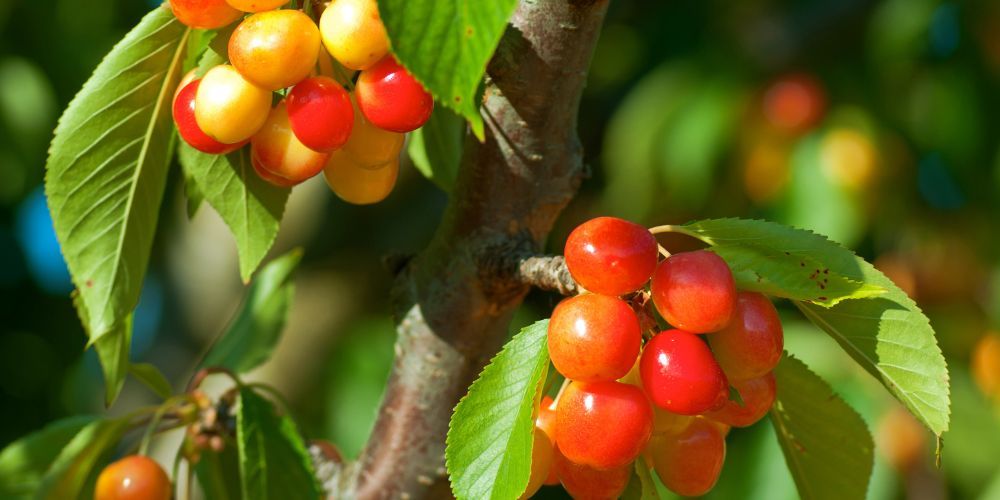
-
Agro-K (dosage: 200 gr)
-
Serifel (dosage: 50 ml/hl), or Kyprion + Zeolite for small areas/unprofessional
-
Nu - film (dosage: 100 ml/hl), with priming and protective anti-cracking action
Intervention to be done once or twice to ensure color, texture, shelf life, flavor and aroma.
For protection from sunstroke and anti-splitting, a treatment with:
- Vapor Gard (dosage. 200 ml/hl - also 300 ml)
- Loess Ca (dosage: 200 ml/hl)
Or:
If the harvest has been generous, as we believe and hope, certainly all the treatments done are justified. In particular, the fertilizations, which may seem excessive, but which, in our view, have a double value:to give support to excellent production and to ensure energy reserves for the plant, to foster a defense against abiotic stresses that with the times to come will be increasingly impactful.
Share this content


 Chronology
 Citrus fruits
 Turf
 Stone fruit
 Olive tree
 Ornamental
 Vegetables
 Actinidia (Kiwi)
 Screw
 Hobbies and insights
 Pome Fruit


By Vincenzo Dimizio 2021-01-22 10:58:39
Io vorrei concimare una sola pianta che ha 10 anni vedo che fa fatica negli ultimi anni . Poi alla fine della produzione ho notato sulle foglie la bolla.