
Your cart
There are no more items in your cart
Peacock's eye cycloconion : prevention and treatments
Categories :
Chronology
, Olive tree
Index
Favorable conditions for the attack
Period of development of the fungus
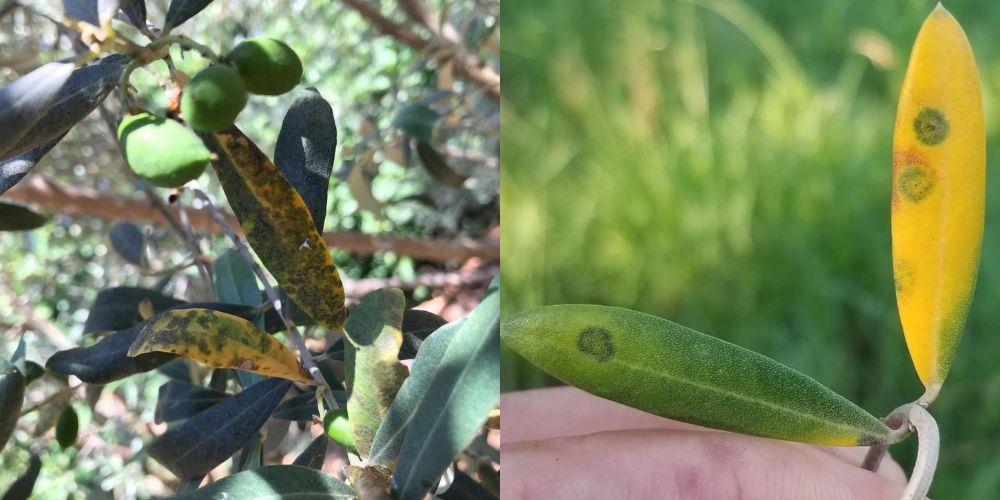
Olive Diseases: Peacock's Eye Cycloconium (Spilocaea Oleagina)
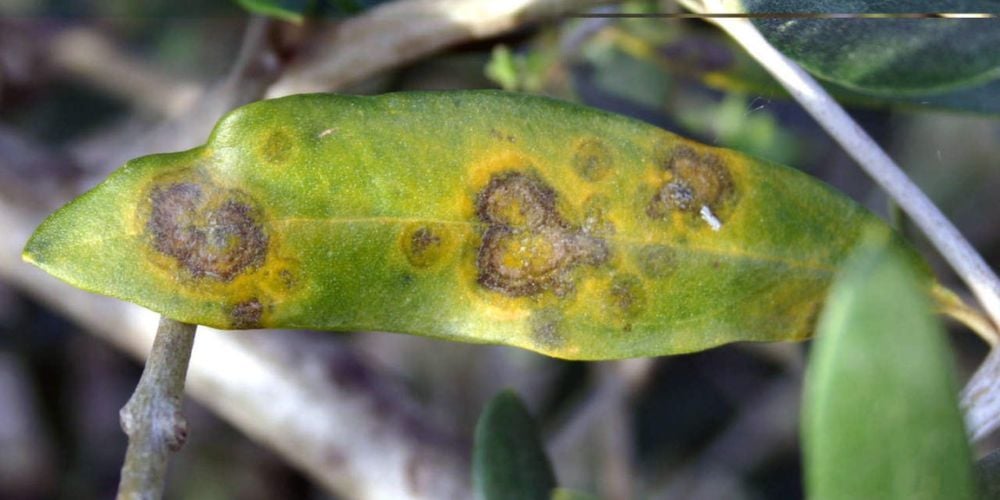
Peacock's eye, or cycloconium, is the disease capable of creating serious damage, in a short time, to the olive tree. It is present at all latitudes, it mainly affects the leaves, but it can also affect petioles, young twigs and fruits.
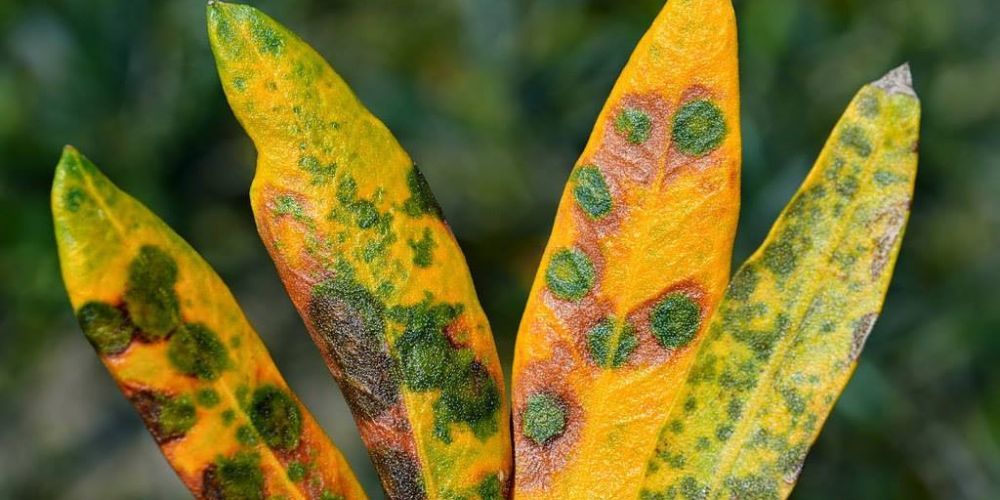
The peacock's eye of the olive tree manifests itself on the leaves with circular spots of light gray or dark green surrounded by a yellow halo.
Favorable conditions for the attack
Optimal conditions for the attack of peacock's eye are temperatures of 18-20 degrees and prolonged humidity for 2-3 days.
Sensitive varieties
It does not attack all varieties with the same intensity, sensitive they are:
- Carolea
- Coratina,
- crusher
- moraiolo,
- pendulum.
Tips for the prevention of peacock's eye
Taking into account that the factors favorable to the development of the fungus are humidity and temperature, it is advisable to have a rather spacious planting layout such as to create aeration, avoid planting in valley areas or with south-east exposure, be very measured on nitrogen fertilization and carry it out in targeted periods: post-harvest, late autumn, and July August.
Careful pruning, improving air circulation in the aerial part, helps to reduce the aggressiveness of cycloconium.
Period of development of the fungus
The time of year when the conditions favorable to the development of the fungus responsible for peacock's eye damage are created are spring and autumn, and consequently in these periods concentrate treatments.
The incubation of the disease is long and only in spring will you notice any symptoms, and therefore damage, of any attacks in late autumn. While the September attacks can occur even after 15-20 days, just as those of the spring attack will only occur at the end of summer.
Recommended treatments
It is therefore necessary to start treating at the end of March and carry out at least two treatments until the second half of May, and carry out the first autumn treatment from September to the second half of October, while in southern areas it is good to ensure coverage even in early November, if the conditions for an attack in that period arise.
The most widely used fungicide for the prevention-fight against peacock's eye is certainly copper, or rather copper-based fungicides, which are also allowed in organic farming.
Would you like to receive our advice? Subscribe to our Newsletter - 8% discount now for you
|
Recommended fungicides
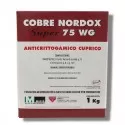
- Cobre Nordox at 150- 200 gr/hl + Lecithin 80MS at 200 cc/hl
Cobre nordox is a very micronized product and consequently very adhesive, persistent and resistant to washout by rain, the addition of Lecithin serves to fix the product even better to the vegetation, reduce the drift effect, further lengthen the persistence of the fungicide.
The products on the market are different, we believe that copper-based products are the most effective and the best tolerated by the olive tree, if we then add that they are also particularly effective against mange and leprosy, we offer only those. Alternatively, a fungicide-fertilizer, composed of copper (30%) + zinc (30%), which can also be purchased without a license:
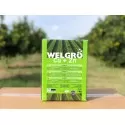
- Welgro Cu Zn at 250 gr/hl + Lecithin 80 MS at 200 cc/hl
The combined action of zinc and copper is very favorable, first because zinc is a fundamental microelement for all vital functions, and also because it thickens the cell walls, making the vegetation healthier and more resistant to abiotic attacks, including peacock's eye.
Treatment periods
If we want to establish a phenological reference, we can indicate the appropriate time for the first post-winter treatment when the vegetation shows signs of vegetative recovery, and the second when 3 or 4 nodes have formed. As well as for the autumn period when temperatures drop below 25 degrees on average and it should rain or at least have a very humid environment for two or three days.
Influence of climate
The changed climatic conditions, low rainfall and rather high temperatures, make this fungus less aggressive, but in particular areas, with eastern exposure, and with intensive or super-intensive plantations it is good not to lower your guard, among other things, as mentioned, at the same time the fight against Leprosy (Colletotrichum gloeosporioides) is carried out, a fungus capable of depreciating and seriously compromising the entire production of a year, and Mange (Pseudomonas savastanoi)
Brushing the trunk
When agriculture was more agricultural, and the agricultural entrepreneur was an agri-culturist, it was widely practiced to brush the trunks with various products (lime, cow dung) that prevented the rise of fungal spores and bacteria along the trunks, a practice abandoned only for reasons of practicality and I would dare to say "laziness", a practice that is being rediscovered: treating the trunks and primaries at the end of winter with a solution of Cobre Nordox 1-2 kg in 100 liters of water it will serve to reduce if not eliminate the attacks of cycloconium, mange and leprosy
Share this content


 Chronology
 Citrus fruits
 Turf
 Stone fruit
 Olive tree
 Ornamental
 Vegetables
 Actinidia (Kiwi)
 Screw
 Hobbies and insights
 Pome Fruit


