
Your cart
There are no more items in your cart
Tuta absoluta or Tomato moth remedies and insecticides
Categories :
Chronology
, Vegetables
Index
The insect: description and biological cycle
Direct and indirect damage caused by the absoluta suit
Tuta absoluta and Yellow Noctua: differences and similarities between the two parasites
Traps for monitoring and mass capture
Tuta absoluta or Tomato moth remedies and insecticides
The tuta absoluta, also called tomato moth or phyllominer, is one of the most harmful insects for tomato crops in the open field and in greenhouses. Its arrival in Europe is relatively recent, as it was first found in 2006 in Spain, from where it then spread throughout the Mediterranean and began to cause serious problems for nightshade crops.
The insect: description and biological cycle
The moth is an insect belonging to the order of Lepidoptera, native to South America and capable of completing up to 10-12 generations per year.
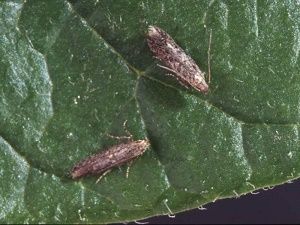
The adult is a small grayish butterfly, less than a centimeter long. It overwinters in the ground and recurs towards the end of March, with peaks of infestation in June. Each female can lay between 150 and 250 eggs, generally on the leaves and more rarely on the stem or inflorescence. The eggs initially have a pale yellow color, then turn red just before hatching. From each egg larvae are born that develop at the expense of the leaf tissue or stem, or directly of the fruit, digging tunnels that lead to deterioration of the parts concerned.
The adult has nocturnal habits, while during the day he stays still in the shelter of vegetation.
Adult of tuta absoluta
Larva of tuta absoluta
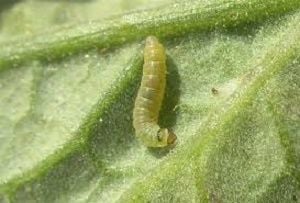
These fully developed moth larvae measure 7-8 mm in length.
The life of these plant pests can last from 25 to 75 days depending on the climate. In a single year, in favorable conditions for the insect, there can be up to 10 or 12 generations. It remains hidden by the leaves and on the ground; After hatching, the larvae penetrate the leaves, stems or fruits of the plant, digging tunnels, inside which they develop.
Direct and indirect damage caused by the absoluta suit
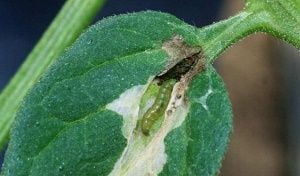
The damage of the tuta absoluta is primarily caused by the larva, which develops at the expense of the fruit, which it attacks since it is still green. The direct and tangible damage is therefore the loss of fruits, which waste away and are more prone to secondary infections than further pathogens. However, even the indirect damage, to the leaves and stems, is not negligible: the leaf mines dug by the larvae in these tissues are in fact capable of reducing the photosynthetic surface of the plant, with a possible drop in production. The roots of the plant, on the other hand, are spared from this parasite.
In the presence of strong uncontrolled attacks of moth, tomato production can suffer losses of up to 70% and in some cases total (100%). It therefore becomes very important to see the first symptoms in time and resort to remedies as soon as possible, many of which are completely eco-sustainable and even allowed in organic farming.

Would you like to receive our advice? Subscribe to our Newsletter - 8% discount now for you
|
Affected plants
Although the most affected species is the tomato, the insect can also attack other cultivated nightshades, such as potatoes, eggplants and peppers, as well as weedy nightshades such as Solanum nigrum and Datura stramonium.
Tuta absoluta and Yellow Noctua: differences and similarities between the two parasites
The yellow moth is another moth that causes damage in some respects similar to that of the tuta absoluta, with the difference that the larva of the moth, is much larger and its galleries in the fruits are therefore much wider, so much so that the fruits are visibly perforated. The yellow noctua, like the tuta absoluta, also begins to do damage to leaves and flowers, and then attacks the fruits at any stage of ripeness. Since it is a moth, many products recommended below to eradicate the tuta absoluta are also valid against the yellow moth.
Stanex must be used 0.5 liters per 1000 square meters, two or three times. The first two treatments are to be carried out 7 days apart, the third at 10-15 days then you can continue every 15 days with the same cadence.
In the event of a strong attack of Tuta absoluta, it may be useful to perform one or two treatments with Xentari at 10-12 g per 10 lt, sufficient for total control of this and other harmful lepidoptera.
Another product that can be used in biological defense is BAC MK, based on Bacillus thuringiensis kurstaki, registered and also valid for the defense against the yellow noctua described above.
To learn more about tomato cultivation, you can also read this in our blog article: Tomato cultivation: guide, tips and treatments.
Insecticides against tuta absoluta for conventional agriculture.
Traps for monitoring and mass capture
The defense of tomato cultivation from tuta absoluta can also be carried out through traps for mass capture, such as:
- Serbios black tutaroll, which consists of a sticky black ribbon 30 meters wide and 100 meters long, to be laid out fixed to two poles.
- TEMO-O-CID COLOR TRAP BLACK, whose package contains 10 ready-to-use, odorless, adhesive traps that do not dry out over time;
- TEMO-O-CID COLORTRAP + pheromones for the Tuta absoluta, which combines the attractive power of the yellow color with that of pheromones, for monitoring and mass capture.
Serbios Trap suit, pheromones, valid both for mass capture and for monitoring only and equipped with 3 pheromones, which last 5/6 weeks. When they are exhausted, they must be replaced by purchasing other Pheromones of the tomato moth or Tuta absoluta.
Share this content


 Chronology
 Citrus fruits
 Turf
 Stone fruit
 Olive tree
 Ornamental
 Vegetables
 Actinidia (Kiwi)
 Screw
 Hobbies and insights
 Pome Fruit


