
Your cart
There are no more items in your cart
How to grow mushrooms with products allowed in organic farming?
Categories :
Chronology
Index
Improving mushroom cultivation with irrigation
Climatic conditions and choice of soil for optimal irrigation
Fungal and bacteriosis diseases in mushroom farms
Insecticides allowed in BIO and chromotropic traps
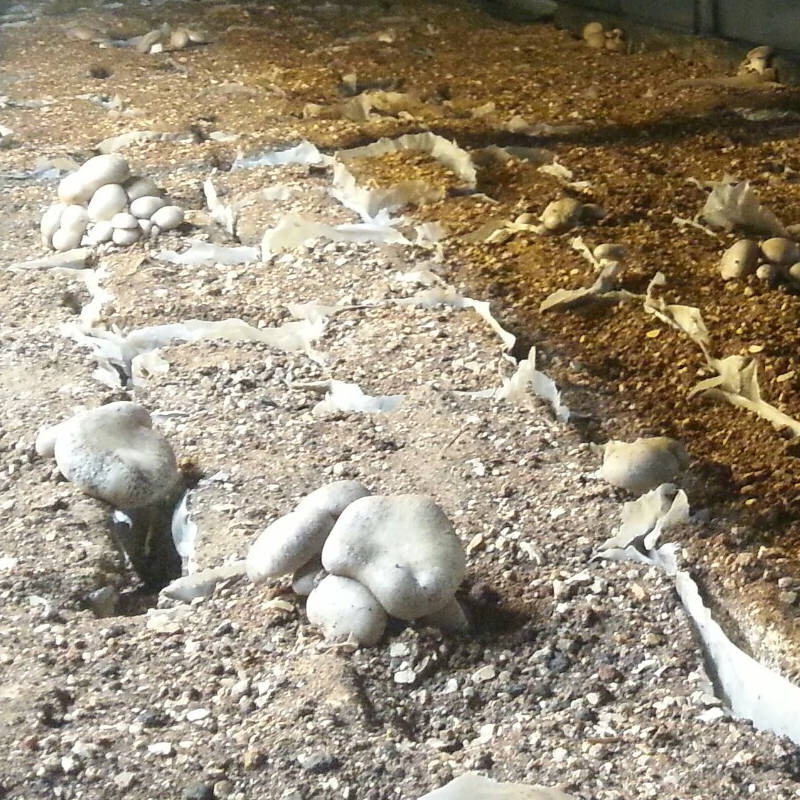
Improving mushroom cultivation with irrigation
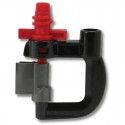
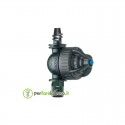
Watering is the most important and delicate practice that determines the success of a mushroom cultivation. Our advice is to adopt an irrigation system with nebulizers equipped with anti-drip devices, which, at the end of irrigation, instantly block the leakage of water and prevent dripping on the mushroom farm. You can proceed with watering even several times a day if the weather is dry, taking care to check that the layer of soil is all adequately moist. How can you be sure to proceed with efficient fertigation? There are two parameters to keep an eye on:
- Climatic conditions
- Proper choice of soil
Climatic conditions and choice of soil for optimal irrigation
To be sure that the practice of irrigation can guarantee greater success, it will be essential to constantly take into account the external climatic conditions, decreasing or increasing the amount of water and the frequency of fertigation. The important thing is to ensure a relative humidity inside the mushroom farm of around 70%.
In addition, it is important to choose a suitable soil, which has the characteristic of being sterilized and, therefore, free of harmful bacteria and fungi. In this way, you can prevent the risk of developing fungal and bacterial parasites that are very dangerous and difficult to fight.
Some specific soils of Humiflora or Tercompounds are of good quality
Would you like to receive our advice? Subscribe to our Newsletter - 8% discount now for you
|
Fungal and bacteriosis diseases in mushroom farms
Often in the mushroom farm, the substrate causes the presence of fungi of the Trichoderma family (in the various strains). How will you be able to notice their presence? Appearance of whitish spots on the fungus with a green spot in the center. Over time, the green spot will spread throughout the fungus.
To avoid the onset of this pathology, we recommend that you carry out a preventive treatment on the soil covering the loaves with Amylo - x at a dose of 200 cc per 100 litres of water.
If the fungus has already appeared, you can carry out an initial treatment with
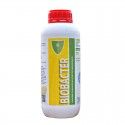
Biobacter, making a good wetting of the soil and trying not to wet the dough. Sprayed directly on the areas infested by trichoderma, Biobacter will be able to eliminate it.
After this surgery, we recommend treatment with Amylo-x at 200 (after about a couple of days), to prevent its onset.
Warning! It is always good practice to carry out a preventive treatment with Biobacter before treatment with Amylo-X. In this way, the soil will be reclaimed in the event of the presence of pathogenic fungi.
Insecticides allowed in BIO and chromotropic traps
The insecticide allowed in Organic Farming that we recommend to kill the adults of diptera and midges that often populate the mushroom farms is Neemazal, based on azadirachtin.
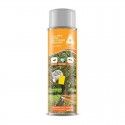
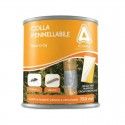
We also suggest the application of yellow chromotropic traps, in order to capture as many insects as possible. Remember that a spray glue is also available to restore the adhesiveness of the traps, when they have lost adhesiveness.
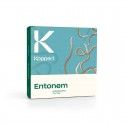
In case of the presence of diptera larvae, you can apply Entonem directly to the mushroom farm and mushrooms.
Entonem contains live nematodes, which will actively search for the Diptera larvae and, after finding them, will proceed to parasitize them, leading to their death. In this way, the nematodes will interrupt the reproductive cycle of the date larvae and, consequently, any possible further attack on them.
Share this content



 Chronology
 Citrus fruits
 Turf
 Stone fruit
 Olive tree
 Ornamental
 Vegetables
 Actinidia (Kiwi)
 Screw
 Hobbies and insights
 Pome Fruit


