
Your cart
There are no more items in your cart
Fight against the red weevil
Categories :
, Chronology
, Ornamental
Index
How to recognize the red weevil?
How to tell if the plant has been attacked by the red weevil?
Remedies against the red weevil: control strategies
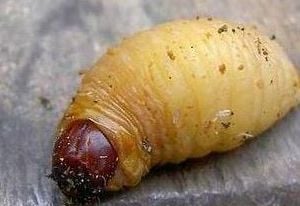
Red weevil: how to fight it (Rhynchophorus ferrugineus)
In this article, we will talk about a particular type of parasite for which there is a specific decree of mandatory control in Italy: the red palm weevil. This beetle has spread widely throughout our territory, destroying, especially in southern Italy, almost all the palm trees due to the lack of an adequate control strategy. We will see together how to recognize the red weevil, the major damage due to its attack and the various fighting strategies.
***
***
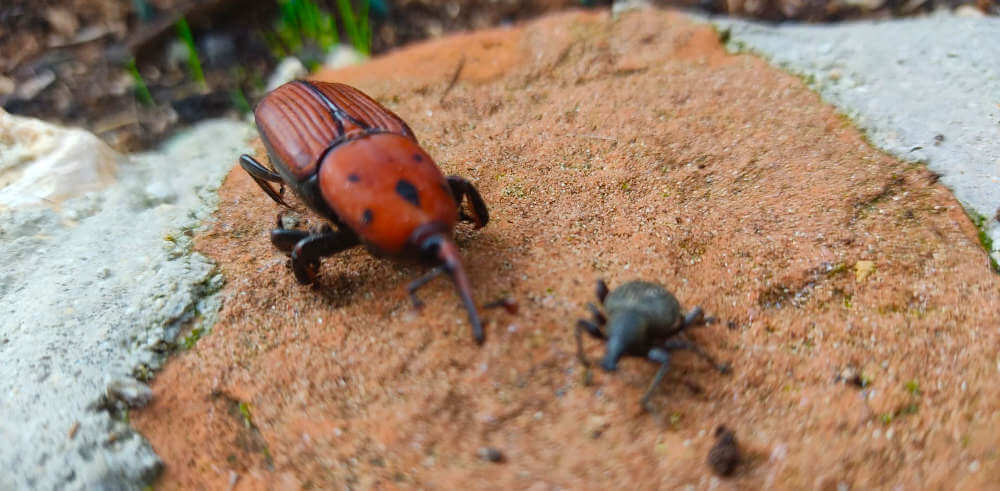
Red palm weevil: what it is and how to recognize it
The red palm weevil (Rynchophorus ferrugineus) is a beetle that appeared for the first time in 2005 in some of the regions of southern Italy. Having not found a natural predator upon its arrival, this palm insect has been and continues to be the cause of numerous damages to palm trees. In reality, it is not the weevil itself that poses greater risks, but the larva of the red weevil. Therefore, before looking specifically at the damage you may find on your plants, let's understand together what the life cycle of the red beetle is and how to recognize it.
So called because of its red proboscis-like rostrum (mouthparts), the weevil completes its life cycle entirely on palm trees. The female weevil lays a large number of eggs (about 300) distributed at the base of the young leaves, on the wounds of the leaves or in cavities of the trunk of the palm tree. After a number of days ranging from 2 to 5, the eggs close and the weevil larvae come out. It is the latter, in reality, that cause the greatest damage to palm trees: thanks to their chewing apparatus, the red weevil larvae dig tunnels inside the palm tree, looking for food to feed. Now let's see how to recognize an attack from a red weevil larva, specifying what the damage is.
***
Would you like to receive our advice? Subscribe to our Newsletter - 8% discount now for you
|
***
How to tell if the plant has been attacked by the red weevil? The palm tree affected by the red weevil has different damage depending on the stage of attack. By distinguishing between the initial attack stage, the advanced attack stage, and the terminal attack stage, you can recognize red weevil damage on palm trees based on:
- Early stage:
In the initial stage of attack, the red beetle lays its eggs and you can notice the initial development of the larvae by the presence of very small oviposition holes. Later, when the larvae begin to grow, you will more easily notice their presence, being able to notice asymmetries of the top of the palm tree and basal rosura of the leaves.
- Advanced:
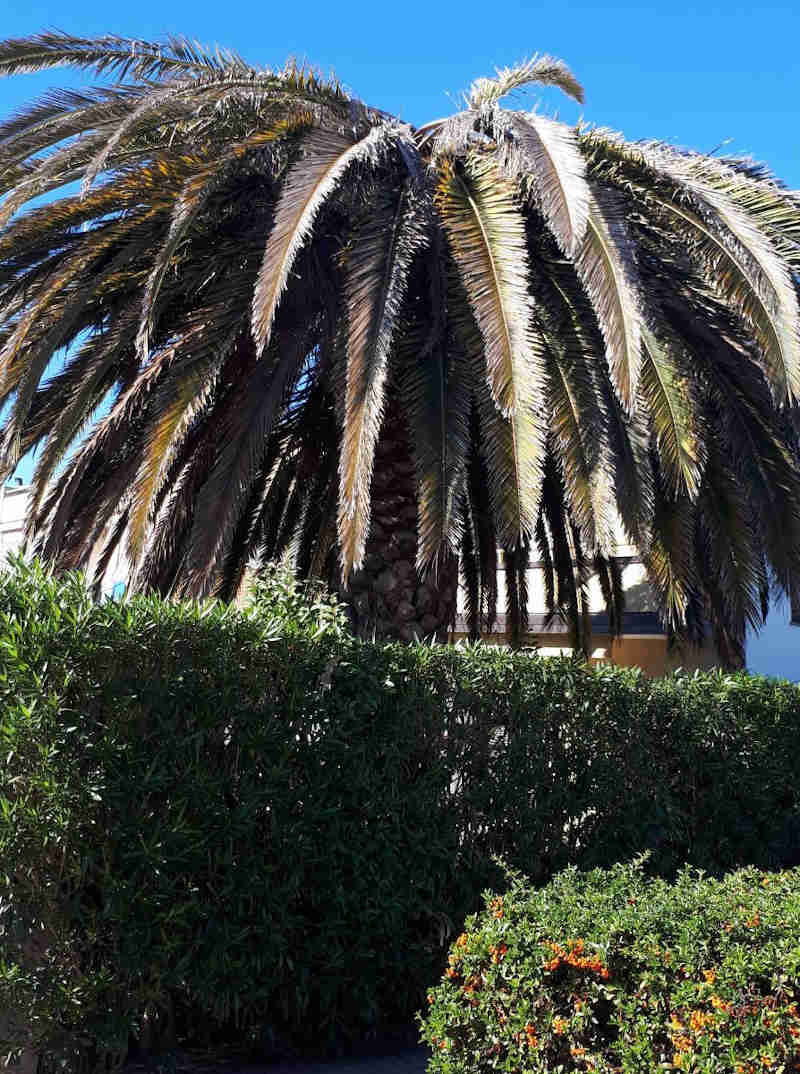
At an advanced stage of attack, the palm crown will appear folded, losing its initial upright position. Over time, the basal leaves will also begin to dry out and the entire palm canopy will take on the classic "umbrella" shape.
- Terminal stage:
During the terminal stage, the apical part of the palm tree will begin to lose all its leaves at first, until it collapses to the ground, leaving the trunk completely dead.
After describing the various phases that your palms could go through in the event of an attack by the red weevil, let's see together how to fight it.
***
***
Fight against the red palm weevil
The strategies we have chosen to propose, each due to the different stage of the weevil, are organic strategies that act in full compliance with the needs of environmental sustainability.
We would like to emphasize that the strategies we will propose are also valid for the palm weevil (Diocalandra Frumenti)
MARCH-MAY / SEPTEMBER-NOVEMBER : FIGHT AGAINST LARVAE WITH ENTOMOPATHOGENIC NEMATODES
In this phase, it is extremely effective to intervene through the use of entomopathogenic nematodes which, by establishing a parasitic relationship with the weevil, are able to act as a functional antagonist in a biological control system.
LEARN MORE
Entomopathogenic nematodes are used for the control of harmful insects on numerous crops. Knowing their life cycle helps to better understand how they act and how they can be used within a broader strategy
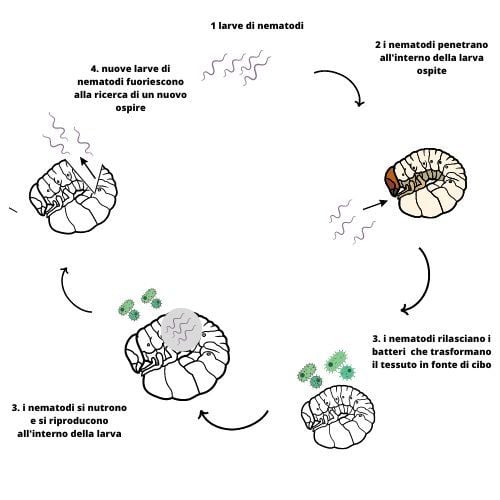
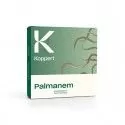
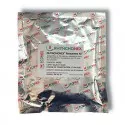
We therefore recommend the use of the following product:
Nematodes penetrate the larvae of Rynchophorus ferrugineus, releasing bacteria that turn its tissue into a food source. Therefore, by feeding and reproducing inside the weevil, the nematodes will cause its death within a few hours.
It is essential to apply the nematodes exactly in the heart of the palm tree, where it is necessary to ensure the presence of abundant water. Nematodes, in fact, need a humid environment.
If the palm tree is of medium or low height, it will be enough to use a simple watering can to apply the product.
In the case of very tall palm trees, to facilitate reaching the necessary height, we recommend the use of a pressure pumpand its kit for connection to the heart of the palm tree. It is important not to give too much pressure: a strong nebulization, in fact, would risk killing the nematode and would nullify the action. Our advice is to remove the pulverizing nozzle from the pump when applying Palmanem.
If, on the other hand, you are going to apply the product by fertigation, we suggest that you remove the filters to avoid excessive pressure.
MARCH-MAY / SEPTEMBER-NOVEMBER : CONTROL OF LARVAE WITH ENTOMOPATHOGENIC FUNGI
A further possibility of fighting larvae involves the use of entomopathogenic fungi. In the image immediately below, you can easily understand how they act against harmful insects.
LIFE CYCLE OF ENTOMOPATHOGENIC FUNGI
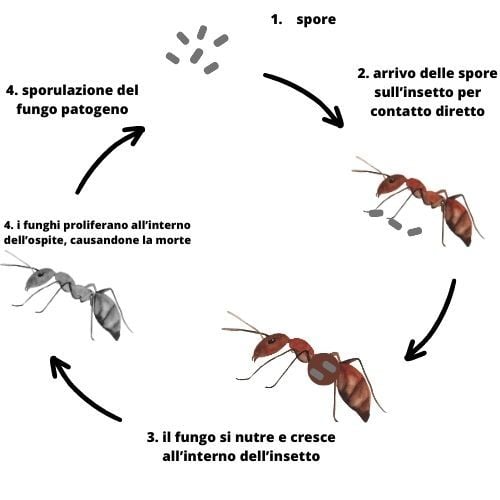
In this case, we decided to integrate the use of an organic fertilizer with entomopathogenic fungi. The solution we propose is:
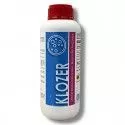
- Klozer (30 ml), an inoculum of mycorrhizal fungi that acts by contact.
Thanks to the production of hyphae, the spores come into contact with the awl's body. In this way, fungi proliferate inside the host insect, causing an insecticidal action
- Carbogen L (30 ml), to increase the vitality of the mushroom and allow it to stay active for longer.
Precisely to ensure greater vitality and effectiveness of the mushrooms in the fight against weevil, we recommend preparing this solution at least 12 hours before its actual use.
It is important to pour the solution thus obtained into the cone of the plant (we also recommend at this stage the use of pressure pumps with relative kits and to reduce the pressure, whether you act with pumps or fertigation).
SPRING: FIGHT AGAINST ADULT WEEVILS
Starting from the spring months, it becomes advisable to verify the actual presence of weevils on palm trees and intervene, only in the presence of adults, with their capture by:
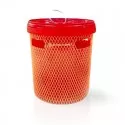
- Rhynco trap, an ecological trap that attracts the weevil by exploiting it:
- smell (diffusion of pheromones and cairomons)
- food attraction (by inserting fruit and plenty of water inside. In this way, the awl's need for moisture is exploited)
- the sight (the insect is naturally attracted by the color red, typical of Rhynco Trap)
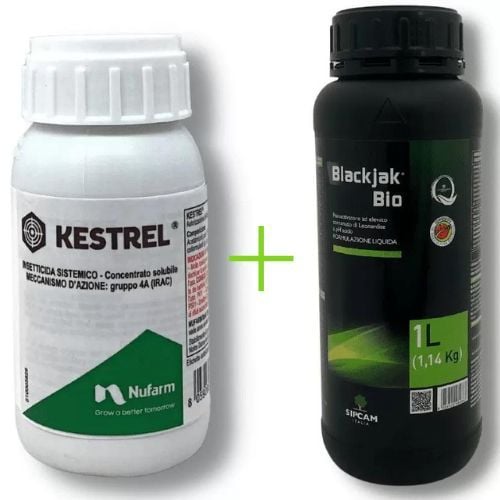
Share this content




 Chronology
 Citrus fruits
 Turf
 Stone fruit
 Olive tree
 Ornamental
 Vegetables
 Actinidia (Kiwi)
 Screw
 Hobbies and insights
 Pome Fruit


