
Your cart
There are no more items in your cart
Hellebore (Christmas Rose): Characteristics, Cultivation and Pathologies
Categories :
Chronology
, Ornamental
Index
The botanical characteristics of the Hellebore
Cultivation of the Hellebore
Diseases and Parasites of Hellebore
The Hellebore FAQ (FAQs)
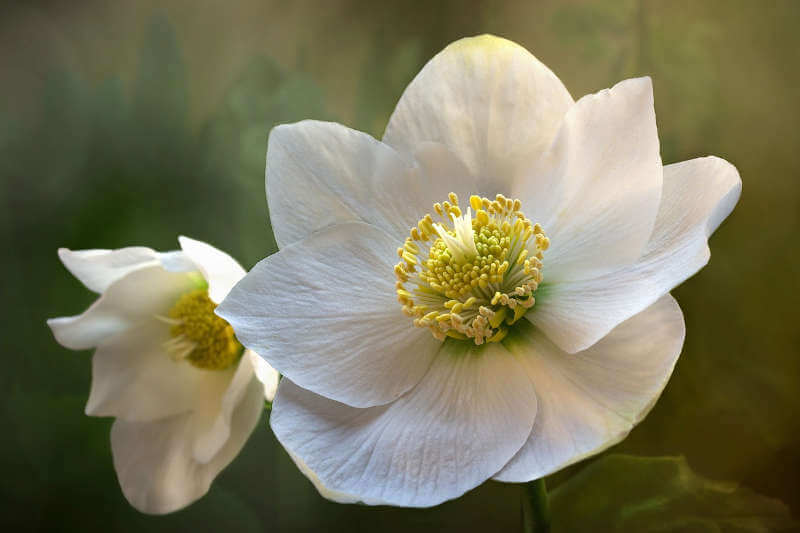 |
Hellebore, belonging to the Ranunculaceae family, is a perennial plant known for its distinctive flowers that bloom in the winter or early spring. The scientific name of Hellebore varies by species, with the most common being Helleborus niger (also called Christmas Rose), Helleborus orientalis , and Helleborus foetidus.
1. The botanical characteristics of Hellebore include:
- Leaves: The Hellebore has persistent, dark green, lobed and palmate leaves. They are generally leathery and persistent throughout the winter.
- Flowers: The flowers, which bloom in the middle of winter, have a cup or bell shape and can be of varying colors, from white to pink, purple or even green.
- Roots: The plant has a robust root system, able to anchor itself in mountainous or rocky soils.
- Habitat: The Hellebore adapts well to shady and cool areas, typical of mountain and hill undergrowth. It grows best in well-drained soils rich in organic matter, preferring humid areas but not subject to water stagnation.
One of the most peculiar characteristics of this plant is its toxicity: all parts of the Hellebore contain poisonous compounds, such as protoanemonin, which is particularly concentrated in the roots. If ingested, it can cause serious gastrointestinal and heart problems.
Would you like to receive our advice? Subscribe to our Newsletter - 8% discount now for you
|
|
2. Cultivation of the Hellebore (also called Christmas Rose or Winter Rose)
Hellebore is a rustic plant, capable of withstanding low temperatures and growing even in difficult soils. Let's see the main aspects of the cultivation of Hellebore:
- Exposure: The Hellebore prefers a shaded or semi-shaded position, which protects it from direct sun, especially in warmer climates. It grows well at the foot of trees or in wooded gardens.
- Soil: It prefers humus-rich, well-drained soils with a neutral or slightly alkaline pH. It is important to avoid soils that are too clayey or compact, which could promote waterlogging.
- Watering: Although it is drought-resistant, the Hellebore needs good watering, especially during hot or dry periods. However, it is essential to avoid waterlogging that can lead to root rot.
- Fertilization: In autumn, before flowering, it is advisable to administer compost or organic fertilizer, to provide the plant with the necessary nutrients. A good supply of organic matter allows the Hellebore to develop larger and more luxuriant flowers.
- Reproduction: Hellebore can be propagated by dividing the headsor by sowing. Division is preferable in autumn or early spring, while planting requires a lot of patience, as the seeds can take up to a year to germinate.
- Cultivation care: It does not require special care, apart from the elimination of dry or damaged leaves during the winter. It is also advisable to mulch the soil around the plant to protect its roots from frost.
3. Hellebore Diseases and Parasites
Despite being a robust and rustic plant, the Hellebore is susceptible to various diseases and pest attacks. The main phytosanitary problems that can afflict it are as follows:
Leaf spots: One of the most common diseases of Hellebore is caused by the fungus Coniothyrium hellebori, which causes the appearance of black or brown spots on the leaves. This fungus develops more in conditions of high humidity and can be treated with copper-based CIFOBLOK Plus or potassium bicarbonate-based Armicarb spray.
Powdery mildew: Powdery mildew, another fungus, can attack the Hellebore, covering the leaves with a whitish coating. This disease is favored by excessive humidity and poor air circulation. The treatment consists of the elimination of the infected parts and the application of wettable sulfur or specific liquid fungicides.
Aphids: Aphids can attack the Hellebore, especially in the spring when the shoots are tender and young. These pests feed on the plant's linfa , weakening it. A severe infestation can be treated with biological insecticides such as CIFOTRIS Plus based on nettle or pyrethrum
Root rot: A problem that can arise in conditions of excessive humidity is root rot, caused by pathogenic soil fungi such as Pythium or Phytophthora. To avoid this type of disease, it is important to plant Hellebore in well-drained soil that is not overly moist. Also in this case, prevention plays a decisive role with the addition of mycorrhizae: Micosat F UNO mini is a granular product based on mycorrhiza which, when added to the pot and slightly buried, performs a strengthening action and root activity
Slugs and slugs: These pests can eat the leaves of the Hellebore, especially during rainy periods. To counteract them, you can use specific baits or adopt natural methods such as Lumalene or Ferramol, which form a natural barrier around the plant.
In summary, even though Hellebore is generally hardy, growing conditions and surroundings can affect its susceptibility to disease and pests. Maintaining good soil drainage and regularly checking the health of your plants is crucial to ensure healthy and thriving growth.
4. The Hellebore FAQ (FAQs)
1. Can the Hellebore also grow in pots?
Yes, the Hellebore can also be successfully grown in pots, as long as well-drained potting soil is used and the pot is placed in a shaded area. It is important to make sure that the pot has a good drainage system to avoid waterlogging.
2. Is Hellebore frost resistant?
Yes, the Hellebore is very resistant to cold and can withstand temperatures below freezing, which is why it is also known as the Christmas Rose, as it blooms in the coldest months of the year.
3. How can I propagate Hellebore?
Hellebore is easily propagated by division of the tufts, which can be carried out in early spring or autumn. Sowing is possible, but the seeds take a long time to germinate.
4. Is Hellebore toxic to pets?
Yes, Hellebore is toxic if ingested, both to humans and pets. It is advisable to prevent dogs or cats from eating its leaves or flowers.
5. What are the main enemies of the Hellebore?
Aphids, snails, and pathogenic fungi such as Coniothyrium hellebori are the main enemies of the Hellebore. Proper plant care and preventive treatments can avoid serious damage.
Share this content






 Chronology
 Citrus fruits
 Turf
 Stone fruit
 Olive tree
 Ornamental
 Vegetables
 Actinidia (Kiwi)
 Screw
 Hobbies and insights
 Pome Fruit


