
Your cart
There are no more items in your cart
Lisianthus: Everything You Need to Know
Categories :
Chronology
, Ornamental
Index
Botanical characteristics of Lisianthus
Cultivation of Lisianthus
Care and maintenance
Lisianthus Varieties
Lisianthus in the language of flowers
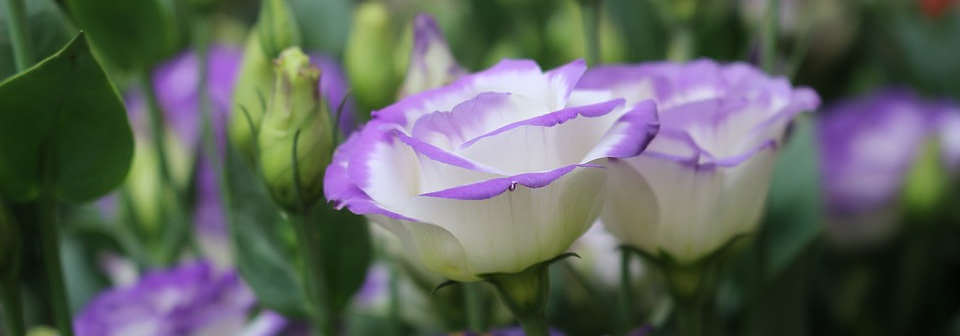
Lisianthus is a plant with a particular charm, appreciated all over the world for its elegant and delicate flowers, which recall the beauty of roses. Although not as famous as the latter, Lisianthus is carving out an important space for itself in gardens, floral arrangements and the floriculture industry. In this article, we will explore every aspect of this plant, from its botanical characteristics, to cultivation, care, variety, and significance in the language of flowers.
Botanical characteristics of Lisianthus
Lisianthus, also known as Eustoma, belongs to the Gentianaceae family, native to North America, where it grows wild in plains and grasslands. This perennial, which is often grown as an annual, can reach a height of 15-60 cm and develops thin but strong stems. The leaves are light green, with an oval or lanceolate shape, while the flowers, which represent the real strength of the Lisianthus, are large and bell-shaped, similar to those of roses.
The flowers of the Lisianthus come in a wide range of colors: white, pink, purple, blue, lilac and yellow, with single or double petals. One of the most appreciated characteristics of this plant is the durability of its flowers, which can remain fresh for a long time, both in the garden and in pots, making them perfect for long-lasting flower arrangements.
Origin of the name
The name "Lisianthus" comes from Greek: "lysis" means dissolution or dissolution and "anthos" means flower. The scientific name Eustoma, on the other hand, comes from the Greek "eu" (beautiful) and "stoma" (mouth), thus recalling the concept of "beautiful mouth", probably referring to the shape and elegance of the flowers.
Would you like to receive our advice? Subscribe to our Newsletter - 8% discount now for you
|
|
Cultivation of Lisianthus
Lisianthus is a relatively easy plant to grow, as long as you meet some basic conditions related to its natural habitat. It is in fact a plant that loves temperate climates, but is sensitive to intense cold and too high temperatures.
Exposure and temperature
Lisianthus requires a location that is well exposed to sunlight, but at the same time it must be protected from direct rays during the hottest hours of the day, especially in summer. The ideal temperatures for its growth are between 20°C and 25°C during the day, while during the night it is preferable that they do not fall below 15°C. In winter, it is necessary to protect it from frost, especially if grown in pots.
Terrain
This plant prefers well-drained, slightly acidic or neutral soil that is rich in organic matter. A good universal soil, enriched with peat moss and mycorrhizae, can be an optimal choice to ensure lush growth. It is important to avoid waterlogging, as Lisianthus is prone to root rot if the roots remain too wet.
Watering
Watering is a crucial aspect in growing Lisianthus. It is essential to keep the soil slightly moist at all times, but never soggy. During the flowering phase, it is advisable to water regularly, preventing the substrate from drying out completely. In colder periods or when the plant is resting, watering should be reduced to prevent rot.
Fertilization
Lisianthus benefits from regular fertilization, especially during the vegetative and flowering periods. We recommend the use of a specific fertilizer for flowering plants, rich in potassium, which promotes the development of large and long-lasting flowers.
Care and maintenance
To keep Lisianthus healthy and achieve abundant flowering, you need to adopt some maintenance practices.
Pruning
Pruning is useful for keeping the plant tidy and stimulating new flowering. After the first flowering, it is advisable to cut off the withered flowers, removing the dry and weakened parts, to encourage the development of new shoots. Removing the side branches can also help focus the plant's energy towards flowering.
Repotting
If grown in pots, Lisianthus needs to be repotted annually or biennially, preferably in early spring, using a pot slightly larger than the previous one. It is important to choose pots with good drainage to avoid waterlogging.
Pests and diseases
Lisianthus is a hardy plant, but it can be susceptible to attacks by aphids, spider mites, and whiteflies. It is advisable to monitor the plant regularly and intervene promptly with soft soap, linseed oil or neem oil treatments, avoiding aggressive chemicals.
Root rot is one of the main fungal diseases that affects Lisianthus, certainly preventable with proper watering management, but intervening with actions that increase resistance from the plant is an effective and advisable strategy for general well-being: It is advisable, in fact, to alternate interventions with products based on potassium bicarbonate and Propolis.
Lisianthus Varieties
There are numerous varieties of Lisianthus, with differences that mainly concern the colors of the flowers and the shape of the petals. Among the most popular are:
- Lisianthus Echo: one of the most widespread varieties, characterized by double and large flowers. It comes in many colors, from white to pink to deep purple.
- Lisianthus Arena: particularly appreciated for its pastel shades and delicate petals.
- Lisianthus Rosita: this variety stands out for its double flowers, often used in high-end floral arrangements.
- Lisianthus Mariachi: A variety that features brightly colored double flowers, ideal for those looking for a high-impact ornamental effect.
Lisianthus in the language of flowers
In the language of flowers, Lisianthus has a very positive meaning. It symbolizes elegance, grace , and appreciation, making it perfect for gifts to loved ones or for celebrating special events such as weddings and anniversaries. Due to its delicate beauty and the variety of colors available, Lisianthus is also often associated with sophistication and sophistication.
Lisianthus is an extraordinary plant that, despite its relative "young age" in the panorama of ornamental plants, has been able to win the hearts of many gardening enthusiasts and professional florists. Thanks to its versatility, it can be grown in pots or in the garden, and its long-lasting flowers are perfect for decorating the home or giving as gifts. When grown with the right care, Lisianthus will reward you with its beauty and sophistication, making any room more elegant and welcoming.
Share this content




 Chronology
 Citrus fruits
 Turf
 Stone fruit
 Olive tree
 Ornamental
 Vegetables
 Actinidia (Kiwi)
 Screw
 Hobbies and insights
 Pome Fruit


