
Your cart
There are no more items in your cart
How to use beneficial insects in organic farming
Categories :
Chronology
, Citrus fruits
, Vegetables
Index
Biological control with antagonistic insects
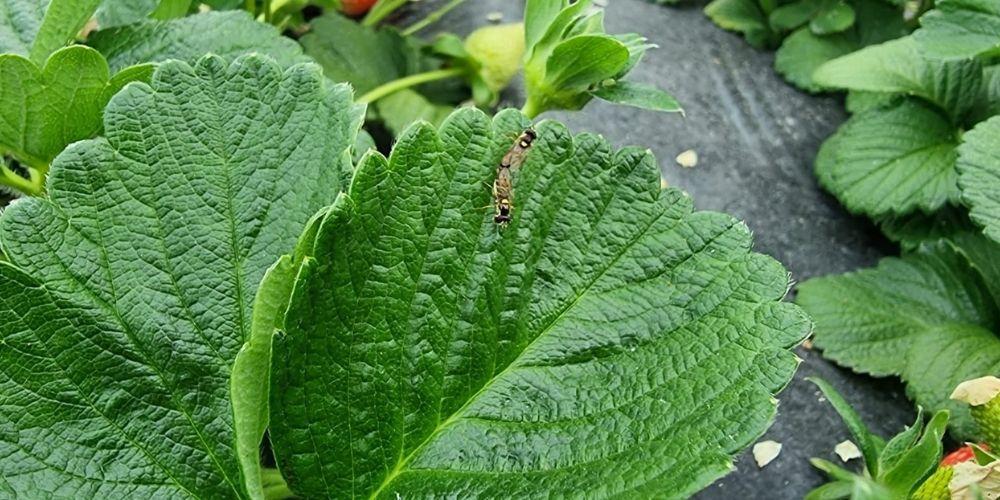
Guide to the use of beneficial insects: from professional agriculture to the home garden
Then, when the pest is present and on outbreaks, action will be taken with antagonistic beneficial insects as shown in the table.
1. Useful insects list
Citrus |
|||
| Pest | Solution | Epoch of use | Dose |
| Spider mite | Spical Ulti-Mite Neoseiulus californicus | May to September |
1-2 bags per plant monthly introductions |
| Citrus cotton bollworm |
CRYPTOBUG Cryptolaemus montrouzieri |
Application to outbreaks | |
|
Citripar Anagyrus vladimiri (Order 3 weeks in advance). |
2 conf. ha x 3 appl. monthly |
||
| Aphytis (Aphytis Melinus) |
4 conf. ha x 3 appl. monthly |
||
Vegetables |
|||
| Pest | Solution | Epoch of use | Dose |
| Terricolous fungi |
TRIANUM P Trichoderma harzianum(PATENTINE) |
Preventive at transplanting |
2.5 kg/ha |
| Tuta absoluta |
Nesibug Nesidiocoris tenuis |
Estimate at transplanting |
0.75 ind. sqm x 2 weeks |
|
Thrips of vegetable gardens |
Thripor-L ORIUS LAEVIGATUS | With first flowers |
1 ind. sq. m x 3 weeks |
| THRIPEX NEOSEIULUS CUCUMERIS | At presence |
100 ind. sqm x 3-4 weeks |
|
| SWIRSKI-Ulti-Mite Amblyseius swirskii | At presence |
1500 sacks per ha |
|
|
SWIRSKI Amblyseius swirskii |
At presence |
150 ind. sq. m x 3-4 weeks |
|
|
Aphids |
Aphiscout Aphidius colemani, and others (Order 3 weeks in advance). |
At the presence |
0.5 ind. sqm x 3-4 weeks |
| Chrysopa Chrysoperla carnea | On outbreaks |
On outbreaks |
|
| Aphipar Aphidius colemani | On occurrence |
0.5 ind. sqm x 3-4 weeks |
|
| Aphidalia Adalia bipunctata | At presence |
On outbreaks |
|
|
Rophoria-P Sphaerophoria rueppellii |
Preventive |
4 conf./ha x 4 weekly applications |
|
|
Rophoria-L Sphaerophoria rueppellii |
On outbreaks |
1 conf per approx 40 aphid outbreaks |
|
| Red spider mite |
Spidex Vital Phytoseiulus persimilis |
At presence |
4-5 ind. sq. m x 2 weeks |
|
Spical Neoseiulus californicus |
At presence |
50 ind. sqm x 2 weeks |
|
|
Spical-Plus Neoseiulus californicus |
At presence | 1500 sacks per ha | |
|
Larvanem Heterorhabditis bacteriophora |
At presence | 50 mil larvae per 100 sq m | |
| Beetle larvae ( ex. Oziorrinchus, Beetle) |
Entonem Steinernema feltiae |
At the presence | 50 mil larvae per 100 sq m |
| Larvae of Diptera (Sciaridae) |
Enermix Eretmocerus eremicus and Encarsia formosa |
At presence |
10 ind. sq. m x 3 introductions weekly |
| White fly |
SWIRSKI-Ulti-Mite Amblyseius swirskii |
At presence | 1500 sacks /ha |
|
SWIRSKI MITE- mblyseius swirskii |
At presence |
150 ind. sq. m x 3-4 weeks |
|
|
Nesibug Nesidiocoris tenuis |
Preventive at transplanting |
0.75 ind. sqm x 2 weeks |
|
Biological control with antagonistic insects
In this guide we will explain how to control the action of insect pests that threaten our crops, in a simple and absolutely natural way, through the use of beneficial insects.
The insects present in nature, in fact, are not all harmful, and those useful to agriculture are the best allies for biological control since they feed exclusively on the target pests and avoid the use of chemical pesticides, which, not having the selectivity of insects, create damage indiscriminately to all species, including harmless ones and in any case to man and the 'environment in general.
Today there are real industrial farms of antagonistic insects, the so-called bio-factories, also present in Italy, which produce, package and store the useful insects on a large scale, then distribute them on the territory among retailers.
It is also possible to buy the packages of beneficial insects online and receive them at home via express courier completely safely.
Do you want to receive our advice? Sign up for our Newsletter - 8% discount right away for you
|
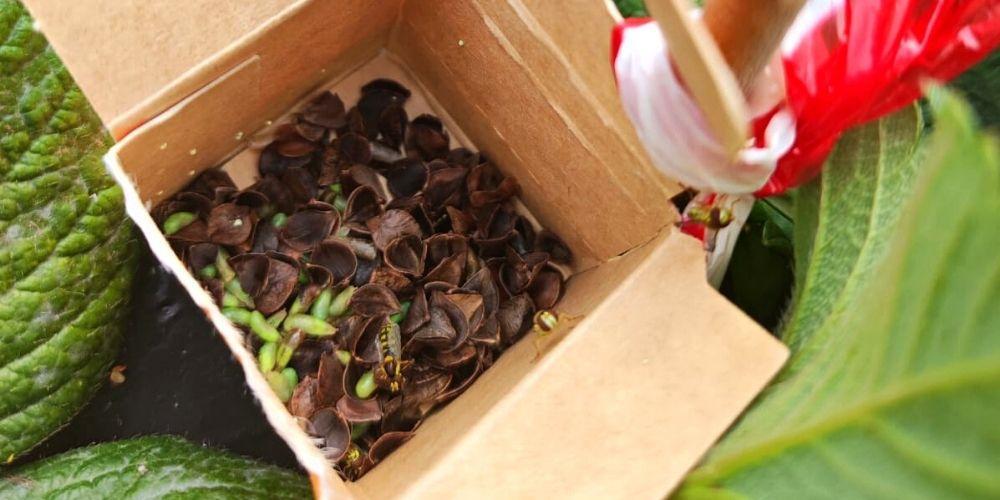
What many people ignore, in fact, is that just as in agriculture, even in our home garden, whether in the garden or on the terrace, it is possible to use beneficial insects since the practice of "throwing" is done in a few simple moves and is within everyone's reach, as there is no chemical risk.
Unlike launching in greenhouses, and thus in environments protected from external interference and insect dispersal, in open environments such as homes it may be appropriate to increase the number of launches in order to achieve equally effective results eD have attentions right from the seedbed preparation stage.
In fact, for optimal defense at the pre-transplanting stage, preventive control of soil-borne insects and fungi will be useful.
Also preplanting, it will be necessary to defend against aphids and whitefly and for tomatoes against Tuta absoluta.
In addition to the usefulness of using predatory insects, the highly significant environmental and cultural value of this practice should be emphasized: releasing antagonistic insects into the wild to control the population of a given pest also means rebalancing the ecosystem, which is repopulated with good insects to the detriment of those harmful to our crops.
Zero residue solutions
As an alternative to beneficial insects, other zero-residue solutions can be used such as:
Share this content


 Chronology
 Citrus fruits
 Turf
 Stone fruit
 Olive tree
 Ornamental
 Vegetables
 Actinidia (Kiwi)
 Screw
 Hobbies and insights
 Pome Fruit


