
Your cart
There are no more items in your cart
What is Citrus Dry Disease?
Categories :
Chronology
, Citrus fruits
Dry Disease is one of the most dangerous fungal diseases that can affect our plants or our citrus fields. The lemon is certainly the plant that suffers the most damage: this is why we often associate this disease with lemon, calling it lemon dry disease. However, other species, such as cedar, lime or bitter orange, are also affected by dry disease. Throughout this article, we will help you recognize the symptoms of this specific disease, trying to provide you with tips to limit its onset.
What we will see in this article
How to recognize Dry Disease?
Dry Disease is a disease due to the Phoma Tracheiphila fungus and its symptoms are more evident towards the end of the winter period and in spring. The course of Dry Citrus Disease can be:
- slow, when it hits the hair;
- rapid, when it hits the root (fulminant pain)
In the aerial part, the infection manifests itself with a yellowing of the leaves, starting from the apical part and with their subsequent fall. Subsequently, it will be possible to observe desiccation of the branches starting from the youngest ones, with a basipetal trend.
The section of the affected branches will show a characteristic yellow-orange color, then reddish, which will become blackish over time. This chromatic alteration is due to the reaction of the plant to the invasion of woody vessels and the production of metabolites by the pathogen. The affected plants react by producing new leaves, however, they only survive for a few years. Infection of the roots, on the other hand, involves a rapid wilting and drying of the entire foliage, with an acropetic course. The disease, in this case, leads to the death of the plant in a few days (fulminant disease).
Life cycle and epidemiolgia
Dry disease is spread by different agamic multiplication elements that differ on the cortex of infected organs. Differentiation is favored by high humidity and temperatures of 14-25°C. These environmental conditions occur, in cultivation environments, in late autumn and winter. The infecting elements are mainly carried by the wind and, once they arrive on the host, determine the primary infection.
The primary infection occurs between October-November and continues until January-February. The plant, which has a reduced activity in this period, offers only a minimal resistance to infection and is also more susceptible due to:
- greater presence of root lesions, due to the deep tillage that is carried out in the autumn-winter period
- presence of injuries to the aerial apparatus, due to damage from cold or other adverse weather conditions (injuries from hail and wind);
- possible transplant crisis.
The pathogen inside the host is localized in the vessels of the wood (tracheomycosis). The infection inside the plant is further propagated by means of particular agamic multiplication elements of the mycelium, called "thalloconides" which are spread with the lymphatic current.
.jpg)
Would you like to receive our advice? Subscribe to our Newsletter - 8% discount now for you
|
How to treat Dry Citrus Disease?
To date, there is no specific product capable of fighting Dry Disease. We will not, therefore, allow ourselves to propose products or recommend strategies from which neither you nor your crop, through a more profitable production, can benefit.
What we allow ourselves to say, however, is that there are agronomic practices and specific targeted interventions that, if implemented in the right way, can limit the onset of citrus dry disease.
Fertilization & fertigation interventions
The first suggestion we would like to give is to proceed with a foliar fertilization activity, through the use of:
We recommend its administration in the autumn and spring period. You can fertilize up to a maximum of 4-5 treatments per year, at a dose of 1.5kg/ha. Welgro Cu-Zn contains 30% Zinc, an element capable of activating signal molecules that increase the plant's defenses, ensuring a consequent auxin-like action. The cupric percentage, of which it is composed, then intervenes in the chlorophyll synthesis process, as well as in the oxidation-reduction processes
At the change of season and, more precisely, in the month of March, our suggestion is to proceed with fertigation with:
- Remedier (dosage: 2.5kg/ha)
Remedier will be used to ensure deep protection: based on T. Asperellum and T. Gamsii, colonizing the portion of land immediately surrounding the root system, it subtracts vital space otherwise useful for the proliferation of pathogenic fungi. We would like to point out that this product achieves its best results as long as the soil reaches a temperature above 10°C.
Throughout the season, however, we suggest you intervene in fertigation with:
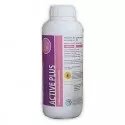
- Active Plus (dosage: 2-4l/ha)
Active plus, administered throughout the season, will serve to provide constant external support: inoculation of mycorrhizal fungi capable of counteracting the proliferation of saprophagous organisms present in asphyxiated and/or poorly draining soils
In autumn, we recommend repeating the surgery, following the same dosage suggested above, based on:
VEGETATIVE RECOVERY PHASE
At this stage, we recommend using the following in fertigation:
- Dentamet (dosage: 10l/ha). First application at vegetative resumption and second application after 10-15 days.
It is a fertilizer based on copper and zinc complexed by a patented cyclic structure with low molecular weight, which allows the plant to better assimilate these two elements. Thanks to its specific cyclic structure, Dentamet stimulates the formation of natural defense substances against environmental adversities, thus ensuring greater resistance to abiotic stresses. In addition, thanks to its low pH value, Dentamet acidifies the area explored by the roots and allows the mobilization of elements that are not very mobile in nature, such as phosphorus.
NOTE: In the most difficult and extreme cases, intervene with Dentamet before mycorrhizae and triocoderm surgery (Active Plus and Remedier).
CHANGEOVER PHASE (Spring/Autumn)
- Vitaseve (dosage: 5kg/ha)
By optimizing lymphatic circulation, Vitaseve allows the plant to react with a strong vegetative propensity, following its use. Plants, therefore, will be able to translocate nutritional elements more efficiently to all their organs. Our advice is to proceed with 2 interventions, both in spring and autumn, 7 days apart.
Solutions for hobbyists
If you have noticed the presence of dry disease in your garden or on the plants of your lemons, then you can follow the good agronomic practices recommended so far and proceed with the following interventions:
- foliar fertilization with Welgro Cu+Zn (dosage: 15g/10l)
From March onwards, intervene with:
- Active Plus (dosage: 200-400mll/1000sqm)
Next, apply:
- Tricod-R (dosage: 300g/1000sqm)
Tricor-R, inoculum of mycorrhizal fungi containing trichoderma guarantees a double effect: on the one hand, it protects the root system from the attack of pathogens, depriving them of space and nourishment. On the other hand, mycorrhizae show an excellent ability to make nutrients available to the plant
Good pruning practices
Pruning operations are also agronomic practices that we recommend you carry out, here's how. Make sure to make the cut at a distance of at least 30 cm from the dry part, taking care to disinfect the tools. The latter, in fact, are the first vehicles for the transmission of pathogens and bacteria from one plant to another.
We have written an article where we tell and describe the good practices to be carried out during pruning.
The right watering
Among the useful agronomic practices, proper water management plays an important role. We will try to explain why proper irrigation plays an important role by introducing the concept of "field capacity".
.jpg)
The field capacity (fig.2) indicates the water content in the soil under optimal conditions as regards the ratio of water to air in the soil. As we know, when the micro-pores are totally full, the soil is found in the field capacity and the water is able to be available and, consequently, given to the plants. On the contrary, if the humidity values are higher than the field capacity, the plants would run the risk of root asphyxiation, due to poor aeration due to prolonged excess water (fig.1). Finally, the permanent withering point (fig. 3) indicates the amount of water retained by the earth particles with such force that it cannot be absorbed by the roots.
With respect to what we have already said, it is important to underline that field capacity is not a static value, but a variable that depends solely on the characteristics of the soil, as well as its porosity. Obviously, it is very difficult to talk about the "right amount of water", depending on the correct intake of various factors such as:
- Temperature
- the presence of wind
- the very nature of the soil (a clayey soil, for example, will need a lower water supply than a medium-textured soil)
Considering what we have said so far and bearing in mind that a stressed plant is a plant more prone to diseases and, above all, to the attack of fungi, such as Phoma tracheiphila, we believe that probes can be one of the few really useful, valid and technically suitable tools to ensure the right movement of water in the soil.
Measuring the degree of moisture and temperature of the soil at different times of the day at different depths will help you know when, how and how much to irrigate.
.jpg)
Share this content





 Chronology
 Citrus fruits
 Turf
 Stone fruit
 Olive tree
 Ornamental
 Vegetables
 Actinidia (Kiwi)
 Screw
 Hobbies and insights
 Pome Fruit


