
Your cart
There are no more items in your cart
Citrus treatment calendar: Guide to fertilization and defense
Categories :
Chronology
, Citrus fruits
Index
December - January - February: Preparing the plant for vegetative resumption
Citrus foliar fertilization: Ensure rich flowering
March - April - May: Supporting flowering and fruit set
Citrus treatments against parasites
June - July - August: Increased potassium absorption
September - October: Final nitrogen input
Introduction
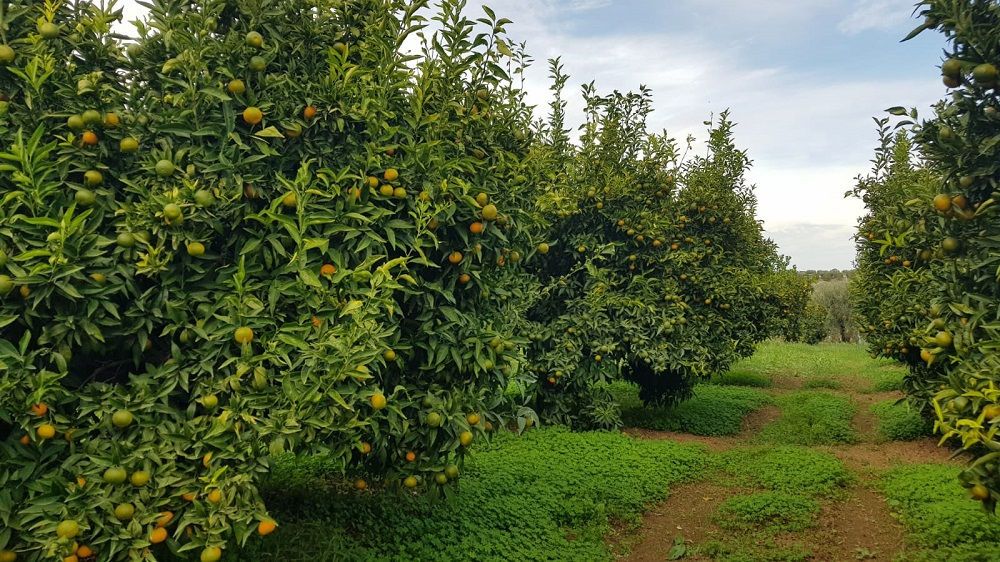
Citrus fruits, belonging to the genus Citrus, include famous varieties such as orange, lemon, grapefruit, tangerine, bergamot, cedar and many others. Although cultivation practices may vary slightly between species, there are common techniques to ensure optimal cultivation, focusing in particular on fertilization and pest management.
Fertilization of citrus fruits and treatments in a citrus grove in production
December - January - February: Preparing the plant for vegetative resumption
During the winter, it is essential to prepare the soil and the plant for the new production season. Fertilization serves to return the removed nutrients to the soil and to provide the macro and microelements essential for flowering and fruit set. Nitrogen (N) is the most important element in this phase, followed by phosphorus (P) and potassium (K).
Recommendations for fertilization:
-
Conventional cultivation:
- Vigor Top = 1 kg/plant
- Prodigy Plus = 1-2 kg/plant
-
Organic cultivation:
- Yarasuna Lush organo-mineral fertilizer NPK 8.5.5+11 CaO = 2-3 kg/plant
The distribution of the fertilizer should be located along the row or under the canopy to avoid waste, and incorporated into the soil with a milling 10-15 cm deep.
Citrus foliar fertilization: Ensure rich flowering
: Ensure rich blooming
A foliar feeding schedule in January and February is essential to ensure abundant flowering. We recommend two treatments spaced out for 15-30 days with:
- Phylen: 500-700ml/hl (in bio replace with Gold Dust = 300ml)
- Furia = 400 ml / hl bio
- Welgro Complex: 200 ml/hl (in bio replace with Trazex = 100ml)
- Soybean Oil Max 85: 150 ml / hl organic
March - April - May: Supporting flowering and fruit set
In spring, fertilization must focus on the supply of phosphorus and potassium, essential for the development of flowers and fruits. Phosphorus is crucial for the plant's biochemical processes, and its lack can cause phyloptosis (early leaf drop) and delayed flowering. Potassium regulates osmotic potential and photosynthesis, also affecting the quality of the fruit.
Recommended fertilization:
-
Conventional cultivation:
- Multicote Agri 16.21.21 = 1 kg per plant
-
Organic cultivation:
- Orga-Kem 6.11.8: 6-8 ql/ha
- Polysulphate: 4-6 ql/ha
In late March and April, it is essential to integrate boron and calcium to support the development of flowers and young twigs. We recommend:
Would you like to receive our advice? Subscribe to our Newsletter - 8% discount now for you
|
Citrus treatments against parasites
During spring, attacks by aphids, leafhoppers , and mites can occur. Frankyl foliar fertiliser, which has natural repellent properties, can be used to contain these infestations. If the attacks are severe, we recommend the use of insecticides such as Epik SL (150 ml/hl), allowed in conventional cultivation, or Asset Duo (240 ml/hl), allowed in organic farming:
June - July - August: Increased potassium absorption
During the summer months, the demand for potassium for osmotic regulation and photosynthesis support increases. If a good production is expected, it is recommended:
- Polysulphate: 1 kg/plant
As early as the end of June, the first mealybugs and whiteflies can be observed. Monitoring through traps is essential. In the event of infestations being reported, intervene with white oil such as Oliocin Plus (1.5 lt/hl) or Biolid Up, products also allowed in organic farming.
September - October: Final nitrogen input
At the end of summer, nitrogen uptake increases, making it necessary to fertilize with:
- Ammonium Sulphate = 3-4 ql/ha
This contribution promotes the growth and colouring of the fruit, as well as preparing the plant for the following season.
Irrigation of citrus fruits
Proper irrigation management is essential to obtain a productive citrus grove. During the irrigation season, one hectare of citrus fruits requires about 5000 cubic meters of water, which must be evenly distributed to ensure maximum exploration of the soil by the roots. Irrigation must be adjusted according to the nature of the soil and climatic conditions.
Citrus plants grown in pots need more watering frequency, due to the reduced volume of soil available for roots.
Pruning citrus fruits
Pruning is a delicate practice that requires specific knowledge. It's crucial to avoid crossed branches, which can hinder growth and create hiding places for pests, and to remove branches that take energy away from the plant. Proper pruning can significantly increase productivity, with plants that can produce up to 400 kg of fruit.
Tillage
In recent years, the tillage between the rows has been reduced, but this has caused problems with compaction and reduced soil oxygenation. Light tillage at a depth of 10-15 cm, twice a year, can improve soil porosity and fertilization efficiency.
The virtues of citrus fruits
Citrus fruits not only enrich our diet, but also offer many health benefits. For example, orange is rich in vitamin C and other bioactive compounds that help boost the immune system and improve cardiovascular health. Similarly, lemon has alkalizing properties , while still containing citric acid, and is ideal for regulating the body's pH.
Share this content


 Chronology
 Citrus fruits
 Turf
 Stone fruit
 Olive tree
 Ornamental
 Vegetables
 Actinidia (Kiwi)
 Screw
 Hobbies and insights
 Pome Fruit


By Vale 2021-05-11 04:13:37
Buongiorno, innanzitutto complimenti per questo articolo molto dettagliato e completo che spiega esattamente cosa è come intervenire passo dopo passo. Ho cercato di tradurre in costi ad ettaro il vostro programma che vorrei seguire per il mio agrumeto, il costo per ettaro di concimazione e trattamenti bio che vien fuori è di circa 3000€/ha possibile o mi son sbagliato in qualcosa? Grazie
By ninoasaro 2020-11-30 22:18:37
300 gr/ql. ql sta per quintali ? --RISPOSTA-- : Esattamente, quintali di acqua.