
Your cart
There are no more items in your cart
Serpentine citrus miner : how to fight it
Categories :
Chronology
, Citrus fruits
Index:
How to Eliminate the Citrus Mining Coil
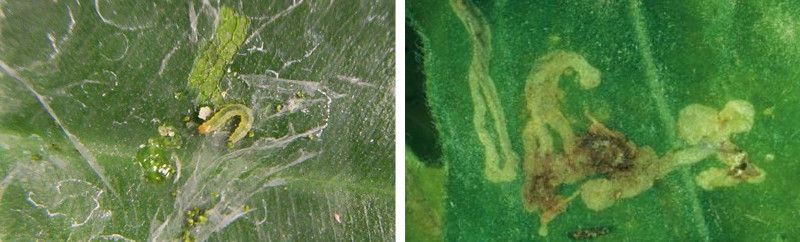
How to Eliminate the Citrus Mining Coil
The serpentine miner (Phyllocnistis citrella) is a species of moth in the Gracillariidae family.
It feeds on the green parts of the youngest and most tender leaves (those between the upper and lower cuticle, to understand better). In addition to young leaves, it is also likely to find their attack on young lemon, orange, tangerine branches.
How do you care for the serpentine miner?
Phyllocnistis citrella settles in new vegetation, creating various damages especially to young seedlings in breeding. The activity of the moth, in fact, imitating the development of plants, damages all the new vegetation.
In order to optimize interventions, avoiding expensive and polluting actions, our advice is to monitor adult flights, through captures with:
After the first catches, it is advisable to carry out a scheduled treatment and intervene every 7-15 days from June to the end of August, depending on the temperatures.
In case of capture, it will be necessary to intervene with a conventional control, alternating every 8 days treatment A and treatment B, both by foliar application:
TREATMENT A
- Inex-A (dosage: 30ml/100lt)
- Vitalfit(dosage: 200ml/100lt)
- EPIK SL (dosage: 200ml/100lt)
- Megafol (dosage: 250ml/100lt)
TREATMENT B
- Inex-A (dosage: 30ml/100lt)
- Control dmp (dosage: 50ml/100lt), acidifier that improves the pH of the solution that allows the active ingredient to act better
- Affirm (dosage: 200g/100lt), insecticide based on Emamectin benzoate
- Megafol , anti-stress stimulating fertilizer that helps the plant to vegetate better( dosage: 250ml/100lt)
- Welgro Complex (dosage: 200g/100lt), NPK fertilizer with magnesium and microelements
If we encounter a significant increase in temperatures, to limit the harmful effect of the sun's rays, it will be advisable to add to the treatments:
- Gold Dry (dosage: 1g/100lt)
For the hobbyist without health authorization (license), our advice is to use products on free sale and allowed in organic farming, able to provide support to the plant to ensure that it is not attacked:
- Hunter(dosage: 30ml/10lt)
- Lepinox PFnPE (dosage: 20ml/10lt)
We recommend, also in this case, to alternate Hunter and Lepinox every 7-10 days and use Blackjack in a mixture (dosage: 20ml/10 lt) to improve the interventions.
A further strategy, very modern and equally functional, consists in the use of predatory insects, which feed on the citrus miner Serpentine, without causing any damage:
- Miglyphus (maximum effectiveness at temperatures between 15 and 25°C). In order for these pests to work at their best, they must be applied promptly, as soon as the first tunnels on the vegetation are detected. It is important that these small predatory insects are at the peak of their vitality to ensure maximum yield: for this reason, our choice was to entrust the shipment directly to the producer. As soon as you receive the product, our advice is to launch immediately.
... CONSIDERATIONS...
In addition to being of an aesthetic nature, the damage of the miner is essentially of a physical-structural nature:
Phyllocnistis citrella compromises the development and choice of young branches designated to become primary branches, necessary for the formation of the productive structure of the plant, with a consequent delay in its own formation.
The first obstacle will therefore be a delay in the creation of a uniform citrus grove in full production. Precisely for this reason, it becomes advisable to control this insect not only in the first few years, but also in the following ones.
For those who want to learn more
How to recognize a miner
It is a moth with very small size with a black spot on the tail, towards the end. Its wings are silver with whitish hues. The larvae are usually yellow-green with a length of about 3mm.
What does it feed on?
Phyllocnistis Citrella feeds on leaves, especially young ones, preferring those of citrus fruits (primarily lemon, followed by orange). The parasite does not reject plants from other families, such as tomatoes or legumes.
As we have already said, it feeds on leaves, but how?
The larvae of this insect dig into them, creating very long tunnels called "mines".
These mines are snake-like and can be found both on the tissues of the leaves and on the shoots.
By feeding on them, they destroy the epidermal cells, of which only the outer wall remains, which together with the cuticle covers the mine.
If the leaf is hit by several mines, the latter will be deformed, turn yellow and dry out.
The serpentine gives birth to multiple generations in a calendar year; it is greatly influenced by temperature: a cool and humid environment promotes its life.
Damage caused by coil miner and attached parts
They are the larvae that cause the most damage to the leaves. Leaf malformations, which occur with longitudinal folds and with the flaps rolled downwards, will also be different depending on the stage of development in which the leaf is located.
They attack from spring to about the end of autumn.
We recommend starting treatments at the end of May, treating mainly on young implants for the prevention of major damage.
Share this content


 Chronology
 Citrus fruits
 Turf
 Stone fruit
 Olive tree
 Ornamental
 Vegetables
 Actinidia (Kiwi)
 Screw
 Hobbies and insights
 Pome Fruit


By Antonella Marchetti 2020-05-23 10:31:56
Buongiorno, ho una pianta di limone sul terrazzo, in vaso, alta circa m. 1,20. Oggi ho visto sul retro e anche sulla faccia superiore di alcune foglie degli agglomerati di palline trasparenti. Li ho tolti con una spugna umida e sulle foglie sono rimasti dei puntini scuri. Forse si potrebbe trattare di uova di minatrice? Come posso fare? ---RISPOSTA--- Gentile cliente, mandi le foto a questo numero: 3356200300, cercheremo di aiutarla. Cordiali saluti