
Your cart
There are no more items in your cart
Fight against the Mealybug of citrus fruits Planococcus citri
Categories :
Chronology
, Citrus fruits
Index
1) Cottony mealybug: how to recognize it
2) What are the harms of cottony cochineal?
.jpg)
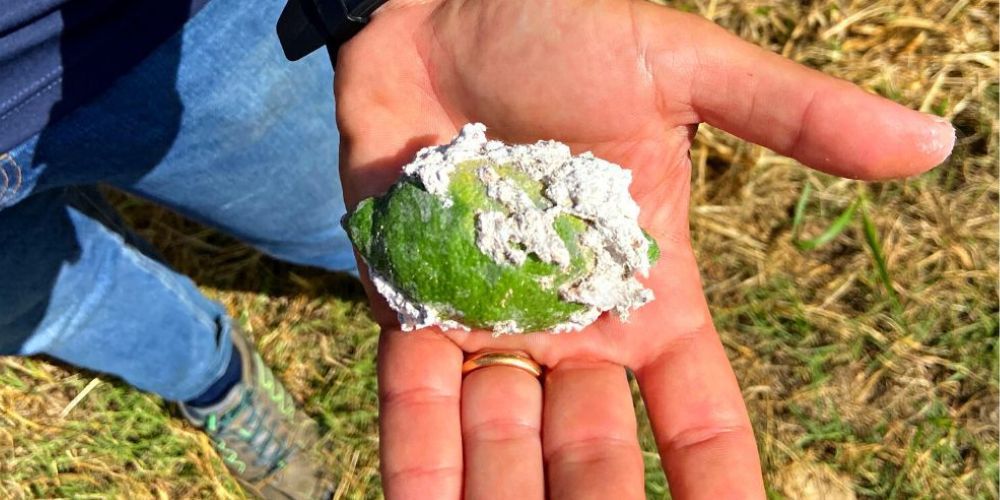
The presence of cottony mealybugs (Planococcus Citri) is found by the trafficking of ants on plant trunks and branches, especially citrus fruits. This annoying and harmful parasite, in fact, produces sugary secretions which, first attract ants and which, subsequently, developing into sooty mold, smear the fruits. The ants, then, by physically moving the nymphs to positions favorable to the birth of a new colony, favor the propagation of the infestation.
But how do you fight cottony mealybugs? Let's see together how to recognize it, the damage it causes and the strategies for fighting it
1. Cottony mealybug: how to recognize it
Planococcus Citri is a polyphagous insect widely spread in temperate areas, in the open field or in greenhouses. The cottony cochineal mainly attacks citrus fruits, causing damage in particular to orange, tangerine and lemon. However, ornamental plants (herbaceous and arboreal) outdoors and in greenhouses, vines and figs can also be host plants of this harmful pest.
How can we recognize it?
The adult female of Planococcus Citri is characterized by a body, about 2.5-3 mm long, covered with a waxy powder. It will be very easy to recognize and differentiate it from other mealybugs because it is surrounded by a series of wax rays of equal length, except for the two caudal ones, which are longer.
Due to their length (1mm), however, the males of Planococcus Citri are less easily identifiable: they are, however, equipped with wings and have a reddish-brown body.
In spring, after being fertilized, the female cottony cochineal begin oviposition which takes place in an ovisack formed by wax flakes. This ovibag takes on a cottony appearance and can hold up to 600 eggs.
The nymphs, with a yellowish color, are instead about 0.5-1 mm long when ripe.
.jpg)
***
***
2. What are the harms of cottony mealybugs?
On citrus plants, it is possible to find this insect near the fruits, especially in the areas of contact between leaf and fruit. Basically, we can distinguish two types of damage from cottony cochineal:
- direct damage, i.e. damage caused by the female cottony cochineal which, by subtracting linfa from the plant, stops its growth with a consequent reduction in the harvest
- indirect damage: production of honeydew and abundant waxy secretion, with the development of sooty molds and consequent depreciation of the product
Even particularly dense vegetation can cause the spread of the disease: such a situation, in fact, favors the formation of colonies that proliferate mainly in shaded areas and in conditions of high humidity.
Also not to be underestimated is the fact that the attack of Planococcus Citri favors the presence of other insects, including the larvae of lepidopteran Fictidia Cryptoblabes gnidiella that find refuge among the waxy clusters; These larvae damage flowers and fruits.
***
***
3. Fight strategies
Beyond some agronomic control practices aimed at promoting the aeration of the foliage, the elimination of attacked fruits and the good rules of balanced fertilization, the strategy we suggest is mainly based on various launches of a specific useful insect (Anagyrus vladimiri) alternating with the use of white oil.
How to proceed?
Professional Strategy - Hobbyist Strategy
Our first suggestion is to intervene in the post-pruning phase (March) with:
- Oliocin Plus (dosage: 25-40l/ha) or Biolid Up (dosage: 1-1.5l/ha)
Oliocin plus, a paraffinic oil with a high degree of purity, acts mainly by contact on cottony mealybug eggs. Our suggestion is to use a large volume of water, depending on the size of your plants, trying to water the vegetation evenly, taking care that the intervention actually enters the plant
Biolid Up is a mineral oil with a high level of purity that acts by contact on eggs or mobile forms of insects, such as cottony cochineal
Late May/early June, proceed with a first launch of:
- Citripar (dosage: 2 bottles/ha)
Take care to place this product on the branches of your citrus plants, near the hearths and possibly in areas not exposed to direct sunlight. After flickering, the adults of Anagyrus vladimiri inside Citripar come out in search of cottony mealybugs to parasitize.
20 days after the first launch, you will be able to make:
Intervention in Biological
- Oliocin Plus (dosage: 25-30l/ha) or Biolid Up
conventional intervention
- Closer (dosage: 40cc/hl)*
- Oliocin Plus (dosage: 25-30l/ha) or Biolid Up
*... ATTENTION...
We bring to the attention of our readers that, with the decree of 15 February 2024, the Closer has obtained the extension of emergency use on citrus fruits until 28 June 2024
At the beginning of July, make a second launch of:
- Citripar (dosage: 2 bottles/ha)
If you still notice infestation, 20 days after the second launch, proceed again with Oliocin Plus.
At the end of August, proceed with the third and final launch of:
- Citripar (dosage: 2 bottles/ha)
In March, you will be able to intervene with:
Dilute 30 ml of Biankoil in 10 litres of water, taking care to water your plant evenly and ensuring a distance of at least 30-40 cm.
Late May/early June, proceed with a first launch of:
After 20 days, intervene again with Biankoil. Proceed with 2 more Citripar launches, one in July and the last in August
Would you like to receive our advice? Subscribe to our Newsletter - 8% discount now for you
|
Share this content


 Chronology
 Citrus fruits
 Turf
 Stone fruit
 Olive tree
 Ornamental
 Vegetables
 Actinidia (Kiwi)
 Screw
 Hobbies and insights
 Pome Fruit


