
Your cart
There are no more items in your cart
Anthracnose or leprosy of the olive tree
Categories :
Chronology
, Olive tree
Index

Olive leprosy (Anthracnose)
Olive leprosy, also known as Anthracnose, is a dangerous disease of the olive tree that causes damage to the fruit and oil production, as well as to leaves, fruiting twigs and even parts of branches, with general debilitation of the plant.
Responsible for Anthracnose is a fungus called Colletotrichum Gloesporioides, which finds its ideal environment for infection at temperatures between 16 and 25 degrees and high atmospheric humidity.
For this reason, an irrigated olive grove is more vulnerable, as it adds the favorable degree of humidity to the temperature.
There are two particular phenological moments in which the primary attacks occur: flowering and veraison. However, secondary attacks before flowering to the detriment of leaves and twigs are also possible; During the summer, damage occurs to the detriment of drupes and vegetation, and after veraison to the detriment of drupes.
Damage to drupes affects the quality and quantity of production, and the quantity and quality of the oil that is extracted, which has no characteristics of an extra virgin olive oil, a reddish color, no scent except rancid and a high acidity.
Olives attacked by leprosy cannot be preserved in brine, nor salted, nor can they have any other form of preservation, as they would rot immediately.
Would you like to receive our advice? Subscribe to our Newsletter - 8% discount now for you
|
The prevention and control of Olive Leprosy (Anthracnose) must be implemented with copper-based products:
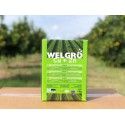
- Welgro Cu-Zn (dosage: 200gr/hl)
or with products based on Pyraclostrobin, such as:
- Cabrio WG (dosage: 50gr/hl)
The most sensitive moments for an olive grove to attack Anthracnose are:
- pre-flowering phase (May)
- post-setting phase (June)
- drupe growth phase (July)
- Veracing and ripening (October)
In addition to these specific periods, other moments must be added in which it is appropriate to intervene with copper treatments:
- immediately after harvesting
- After pruning
- after any frost or hailstorms
Share this content




 Chronology
 Citrus fruits
 Turf
 Stone fruit
 Olive tree
 Ornamental
 Vegetables
 Actinidia (Kiwi)
 Screw
 Hobbies and insights
 Pome Fruit


