
Your cart
There are no more items in your cart
Olive Diseases and Defense Strategies
Categories :
Chronology
, Olive tree
Index
The olive tree is one of the oldest and most valuable plants, both symbolically and profitably. Despite the typical resistance of the plant due to its rusticity, the olive tree is subject to attack by multiple pathogens, which can cause serious diseases. Among the fungal diseases we mention peacock's eye, by far the most dangerous, particularly on some more sensitive varieties. It becomes essential, therefore, to be able to recognize them and have the right strategy to fight each pathology.
Olive mange (Pseudomonas Savastanoi)
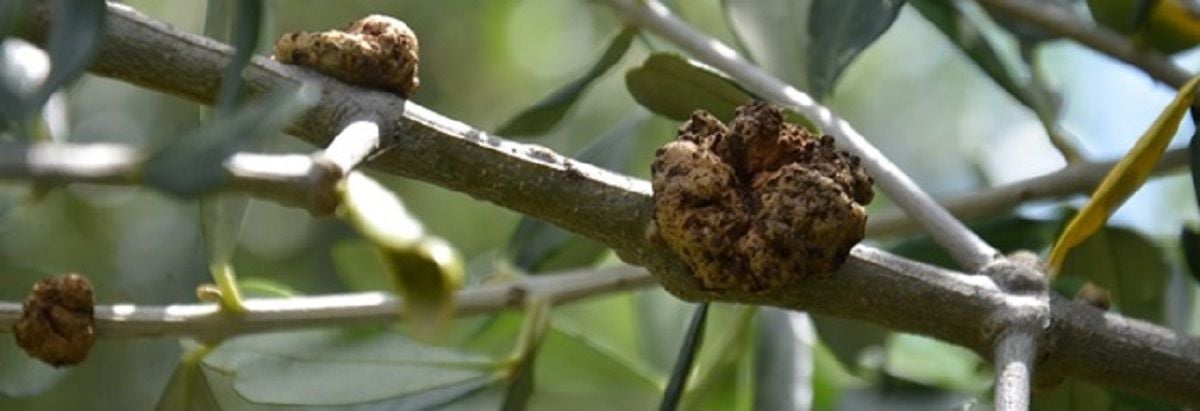
Olive mange is a pathology that should not be underestimated, especially in the case of young seedlings in the nursery. It is a bacterial infection that penetrates the plant through wounds caused by insect bites or mechanical damage (e.g. hail and frost) or by cultivation operations, such as injuries caused during the harvesting phases.
How do you fight olive mange?
It will be necessary to remove the tumors that form (see photo) and disinfect, intervening with copper products such as:
- Cobre Nordox or Cobre Nordox Pfnpe (dosage: 200g/100l)
A further intervention to combat olive mange, moreover, is to eliminate the plant from the infected parts, making cuts in the area below the tumor growths, then taking care to disinfect the wounds with the same product.
In the case of large tumor masses on important branches or trunks, dendro-surgery techniques can be used, also followed by abundant copper disinfection .
If you find major wounds due to the removal of infected tissues, our advice is to use healing mastic, in order on the one hand to prevent the possible entry of new pathogens and on the other to facilitate the healing process.
Verticillum (Verticillum Dahliae)
Verticillosis is a fungal disease widespread in all areas of olive cultivation, which is more aggressive and faster in its course on young plants (5-15 years). At the leaf level, symptoms manifest themselves with:
- loss of turgor
- yellowing
- phylloptosis
Branches and branches may also be subject to desiccation.
To reduce the risks due to Verticillum Dahliae, in addition to using certified propagation material, it is a good idea to plant the plant in the years immediately following the cultivation of other species susceptible to attack by the pathogen.
In the event that there is a strong presence of the fungus, in addition to removing the symptomatic branches, our advice is to intervene directly on Verticillum Dahliae to limit its spread, through specific actions.
As a first intervention, we recommend that you carry out fertigation with:
- Dentamet (dosage: 10 l/ha)
After 10-20 days, you can intervene in fertigation with:
- Oxyclean (dosage: 10 l/ha)
The aim of these interventions is to reduce the pressure of the pathogen through the use of copper and hydrogen peroxide.
In the next phase (2-3 days), we recommend carrying out a 3rd fertigation with:
- Ecogreen v60 (dosage: 10 l/ha)
- Remedier (dosage: 2.5kg/ha)
Trichoderma, activated with a good organic substance, will compete for space and nutrients with the pathogen, consequently limiting its spread and drastically reducing the possibility of infection.
The last intervention we are going to carry out will be at the level of the root system, in order to reconstitute the lymphatic flows compromised by the activity of the pathogen. In this case, our advice is to proceed with two foliar interventions 15 days apart, through the use of:
- Vitaseve (dosage: 500 ml/hl).
Prays Oleae (olive moth)
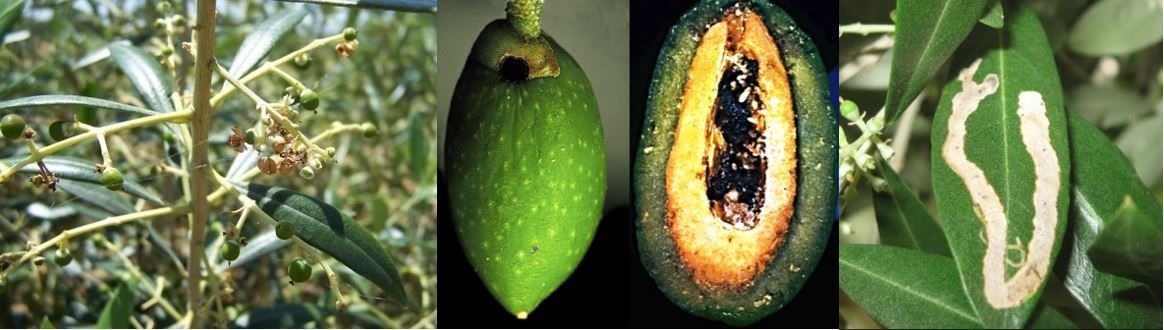
Prays Oleae is a phytophagous that, in the larval stage, produces damage on flowers, fruits and finally on leaves. Damage to flowers is usually negligible.
However, the second generation (so-called carpofoga) attacks the fruit in May-June, causing them to fall early . It is only in the event of an attack on the fruits, in fact, that an intervention against Prays Oleae is recommended.
Our advice, therefore, is to intervene in the late flowering phase or immediately after, through one of the following products:
- Costar WG (dosage: 100 g/hl)
- Kaimo Sorbie (dosage: 20 g/hl)
The intervention threshold varies according to the destination of the product (oil or table). In this case, therefore, it will be advisable to check the production specifications of your region.
Olive fly - Bactrocera oleae
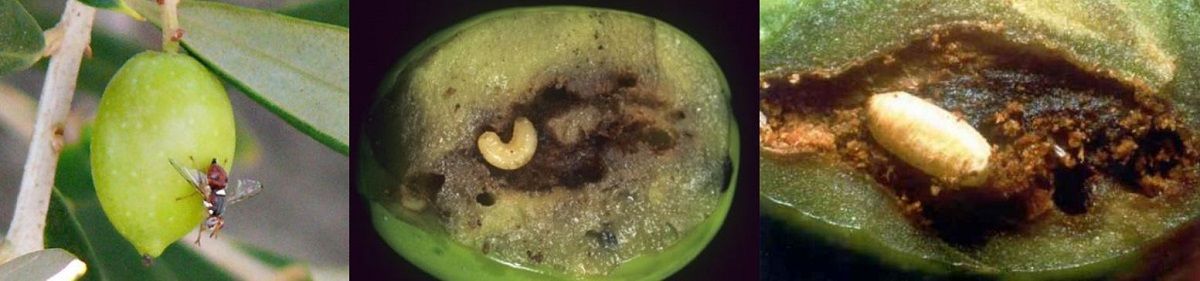
The olive fly is a dangerous pest present in all olive groves in Italy and the world.
In order to identify the most effective time to perform the intervention against Bactrocera Oleae, our suggestion is to install:
- 3-4 Dacus Track plus monitoring traps per hectare, alerting you only if the threshold of at least 4 catches is reached in a day.
If you reach this threshold for three consecutive days, then we recommend that you intervene with specific registered chemicals, such as:
- Sivanto (dosage: 75ml/hl)
or
- Kaimo sorbie (dosage: 30ml/hl)
If you want to choose to adopt biological control means, in which our team places a lot of trust, then you can place, alternatively, one of the following traps:
- Dacus Trap , about 90 traps/ha
- Eco-Trap
- Dakofaka , every two plants and so that the traps are no more than 10 meters apart.
The traps have a duration of 4 - 6 months and can be placed as early as late June or early July.
For proper monitoring, together with the mass capture traps, we recommend that you place one or two monitoring stations with Dacus Track, which you will need to monitor almost daily.
Also in this case, if the limit of four catches per day is reached, for three consecutive days, it will be necessary to carry out a treatment with a pyrethrum-based insecticide product, in order to lower the adult population and bring it back within physiological limits.
A further method of biological control is treatment with:
- Kaolin Surround (dosage: dose of 2-3 kg/100lt). It will be necessary to carry out a couple of interventions to evenly cover the plant with a layer of light powder, which will hide the olives from the view of flies and will still make it difficult to penetrate for egg-laying.
Otiorhynchus Germar
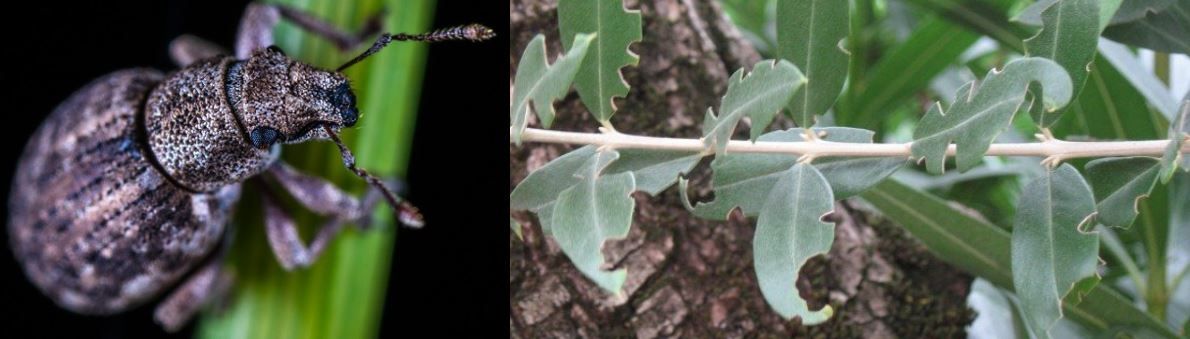
Another particularly aggressive pest on young olive trees is the Oziorrhynchus.
It is a beetle that destroys new vegetation in a short time, creating characteristic half-moon damage on the leaves that are devoured from dusk to dawn.
It is important to fight the weevilbird at the exact moment when it is found, defending the seedlings with:
- Rincotrap weevil, to be placed around the trunk
To combat this pest, you can also use sticky traps. However, if you choose to use the latter method, it is very important to pay attention to the blades of grass in the vicinity of the plants. The idlerynchus, in fact, will take advantage of any foothold to reach the seedlings and devour them.
Olive leprosy
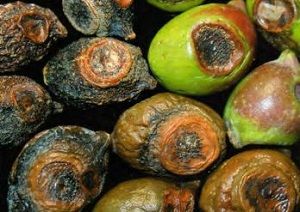
It is a fungal disease that mainly affects fruits.
The classic symptom of olive leprosy is a localized depression of the fruits, which tend to rot.
It is important to act both through specific agronomic practices that avoid stagnation of water at the base of the plants, and through the use of copper oxide-based products such as
- Welgro Cu-Zn (dosage: 200gr/hl)
or with products based on Pyraclostrobin, such as:
- Cabrio WG (dosage: 50gr/hl)l)
Find out more about theolive tree or Anthracnose
Share this content


 Chronology
 Citrus fruits
 Turf
 Stone fruit
 Olive tree
 Ornamental
 Vegetables
 Actinidia (Kiwi)
 Screw
 Hobbies and insights
 Pome Fruit


