
Your cart
There are no more items in your cart
Olive Margaronia (Corn Borer):control strategies
Categories :
Chronology
, Olive tree
The Olive Margaronia, also known as the Olive Borer or green olive moth, is a pest particularly present in Mediterranean areas. The main damage from the green moth occurs when the butterfly is still in its larval stage, precisely because of its trophic activity.
In the course of this article, we will find out what damage Margaronia is able to cause to olive trees and what are the means of control available to combat it.
Index
Olive Margaronia: Fighting Mode
Would you like to receive our advice? Subscribe to our Newsletter - 8% discount now for you
|
Green olive moth: the damage
Although until some time ago it was considered a minor parasite (so much so that even any type of intervention is not recommended), to date the presence of Margaronia has significantly increased, together with the damage closely related to its action.
It is very likely that this increase is due to the current climatic conditions, favorable to its habits. This moth, in fact, prefers the night hours and could take advantage of the long hot nights to move.
After the eggs hatch (which generally takes place after a minimum of 3-4 days and a maximum of 18-20 days, depending on the season), the Margaronia larvae emerge to head towards the more tender leaves of the olive tree.
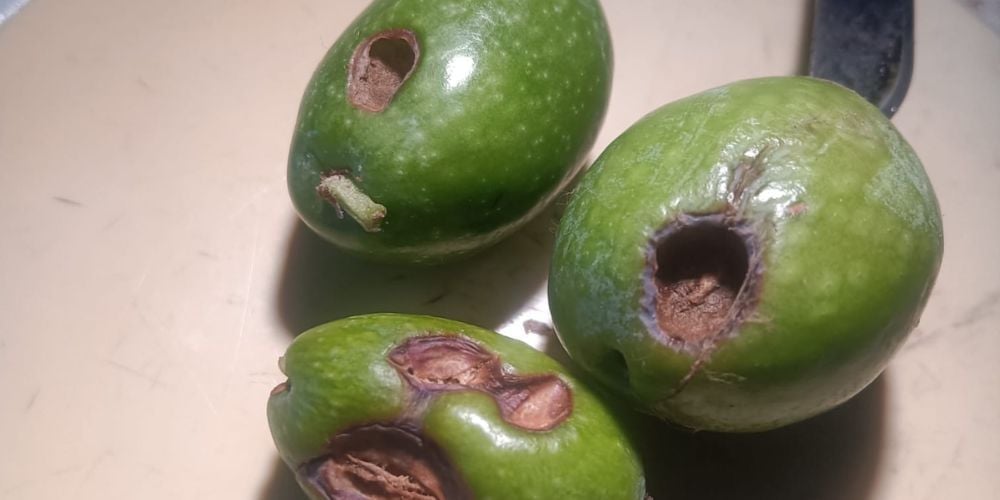
Although, especially in the areas of central and southern Italy, the Margaronia is able to complete up to 5 generations per year, it is precisely in its fourth stage that the larva causes the most serious damage: the fourth-age larvae, in fact, have the ability to erode the drupe, even going so far as to expose its core.
The first signs of attack by Margaronia can be found on the leaves: the trophic activity of the larvae, in fact, causes the destruction of most of the foliage. After that, the larva will mainly buy the young and tender shoots, which will be gnawed completely.
However, in the event of an impactful presence of Margaronia, the drupes will also suffer damage, showing circular notches that expand to the core.
The extent of the damage is closely linked to the age of the olive tree. If young seedlings are attacked in nurseries or in new plants, then a green moth attack can seriously compromise the regular development of branches and shoots, up to their arrest.
It is very important to try to avoid late attacks (end of second - beginning of third week of September). In this case, in fact, a possible attack could lead to a delay in vegetative recovery (following spring)
Olive Margaronia: Fighting Mode
As far as control strategies are concerned, precisely because Margaronia has always been present in a non-worrying way, there are no specially registered active substances. Currently, our technicians have been able to test the effects of Bacillus thuringiensis and Acetamiprid.
For this reason, our advice is to counter the action of Margaronia by proceeding with:
Biobit DF (dosage: 100gr/ql), biological insecticide based on Bacillus thuringiensis. Acting by ingestion, Biobit df damages the intestinal wall of the larva, causing its death in 1-3 days at most. Our advice is to use, at the time of use, a quantity of water necessary to completely cover the crop. In the case of severe infestations, we recommend increasing the dosage of use.
 |
|
A solution to be applied in conventional agriculture, on the other hand, involves the use of:
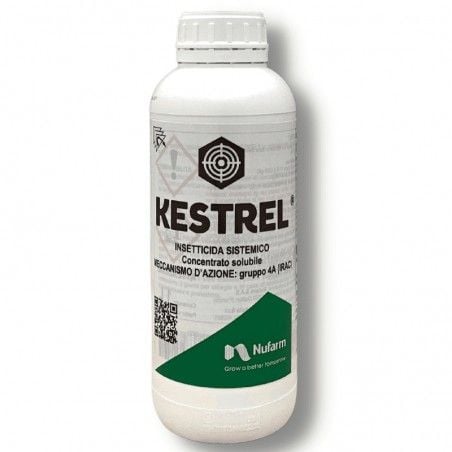
Kestrel (dosage: 50gr/ql), with ovo-larvicidal function.
 |
|
For non-professional users without a license, the Turi-L is available
 |
|
Share this content



 Chronology
 Citrus fruits
 Turf
 Stone fruit
 Olive tree
 Ornamental
 Vegetables
 Actinidia (Kiwi)
 Screw
 Hobbies and insights
 Pome Fruit


