
Your cart
There are no more items in your cart
Olive growing: a guide to growing an olive grove
Categories :
Chronology
, Olive tree

The olive tree, an ancient Mediterranean plant, full of symbols and legends, is a rustic plant; it loves the sun and is content with little water. With little technology, it has been able to extract oil for millennia.
For an effective cultivation of the olive tree, it is necessary to proceed with precise agronomic practices and specific fertilizations. We have therefore decided to proceed with a detailed analysis of the operations useful for each phase of cultivation of the plant.
Index
Nutrition and defence: bottom fertilisation
***
***
Tillage
Although it adapts to any type of soil, the olive tree prefers permeable and loose ones and does not like stagnant water.
To date, avoiding tillage practices has now become a common attitude, to the advantage of chemical weeding and to the complete disadvantage of soil and plant health.
In addition to the environmental damage derived from the abuse of practices that introduce molecules into the soil that disturb and modify its biological balance, the olive tree is developing more and more fragility and it is much more likely that in these conditions the plant will be attacked by bacterial pathogens, such as Xylella.
Our suggestion, therefore, is to proceed with tillage operations after harvesting, pruning and copper treatments and then to administer a good organic fertilizer:
- Agri Bio Aktiv (dosage: 1-2 kg/plant), under the canopy and underground
Deep ploughing will not be necessary, keeping between 10 and 20 cm will be fine. The aim is to prepare the soil to accommodate winter precipitation and to retain water.
In spring, weeding will be appropriate to eliminate weeds that have already been born and perennial and to prevent the germination of seeds that have not yet germinated.
In summer, however, our advice is to proceed with shearing to eliminate the grass that may escape weeding or, even better, to proceed with surface tillage which, among other things, serves to reduce evapotranspiration.
Just as weeding should not be abused, in the same way it should not be overworked: 2 or three tillages a year will be sufficient, always at a maximum depth of 20 cm, in order to keep the roots below that depth (where the availability of water is more abundant and the bacterial life rich).
***
***
Olive tree irrigation
The olive tree is a plant that resists in arid soils, with little water. However, in order to obtain the highest income and a better harvest, it will be necessary to help the cultivation with irrigation every year.
It is estimated that an olive tree, in the summer, needs 40 to 80 liters of water per day and, therefore, it will be necessary to rescue the plant and equip oneself with an adequate irrigation system, which will take into account the nature of the soil and the availability of water.
A good system is to equip yourself with a drip system with the use of 4 drippers to be positioned in 4 symmetrical points at a distance of less than one meter from the stump. Or in a line, two on each side, positioned, the first two, 50-60 cm from the foot, the other two 50-60 cm from the first.
If the drip system is used, it will be necessary to carry out a superficial tillage of the soil, before starting to irrigate, to interrupt any capillarity (particularly in clayey soils) and allow the water to expand and wet a greater extension of soil.
***
***
Pruning the olive tree is the most "technical" of the agronomic practices and is essential for the life, health and yield of the plants.
The logic of pruning is to balance the size of the crown in relation to the size of the stem and therefore to the strength of the plant.
Plants are factories that exploit sunlight to transform it into sugars and enrich the fruits with all those virtues and nutrients useful for life.
In consideration of this, it will not be difficult to understand the common thread that will guide us in pruning, in the choice of branches to leave and those to cut. Pruning is a very important and delicate practice, which requires experience and knowledge of the fertility of the soil, the variety, and the geographical area.
If the wood destined for production is not saved and if vital space is not left for the productive branches, the harvest will be reduced, the oil yield will be scarce and the plant will be unbalanced, with a large production of useless suckers.
***
***
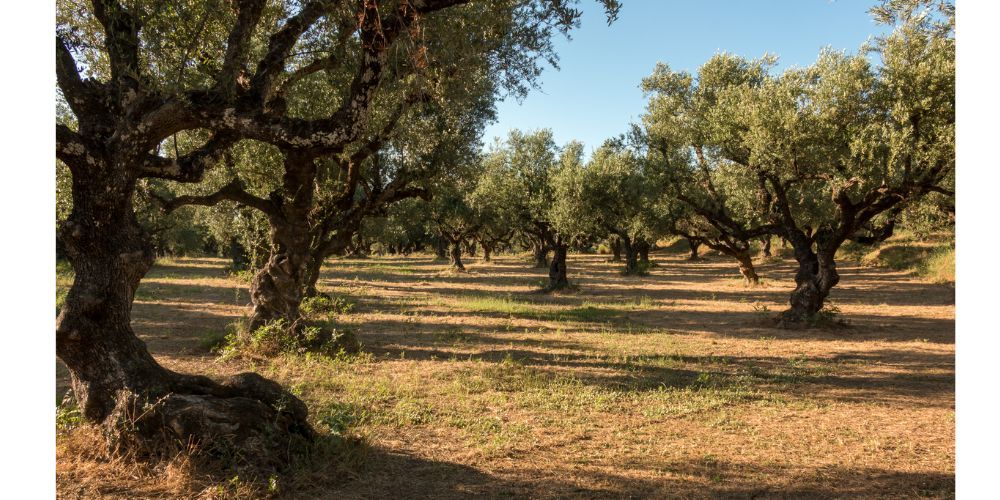
Olive weeding is an economically advantageous practice, but one that has an impact on the environment, dangerous in the event of abuse in terms of quantity and frequency.
Chemical herbicides should only be used to reduce pressure and the presence of perennial weeds, to the advantage of seasonal essences that are easier to control with traditional systems.
Below is a catalogue of perennial weeds that may be useful in deciding on the practice:
- Shamrock
- Acrostid
- Cyperus Papirus
- Convolvulus or Wilhelm
- Coniza Canadensis
- Marsh Reed
- Horsetail
- Bluegrass
- Sorghetta
- Wick or Cyrsium
***
***
Nutrition and defense of the olive tree: bottom fertilization
Considering the high costs of managing an olive grove, today every farmer needs to get the maximum production from his olive trees. It is precisely for this reason, therefore, that the nutrition phase takes on a fundamental aspect. It is very useful to provide a good contribution of elements in the ratio N 3 P 2 K 5.
However, it is essential to ensure constant nutrition for the plant, taking into account that in the first phase (so-called budding) it is advisable that nitrogen (N) prevails. At the little finger, the elements can be in equal measure with each other, followed by a gradual and progressive increase in potassium (K).
It will be good practice to administer organic fertilizers, useful for ensuring a long release of the elements.
Even during the winter vegetative rest, the plants do not interrupt their vital functions. On the contrary, especially at the radical level, the activity continues. The only limit could be the temperature of the soil: therefore, fertilizing the soil at the end of autumn/early winter will serve to create reserve energy in the plant to the benefit of a more abundant and robust flowering, fruit set and production of new vegetation.
***
***
The fertilization of an olive grove
Adequate fertilization of the olive grove will ensure good production every year and, with the help of proper and rational pruning, alternation will also be avoided.
Before talking about fertilizing an olive grove, however, it is very important to improve the structure of the soil, administering a quality organic substance, which will improve the fertility of the soil, but above all will make available to the roots the nutrients already present in the soil and those that we will subsequently administer.
The olive tree has a very long production cycle: it begins to vegetate as early as March, to reach the harvest in November and beyond. During this long period of time, the plant consumes energy and it therefore becomes necessary that it has the right supply of energy for adequate flowering when it resumes.
***
***
In this last phase, we will analyze specific treatments all aimed at the prevention of various olive diseases, from fungal diseases to insect attacks. Whenever possible, we will administer foliar fertilizers, in order to make up for what the plant cannot assimilate or does not find underground. Through this operation, then, we will aim to enhance the presence of other elements that, at certain times, are widely used by the plant.
The purpose of this specific paragraph is to provide you with a calendar of interventions that takes into account the most important problems and, at the same time, is able to provide the olive tree with nourishment and energy such as to stimulate budding and growth of new twigs that will be useful for production in the following year.
While always suggesting and siding with the use of products allowed in organic farming, we have chosen to report both a calendar of organic treatments and a calendar of conventional treatments.
- January-February: conventional treatment
Cobre Nordox (dosage: 250g/100l)
PhyleN (dosage: 500ML/100l)
Welgro Complex (dosage: 200gr/100l)
- January-February: biological treatment
Kyprion (dosage: 200ml/q.le)
Gold Dust (dosage: 300gr/100l)
Trazex (dosage: 100gr/100l)
- Budding start phase: conventional treatment
Kendal Tea (dosage: 300ml/100l)
Vitaseve (dosage: 500ml/100l)
Welgro Complex (dosage: 200ml/100l)
PhyleN (dosage: 500ml/100l)
- Budding start phase: biological treatment
Kyprion (dosage: 200ml/q.le)
Organor N 12 (dosage: 250gr/100l)
Molibor Extra (dosage: 150gr/100l)
- Pinky: conventional treatment
Agroleaf 31-11-11 (dosage: 300gr/100l)
Boroplus (dosage: 100ml/100l)
Kyprion (dosage: 200ml/q.le)
Xentari WG (dosage: 100gr/100l)
- Pinkling: biological treatment
Boroplus (dosage: 100ml/100l)
Xentari WG (dosage: 100gr/100l)
Gold Dust (dosage: 250gr/100l)
- Fruit and vegetables up to olive pepper berry: conventional treatment
Xentari WG (dosage: 100gr/100l)
Cabrio WG (dosage: 50gr/100l)
Mc Cream (dosage: 250ml/100l)
Glibor Ca (dosage: 250ml/100l)
- Fruit up to olive pepper berry: organic treatment
Xentari WG (dosage: 100gr/100l)
Mc Cream (dosage: 250ml/100l)
Glibor Ca (dosage: 250ml/100l)
From June onwards, there are no particular diseases, except for leprosy and the fly
In the second half of July and throughout the month of August, it will be useful to proceed with one or two interventions, through the use of:
- Inex-A (dosage: 30ml/hl) +
- Aquos K (dosage: 300ml/hl), strongly alkaline fertilizer. This particular characteristic is very useful because it inhibits the life of fungi and bacteria, which always prefer a sub-acid or acidic environment.
In this case, the aim is to increase the potassium supply, which results in a consistent increase in oil yield and an increase in the plant's resistance to abiotic stress.
Share this content


 Chronology
 Citrus fruits
 Turf
 Stone fruit
 Olive tree
 Ornamental
 Vegetables
 Actinidia (Kiwi)
 Screw
 Hobbies and insights
 Pome Fruit


