
Your cart
There are no more items in your cart
How do you fight Xylella?
Categories :
Chronology
, Olive tree
After mentioning the damage caused by Xylella fastidiosa, how the bacterium arrived in Puglia and how it spreads, in this article we will propose a defense strategy and, to follow, agronomic practices that aim to contain the damage caused by this bacterium.
Index
How to recognize Xylella Fastidiosa?
***
***
How to recognize Xylella Fastidiosa?
Xylella Fastidiosa is an extremely virulent pathogenic bacterium capable of infecting numerous species of plants, causing huge economic losses. Originally present exclusively in America, Xylella appears for the first time in Italy in 2013 and, more precisely, on the olive groves of Puglia.
The pathogen is transmitted through insect vectors (the most famous is Spittlebug - Philaenus Spumarius) which, moving from one plant to another to feed, transfer Xylella from infected plants to healthy plants, thus causing an epidemic.
To date, the bacterium is still responsible for the dieback of a large number of olive trees in Salento, but also in other regions of Europe.
What damage does it cause?
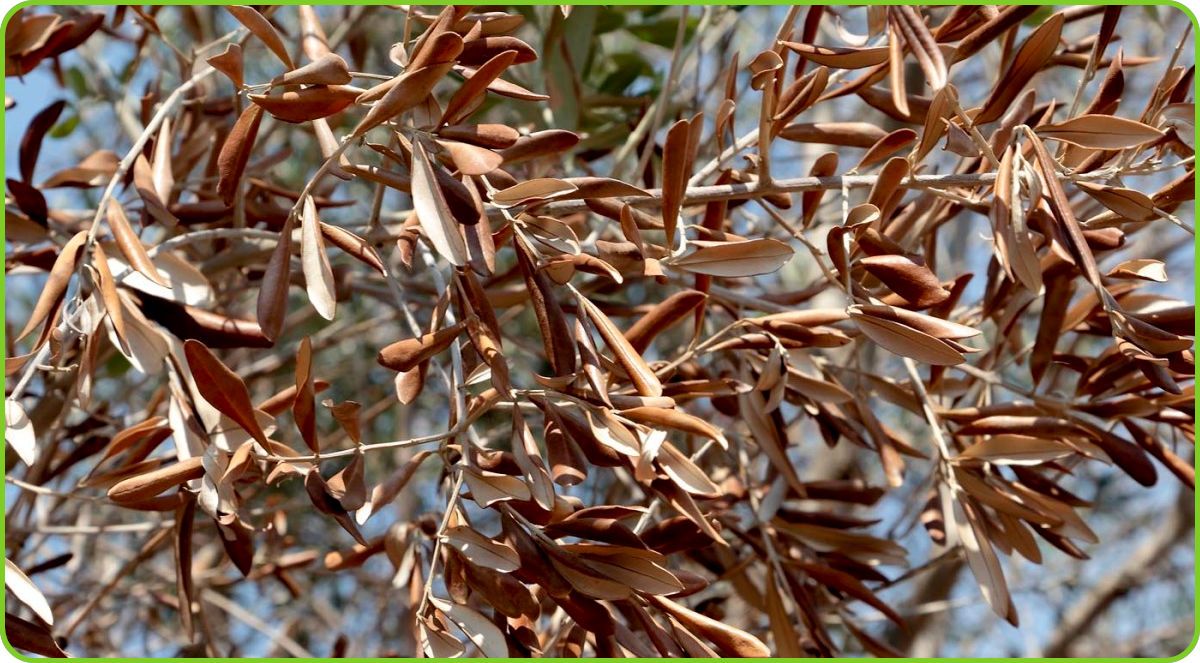
Observing the olive trees attacked by the pathogen, you will first notice a generalized browning of the leaves, and then notice:
- desiccation of more or less large branches
- slow and complete death of the plant
***
***
First of all, we would like to point out that, to date, there is no chemical discovery with targeted action against Xylella. It is therefore necessary to create the conditions, both environmental and on the plant itself, that hinder the virulence of this bacterium.
The strategies that we will propose, therefore, go precisely in this direction.
We will therefore suggest a series of interventions to be carried out in the conditions of greatest vigor of the plant, which aim at correct and accurate agronomic management, taking into account both the defense and nutrition phases.
February
During this month, our advice is to proceed with a treatment of the trunks and, if possible, also of the primary branches with:
- Cobre Nordox (dosage: 1-2 kg/100l), we recommend wetting thoroughly.
The purpose of this treatment is to prevent bacteria harmful to leaves and green parts from rising from the ground and along the trunk.
A further treatment of the whole plant will be carried out through a mixture consisting of:
- Vitaseve (dosage: 500 ml/hl)
- Welgro Complex (dosage: 200 gr/hl)
- Phylen (dosage: 500-600 ml/hl)
In this case, the purpose is to provide energy to the plant to prepare good vegetation and good flowering. We suggest you repeat this same operation when the first leaves appear and when you pinkie your finger.
May-June
During these months, there is a rise in temperatures, which open the door to the beginning of the summer heat.
In similar conditions, the olive tree begins to suffer the weight of abiotic agents: a further defense and nutrition treatment, therefore, will be very useful to prepare it for defense. We suggest you intervene with a mixture of:
The addition of Gold Dry serves to "filter" solar radiation without reducing the benefit of light.
***
***
The right agronomic practices
Among the agronomic practices necessary to contain the damage of the pathogen we point out:
- The reduction or elimination of chemical weeding.
Mowing and shredding weeds are preferable which, in addition to eliminating the grass, return precious organic material to the soil. For the same purpose, but even more effective, are surface ploughing or clod-breaking, capable of interrupting the capillarity of the soil, so as to significantly reduce water losses through evaporation.
2. Adequate organic fertilization, differentiated according to the various seasons:
In autumn:
- Agri bio aktive (dosage: 2-3kg/plant, depending on its size)
In addition to containing organic matter, Agri bio aktive has an inoculum of trichoderma and mycorrhizal fungi that not only protects the plant from the attack of pathogens, but is able to give a strong impulse for its reinforcement
On February:
- Orga kem 6.11.8 +10CaO (dosage: 2-3 kg/plant) +
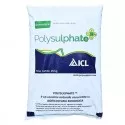
- Polysulphate (dosage: 2-3 kg/plant, depending on plant size)
early springin:
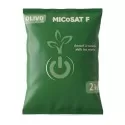
- Micosat F Olive (dosage: administer 50g to the base of the plants). Lay 10-15 cm to facilitate contact with the roots
Finally, we advise you not to destroy shrubs, brambles and spontaneous vegetation that grows along the banks or borders. Small uncultivated areas serve to give shelter to useful fauna that lives at the expense of insects and small animals that can be vectors of diseases.
Share this content



 Chronology
 Citrus fruits
 Turf
 Stone fruit
 Olive tree
 Ornamental
 Vegetables
 Actinidia (Kiwi)
 Screw
 Hobbies and insights
 Pome Fruit


