
Your cart
There are no more items in your cart
Sustainable olive grove with low environmental impact
Categories :
Chronology
, Olive tree
Index
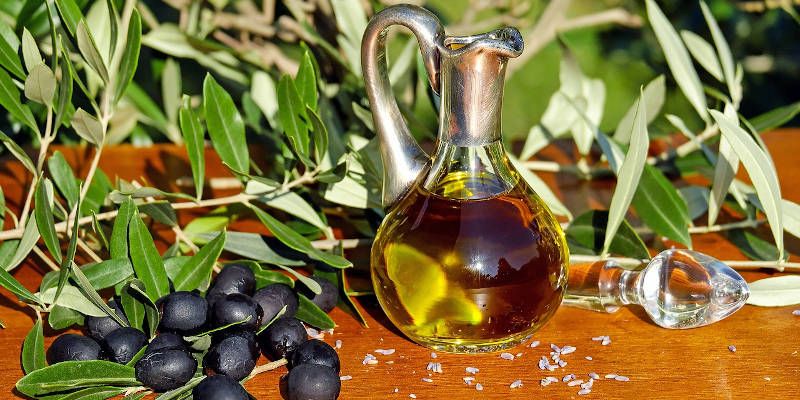
How to produce extra virgin olive oil with zero residue or low environmental impact
Introduction
In this text we propose a method of managing the olive grove with a low environmental impact to obtain extra virgin olive oil in a sustainable way, using products of natural origin that in addition to not being harmful to human health allow to obtain a high quality product and yield.
In this context, it is important to prepare a good nutritional strategy for the plant, which ensures that the plant is lush, well nourished and above all that the drupes are healthy. Damaged olives will favor oxidative and fermentative phenomena, which on the one hand cause a drop in oil yield due to the drop of the olives and on the other hand a poor quality due to a high acidity of the oil.
Oil and sustainability - The sustainable management of olive groves
Would you like to receive our advice? Subscribe to our Newsletter - 8% discount now for you
|
Calendar of interventions
Below we propose a calendar of interventions to be carried out on olive trees:
November (post-harvest)
After harvesting, we recommend using a pelleted NPK organo-mineral fertilizer with the addition of calcium and magnesium, in order to improve soil fertility and promote the absorption of nutrients to allow the plant to accumulate reserve energy for the following season.
Bottom fertilization
-
Orga-kem 6-11-8: 1-1.5 kg/plant depending on the age of the plant
November-December
In the months of October-November the olive harvest takes place, which is carried out with shaking methods, which sometimes create mechanical damage to the plant, so in this phase it is useful to help the plant overcome the stresses of the harvest by intervening with:
Foliar treatment
-
Inex-A: at 30 ml/hl
-
Welgro Cu Zn: 150 gr/hl
February March
In this period it is useful to carry out a basic fertilization with a controlled release fertilizer and an organic fertilizer in order to gradually release the nutrients to the soil that will be useful when the plant wakes up:
Bottom fertilization
-
Agromaster 15.7.15+ 3Mg + 34 SO3: at 1 kg/plant depending on the age of the plant
-
Prodigy plus: at 1 kg/plant
March-April
Beginning of budding: The increase in temperatures and hours of light triggers the budding process, so in this period it is useful to intervene with foliar fertilization based on macroelements and microelements such as boron, in order to prepare the plant for flowering, as well as copper-based treatments for the defense of olives from fungal diseases:
Foliar treatment
-
Inex: at 30 ml/hl
-
Plantafol 30.10.10: 500 g/hl
-
Boroplus: at 200 ml/hl
-
Mash Manica 20 WG: 350 g/hl
Among the main pathologies affecting the olive tree are peacock eye, leprosy and olive mange, which are controlled with copper products. Currently, there are no alternative technical means available on the market to copper products that have the same effectiveness for the control of these diseases.
To contain them, it is preferable to carry out treatments based on Bordeaux mixture (Bordeaux manica) as the product has a coarser particle size composition than other copper formulations, such as to prevent or reduce the presence of copper residues in the plant.
This foliar treatment can be repeated with 1-2 interventions, in order to provide essential nutrients to the plant in this phenological phase.
April May
Favorable years, with a hot and humid climatic trend, could favor the infestation of the olive moth (Prays oleae). To this end, it is useful to monitor the flight of the moth with Super Track Wing traps, installing 2-3 traps per hectare and positioning them 1.5 m above the ground and adding pheromone dispensers (Prays oleae pheromone) inside them. When the peak flight is reached, intervene with:
Foliar treatment
-
Inex-A: at 30 ml/hl
-
ph Special: at 50 ml/hl
-
Xentari WG: at 200 gr/hl
It is advisable to repeat the intervention 1-2 times for better control of the parasite.
In addition, in this period it is useful to carry out foliar fertilization to improve flowering and fruit set with a mixture of:
Foliar treatment
-
Microfol combi: at 200 gr/hl
-
Triplex 19-19-19: at 200 ml/hl
June July
Fruit growth: At this stage, to help the growth of the drupe and improve its quality, it is useful to fertilize with a high potassium content:
Bottom fertilization
-
Agromaster 12-12-22: at 1 kg/plant depending on the age of the plant
Or, alternatively, you can opt for a foliar fertilization strategy with:
Foliar treatment
-
Ener 26: 300 gr/hl (allowed in organic farming)
In years characterized by humid summers we have to worry about the key pest of the olive grove: the olive fly (Bctrocera oleae). The flickering of the adults of the fly begins in early spring. From June to July, ovipositions in the fruits take place, when the eggs hatch the larva penetrates the fruit and develops inside it.
Oil fly control
There are several possible strategies for the control of the olive fly:
-
Starting from the end of June, it is possible to intervene with a kaolin-based corroborant in order to strengthen the plant and create a repellent barrier that disturbs the biological cycle of the oil fly: Rock dust (kaolin) at 40 kg/ha, to be repeated with another 2 interventions 20 days apart.
This intervention can be combined with a treatment with Naturalis (license required) at a dose of 200 ml/hl. It is an insecticide based on beauveria bassiana, this product does not have a killing action and for this reason it must be used preventively.
-
One of the possible strategies is to carry out guided control using yellow chromotropic traps (2-3 per hectare) activated with pheromones specific for Bactocera olae: install Colortrap traps in June and intervene with Naturalis after the first captures of the adults (before the females begin to lay), repeat the intervention every 7-10 days until harvesting.
-
Another strategy provides for the possibility of intervening with Spintor fly (license required) when the intervention threshold is exceeded: 1 l/ha diluted in 4 l of water and apply it in alternate rows or alternate plants, wetting the foliage well. And it is good practice to treat all perimeter plants. Repeat the treatment every 7-10 days until ripe.
-
If you do not want to carry out insecticide interventions, you can intervene with mass capture ("attract and kill") with ECO-TRAP sex traps (license required) (or DAKOFAKA, without pheromone), whose sex pheromone attracts males, while the ammonium salts present allow you to capture the largest number of adults of both sexes. These traps must be installed at the time of hardening of the core (from the end of June-beginning of July). On homogeneous olive groves with medium-sized plants, place an ECO-TRAP for every 2 plants. The most effective use of Eco trap occurs on large olive groves (starting from 1000 plants per hectare).
N:B: We always recommend the addition of Inex-A, at a dose of 30 ml/hl, it is an adhesive wetting agent that allows uniform coverage of the vegetation, avoiding or reducing the loss of product due to dripping.
Olive growing with low environmental impact
Share this content


 Chronology
 Citrus fruits
 Turf
 Stone fruit
 Olive tree
 Ornamental
 Vegetables
 Actinidia (Kiwi)
 Screw
 Hobbies and insights
 Pome Fruit


