
Your cart
There are no more items in your cart
Fertilization of winter citrus fruits January-February
Categories :
Chronology
, Citrus fruits
Index
Winter fertilization of citrus fruits
Organic winter fertilization of citrus fruits
Winter foliar fertilization of citrus fruits
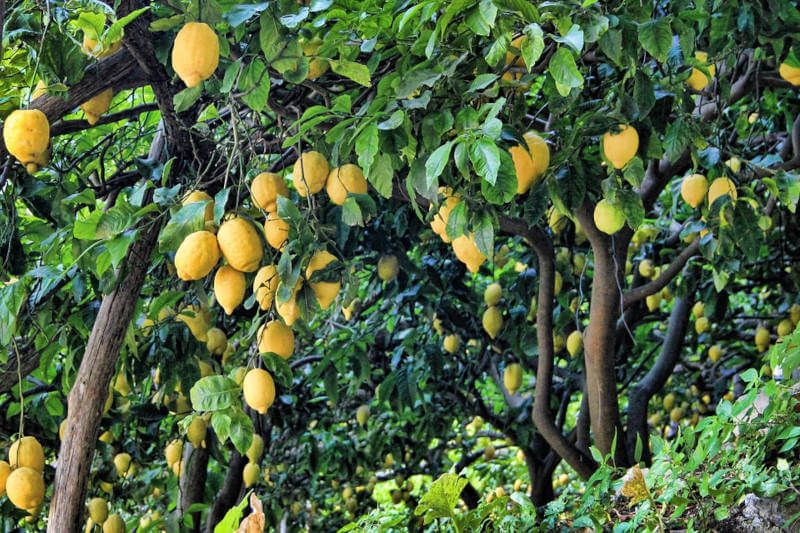
Winter citrus fertilization January - February
In this article, we will explain how to fertilize citrus fruits (i.e. how to fertilize lemon, how to fertilize oranges, tangerines, etc.). in a strategic phase such as winter.
Fertilization is a useful and necessary practice to return the removed fertilizer units to the soil and to provide macro and microelements, necessary for subsequent flowering and fruit set. The most important element in vegetative recovery is nitrogen, to a lesser extent the other elements, so our proposal:
Would you like to receive our advice? Subscribe to our Newsletter - 8% discount now for you
|
1. Winter fertilization of citrus fruits
- Agromaster 14.7.14 1 kg per plant + Prodigy Plus (1-2 kg per plant)
2. Organic winter fertilization of citrus fruits
- Orga - Kem 10.5.5 (2-3 kg per plant)
It is common sense to distribute the fertilizers located along the row or under the foliage in order to save money by avoiding fertilizing areas unexplored by the roots, and to incorporate it into the soil by milling 10 - 15 cm deep.
The fertilization of citrus fruits must be understood, and in fact it is, as an investment, and like all investments aim at a profit, in our case an optimal production, an investment is therefore a program of foliar fertilization, which in this period gives certainty of a rich flowering.
3. Winter foliar fertilization of citrus fruits
At the end of January - February one or two foliar fertilizations of citrus fruits spaced out for 15 - 30 days:
- Phylen at 500 - 700 ml/hl
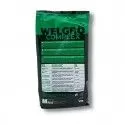
- Welgro complex at 200 cc/hl
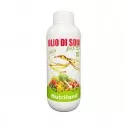
- Soybean oil max 85 to 150 cc/hl
If we consider that the expectations for an adult plant is a minimum of 100 kg/plant per year, which together with the vegetative mass removed with pruning, according to various literatures generates a need for Nitrogen (N) of about 180 - 200 kg, Phosphorus (P) of about 40 - 60 kg and Potassium (K) of over 150 kg / ha as well as Magnesium (Mg) and Calcium (Ca) with equally important quantities.
Plants derive nourishment from the soil, water and air, unfortunately not enough for our production expectations. Nitrogen is present in the air in gaseous form, it is fixed by plants through processes activated by bacteria that live in the soil and on the leaves.
Products such as BlueN Corteva, which contains methylobacterium symbioticum, are recently introduced on the market , which, used by foliar application at 0.5-1 kg/ha, is able to synthesize over 50 kg of nitrogen directly in the leaves. The product was introduced in 2021, we are experimenting and verifying its correct use, we are sure it will enter nitrogen fertilization strategies. (For more info on BlueN, click here)
Go to the full article on fertilizing citrus fruits.
Share this content



 Chronology
 Citrus fruits
 Turf
 Stone fruit
 Olive tree
 Ornamental
 Vegetables
 Actinidia (Kiwi)
 Screw
 Hobbies and insights
 Pome Fruit


By giuseppe ginesu 2020-10-24 22:49:14
Ho delle piante di Caffin e non riesco ad anticipare la maturazione, li raccolgo sempre intorno al 20 ottobre.Posso migliorare? -- RISPOSTA: Sicuramente si può migliorare, cercando di arrivare prima possibile a pezzatura, grazie all'aiuto del Corasil, di una buona nutrizione a terra e fogliare. Una volta raggiunta la pezzatura, già da fine agosto si riduce l'azoto e si lavora col potassio (in funzione della pezzatura con potassio alcalino come QUIK MG in fertirrigazione, o fogliare con K BOMBER Biolchim).
By Domenico 2020-02-18 11:59:08
Salve per questi due prodotti per agrumi in questo periodo dell’anno , vorrei sapere come devo procedere, mischio 1 kg di ciascun prodotto e lo metto nella conca dell’albero e innaffio ? Gli alberi sono piantati in giardino. E dopo quanto ripeto il trattamento? -- RISPOSTA: Salve, abbiamo aggiornato il trattamento, che potrà essere ripetuto dopo 2 mesi Grazie
By Francesco 2018-03-06 19:09:24
Anche se non interrati dopo poco tempo non sono più visibili perché sciolti dall'umidità del terreno e i sali si distribuiscono nel terreno per osmosi
By giuseppe 2018-03-01 21:57:13
questi concimi biologici, distribuiti a gennaio-febbraio, ovviamente non si possono interrare se la terra e bagnata. non sarebbe meglio darli in autunno con un successivo leggero interramento ? oppure a marzo-aprile sempre con un leggero interramento?