
Your cart
There are no more items in your cart
Prato Gramigna Treatments Macrotherme Autumn
Categories :
Chronology
, Turf
Index
Macrotherm grass weed October: treatments and fertilization
Crabgrass macrotherm treatments not to do (in a garden )
Macrotherm meadow wheatgrass October: treatments and fertilization
In this text we try to explain what operations to do and especially what not to recommend on a turf consisting of macrotherms in October commonly called gramignets.
On turf consisting of microtherms in the fall there is a lot of advice on the net, while when it comes to managing varieties such as:
Zoysia japonica,
Cynodon dactylon,
Paspalum vaginatum,
Paspalum notatum,
Stenotaphrum secundatum
numerous doubts emerge, especially at the most critical times of the year, such as october!
Little is said about macros in late summer, and we often inquire about operations that are good for MICROTERMS but would be absolutely counterproductive for MACROTERMS. We will therefore see How to fertilize the crabgrass lawn in autumn .
Do you want to receive our advice? Sign up for our Newsletter - 8% discount right away for you
|
Fertilizing macrotherms
The month we are about to experience is the time when the most important and invasive operations are concentrated. However, these operations will contribute to our good turf throughout the coming year.
Often, when we decide to install a lawn composed of macrotherm varieties, we are fascinated only by the advantages due to the greater resistance and overcoming of water or pathogenic stresses, but we often overlook the fact that this variety, in the autumn period, will undergo its natural yellowing.
In fact, we are surprised when, in September, mowing gives the first yellowing.
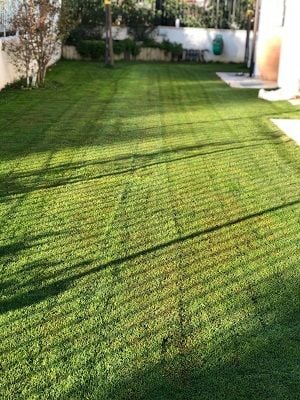
Yellowing crabgrass lawn

Let us try to define what the operations to be performed might be.
In case you accept the nature and, therefore, the coloration of the turf, we recommend raising the height of the mower cut to get to enjoy the winter "blond" with great landscaping value.
If, on the other hand, your wife stresses you out because your turf looks dry, while the neighbor's is always green you could carry out the following:
Lawn weed maintenance
- Transseeding:
is a very common operation especially on soccer fields in southern Italy, mainly consisting of Macroterms that must always maintain a bright green color.
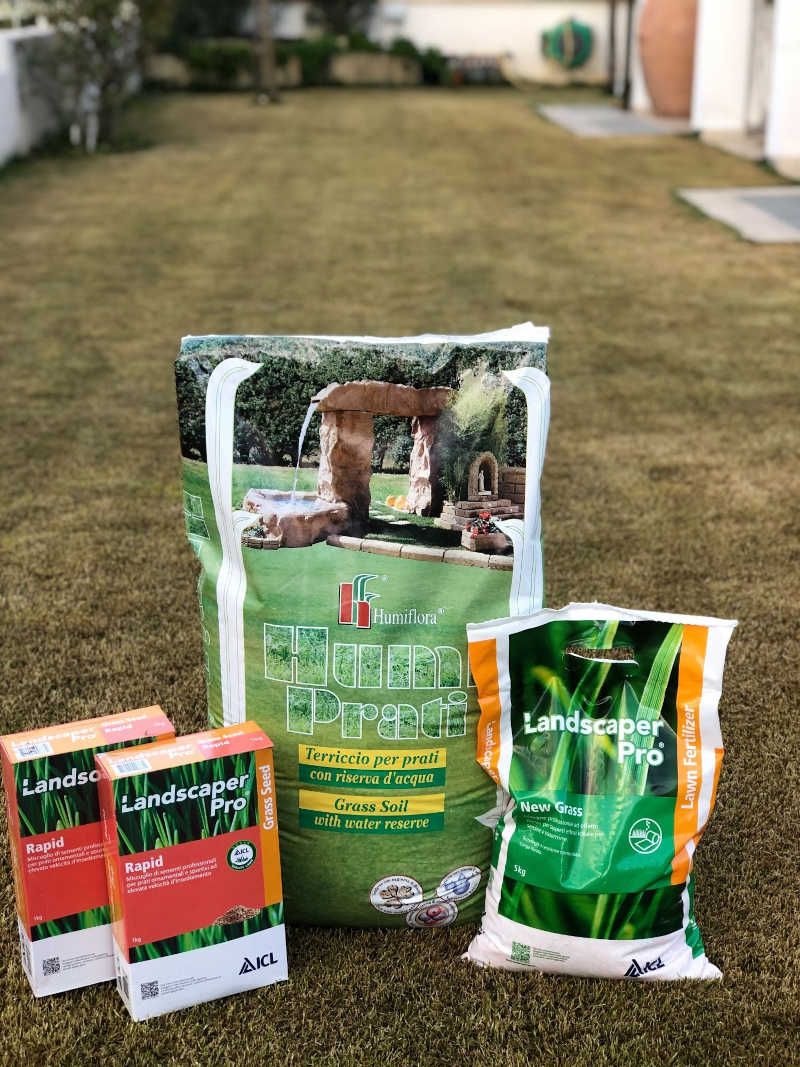
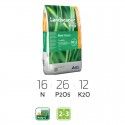
Before seeding, we must scarify and lower the height of the cut to the maximum and, successivame, reseed with essences that are not very resistant to heat (e.g.: SOS Quick repair mixture Barenbrug ). In this case, the seed dosage will be high and subsequently we will add : Humiprati Potting Soil for Lawn Humiflora which provides the right moisture and Landscaper Pro New Grass lawn fertilizer, a fertilizer that improves and speeds up rooting. Immediately afterwards it will be necessary to give 10 minutes of water.
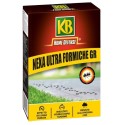
Once the water is closed, it is appropriate to also distribute, while sowing, the product against ants Nexa Ants. -
Pigmentation of Macroterms: if reseeding seems too much work for you, you can always solve it by coloring the lawn. Start by distributing specific pigments that "warm up" the leaf a bit and even out the color (e.g Greenit). Low dosages and volumes of water monthly to be increased as needed.
-
Nutrition: Let's see then How to fertilize your crabgrass lawn in the fall.
Macrotherm, at this particular stage of the year, as we have already seen, is not very vital and therefore not very predisposed to assimilate nutrients, so we recommend that you use this product that has characteristics suitable for this phase. Fertilize with fertilizer with high Potassium content (such as: POLYSULPHATE to strengthen the leaf blade and make it store important elements for vegetative recovery. -
Maintenance: distribute antigerminel (Ready Germiplus) to keep the "blond" clean during the cold season (if you don't seed, of course). Enjoy the problems you did not have with respect to micro, if you can.
P.S. Transseeding is ill-advised for those essences with wide leaf lamina (Stenotaphrum secundatum, Pennisetum clandestinum..) and for those essences that then at vegetative recovery should not be "scalped" (Zoysia japonica). Above all, very heat-tolerant loys should not be used.
Between grubbing and aerating, sometimes unnecessary reseeding, a shopping list of products to be used within a short time and new realizations that find in the early autumn the best period, we try to clarify by advising against operations that absolutely must not be done:
Crabgrass macrotherm treatments not to do (in a garden)
1. Scarify and lower the cut (except if you decide to reseed with essences for winter transition)
2. Carry out nitrogen fertilization
3. Sandblast
4. Prune
This is all because the photoperiod shortens, temperatures drop, and vegetation slows to a halt (obviously depending on latitude and type of macro) and the lawn would not have the ability to "respond."
Share this content



 Chronology
 Citrus fruits
 Turf
 Stone fruit
 Olive tree
 Ornamental
 Vegetables
 Actinidia (Kiwi)
 Screw
 Hobbies and insights
 Pome Fruit


