
Your cart
There are no more items in your cart
How to eliminate Beetle Larvae - Melolontha
Categories :
Chronology
, Turf
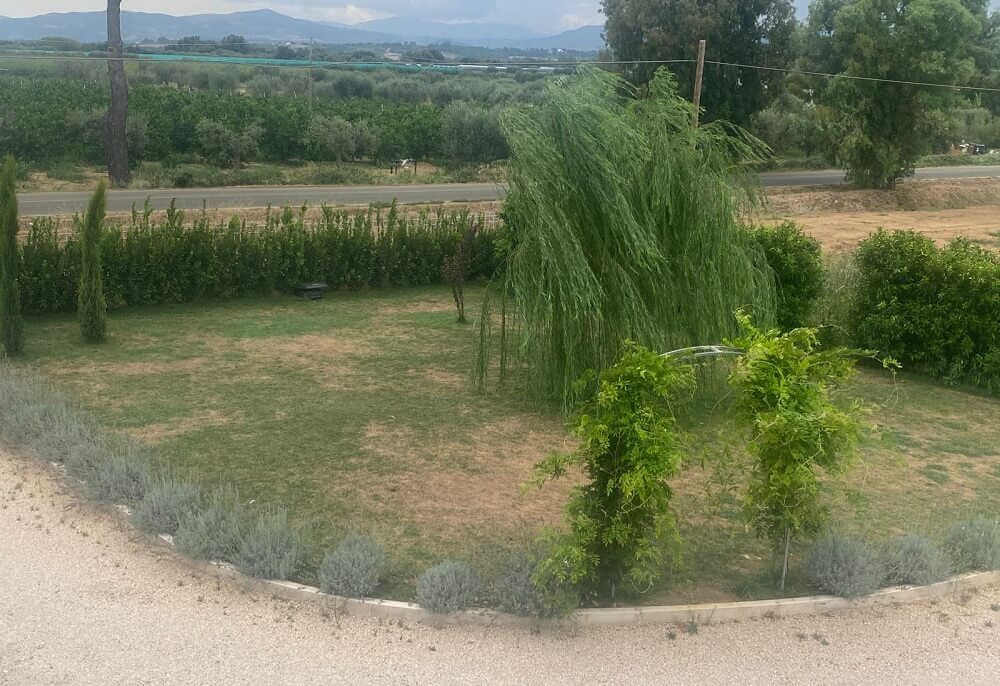
One of the biggest enemies of turfgrass is beetle larvae: small, ivory-white, brown-headed insects that are 2 to 4 millimeters long (depending on their stage of growth). Their presence in your lawn can pose a serious problem because grass roots are one of their favorite foods. How to get rid of cockchafer larvae? Here are some tips!
What we will look at in this article
**
***
How to recognize beetle larvae?
Beetle larvae are characterized by their typical "C" shape, whitish color, and enlarged abdomen. The first damage caused by cockchafer larvae in the lawn begins to occur in spring, when the adult female cockchafer begins to dig burrows in which to lay her eggs. After about 20 days, the deposited eggs will begin to hatch, and the newly hatched tiny larvae will immediately begin to feed on plant roots, eventually resulting in their death.
Unfortunately for your turf, these little white worms can remain in the larval state until the age of 3 years, wreaking havoc on everything they encounter in their path.
But what are the major damages?
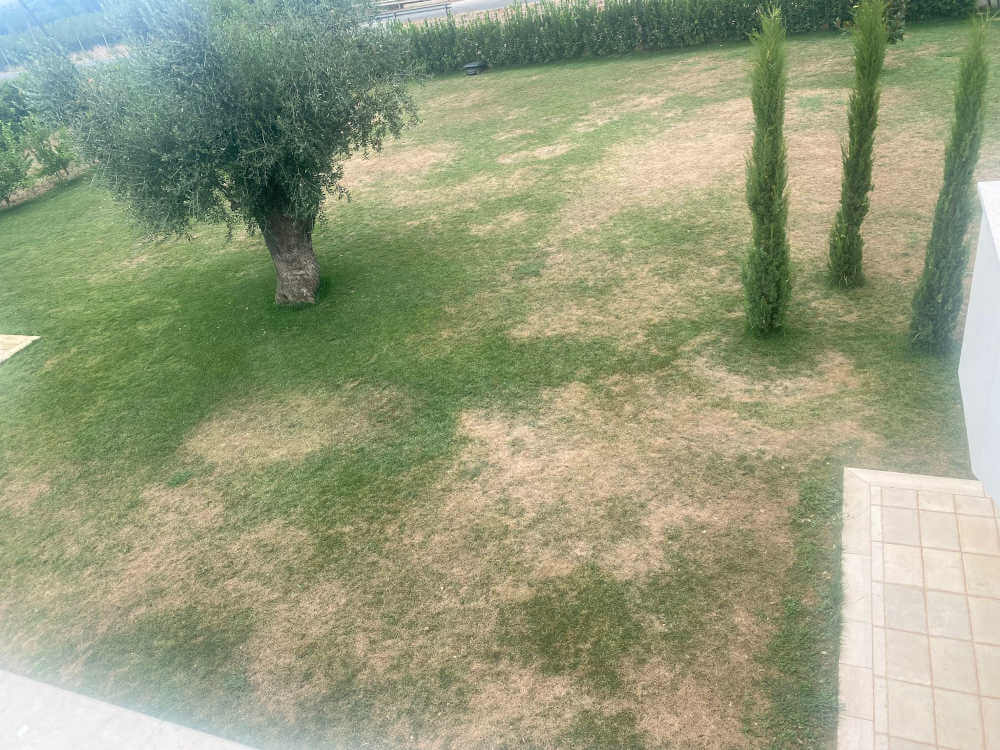
Because beetle larvae feed on roots, this causes a weakening of plant structure, leading to their death. In addition, the larvae are prey for animals such as birds and badgers. Therefore, it is possible that you may find your lawn invaded by birds who, intent on searching for the larvae, will dig into the soil, causing further damage to your lawn and landscaped areas.

**
***
How to combat cockchafer larvae?
To combat cockchafer larvae, our choice is to offer you two different strategies, depending on whether you take action in prevention or in the actual presence of the larvae. In both cases, we will do nothing more than stimulate already existing processes, thus taking care to proceed in full respect of nature. In the first case, we suggest the use of entomopathogenic nematodes, a very effective biological control option. Let's see together what entomopathogenic nematodes are and how best to employ them in the fight against beetle larvae
Nematodes against Beetle larvae
Nematodes are tiny white worms that are invisible to the naked eye. Through the orifices of the larvae, nematodes penetrate inside their target insect, reproducing very quickly. Thus, within a few days, beetle larvae are completely invaded by thousands of nematodes, which, by feeding on them, drive them to their death. After that, the nematodes will start looking for a new host, arriving, thus, to eliminate all the larvae.
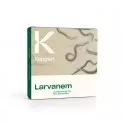
With a view to preventing a new attack, in case your turf has been attacked before, we suggest the use of:- Larvanem (to be applied around March, when the insect's biological cycle is most vulnerable)
For the product to work best, it is' important that you make sure that the soil is moist and that you keep the moisture level high even in the days following the nematode application.
Do you want to receive our advice? Sign up for our newsletter - 8 percent off right away for you
|
What to do if there is an emergency to combat cockchafer larvae?
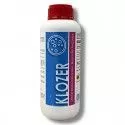
In case you have not done any preventive treatment and you have an urgency to fight a cockchafer larvae attack, then we recommend the use of Klozer, a special type of inoculum of mycorrhizal fungi and rhizosphere bacteria.
Before explaining why our choice has fallen on this particular product, how it works and what its benefits are, it is important to remind you that the product we suggest works only if organic matter* is available within the soil you are treating, which has the task of activating the fungi contained within it. The first action to take, therefore, is to make sure that the soil is well supplied with it, otherwise it will be necessary to administer it.
Another caution you will have to have is to proceed with an irrigation of the soil before intervening: the Klozer, in fact, acts if it comes into contact with the larvae, which live in the first 10-15 cm of soil. Irrigation, therefore, becomes important to make sure that the mycorrhizal fungi intercept the larvae.
Here is themixture intervention we suggest:
- Klozer (dosage: 2l/ha)
- Vigor Liquid (dosage: 7l/ha)
*Check out the article theimportance of organic matter in agriculture
*NOTE: To ensure greater control and safety in the management of cockchafer larvae, it is possible to perform both interventions, acting with both Larvanem in prevention and Klozer in the recommended modes
...DEEPENING...
Let's start by saying that Klozer is an inoculation of 2 strains of fungi different from each other (Metarhizium anisopliae, Beauveria bassiana).
After developing and stabilizing, the fungi are activated to go in search of the substance on which they feed (chitin, which is the typical substance found in insects and larvae (in this case, beetle larvae).
Having found in the beetle larvae their source of nutrition, the fungi enter them, paralyze them and finally feed on them. Thus, the fungus escapes from the larvae to search for more larvae and perpetuate its nourishment.
Of course, in order to allow the fungi an active and perennial search, it will be necessary to apply the product in a sufficient quantity to cover the entire area involved(dosage: 2l/ha), which corresponds to a concentration equal to one billion spores per milliliter, thus high enough to cover the entire extension we are interested in.
If you have detected the presence of larvae in your garden and do not have a pump available to treat, then we suggest using the same product, but in granular form, taking care to distribute it evenly over the soil, exactly as if you were fertilizing.
The same kind of recommendations made above also apply to this mixture intervention. Be sure to water the soil first and distribute organic matter if the soil lacks it. In this case, however, we suggest you use one in granular form:
- Klozer G 20 (dosage: 1kg/1000sqm)
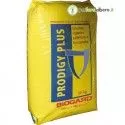
- Prodigy Plus (dosage: 25kg/1000sqm)
Clearly in its granular form, the product has a lower concentration, so our advice in this case is to increase the dosage. In its granular form, klozer works exactly in the way we described earlier, with the only difference being that in this case, the spores start from the granules
***
***
How to eliminate cockchafer larvae in pots?
Beetle larvae can also cause damage to ornamental plants in the pots on your balconies, impairing their viability. To tell if there is presence of cockchafer larvae in your pots, you only need to scratch the potting soil a little. If you find typical "C"-shaped worms a few inches above the surface, then you will have to take immediate action against the larvae to prevent them from feeding on the roots of your plants.
Again, we propose 2 alternative strategies, both biological:
First strategy: the use of nematodes
- Larvanem, taking care to use the product with a watering can.
This is a very easy product to use, ensuring that you keep the soil at a certain moisture level at all times. You will simply take out the 50-mil nematode sachet and leave it out of the refrigerator for about 30 minutes to allow the nematodes to reach their ideal climate. After that, dilute the product in 10 liters of 'water, taking care to mix thoroughly and let it sit for 5 minutes. Immediately after pouring the resulting solution into the watering can, you can use it to protect your plants. By respecting this dosage, you will be able to treat up to 10 pots.
Second strategy: the use of mycorrhizal fungi
This second strategy, probably more practical and faster, involves the use of:
In this case, you will simply mix theproduct with the potting soil, trying to leave it always moist to allow the mycorrhizal fungi to better intercept the larvae
If you have detected the presence of cockchafer larvae in your vegetable garden or lawn, then the dosage of Klozer will correspond to 50g per 100 square meters
Share this content





 Chronology
 Citrus fruits
 Turf
 Stone fruit
 Olive tree
 Ornamental
 Vegetables
 Actinidia (Kiwi)
 Screw
 Hobbies and insights
 Pome Fruit


