
Your cart
There are no more items in your cart
How to Recognize and Treat Corineum, Rust and Bacteriosis in Stone Fruits
Categories :
Chronology
, Stone fruit
Stone fruit plants, such as peach, cherry and plum trees, are essential for our agriculture, but they are often prone to diseases that can impair their growth and productivity. Among the most common pathologies are corineo, rust and bacteriosis, which, despite having similar symptoms, require specific treatments.
In this article, we will explore how to recognize these problems and the most effective solutions to combat them, ensuring optimal management of your plants.
Index
Corineo: What it is and How to Recognize It.
Stone Fruit Rust: Identification and Care
Bacteriosis: Recognizing the Symptoms and Intervening
*
Corineo: What it is and How to Recognize It
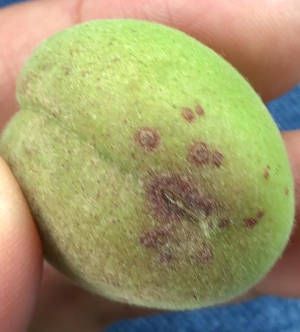
Corineum, also known as pitting, is a fungal disease caused by the fungus Corineum beijerinckii. This pathogen primarily attacks the leaves, fruits, and branches of stone fruits, causing significant damage that can affect plant health and fruit production.
Symptoms of Corineum
Leaves: Infected leaves exhibit concentric red speckles, which can vary in size based on the severity of the infection. Subsequently, these stains can cause holes, leading to confusion with other pathologies.
Branches: Lesions develop on the branches from which a rubbery liquid comes out, a hallmark of the corineo.
Fruits: The fungus can also affect fruits, causing deformation and necrosis.
Aftermath
Corineum infection slows down the growth of the plant, making it especially harmful to both professional farmers and gardening enthusiasts.
Treatment of Corineum
To prevent and combat corineo, preventive intervention is recommended, particularly during the dormant phase of the plant:
Cobre Nordox (dosage 150-200 g/q.le) - Also available in Cobre Nordox PFnPE license-free format.
*
Would you like to receive our advice? Subscribe to our Newsletter - 8% discount now for you
|
*
Stone fruit rust: Identification and Care.
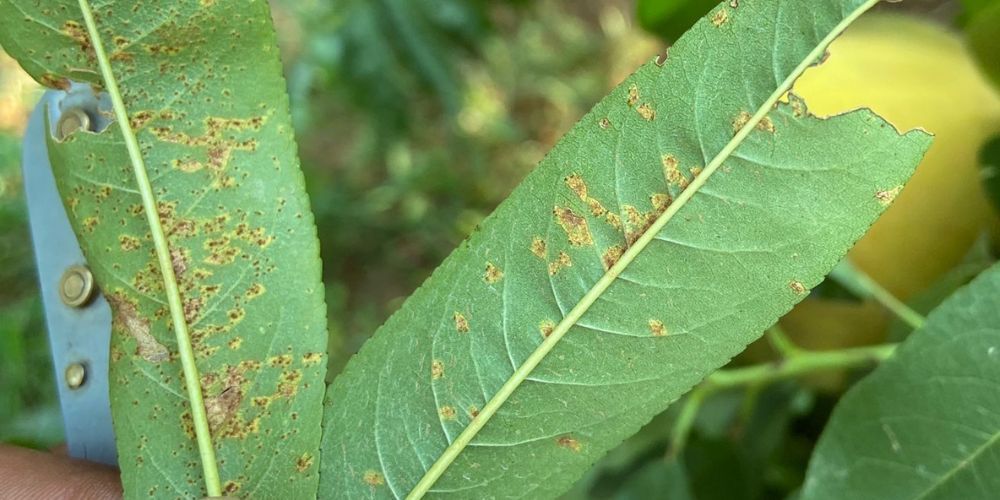
Rust is another common disease that affects stone fruits, mainly manifesting itself on the leaves.
Symptoms of Rust
Upper page of the leaf: Yellow spots appear that tend to necrotize.
Leaf underside: Under the yellow spots, red pustules form. These can cause holes to form in the leaves, a phenomenon known as "spacing."
Note: Fruits are generally not affected by rust.
Rust Treatment
To treat rust, we offer solutions for both professionals and hobbyists:
Tiovit Jet (dosage: 300 g/q.le) - Requires license.
Ferticus Copper Sulphur (dosage 30 ml/10 lt of water) - Available for free sale.
*
Bacteriosis: Recognizing the Symptoms and Intervening
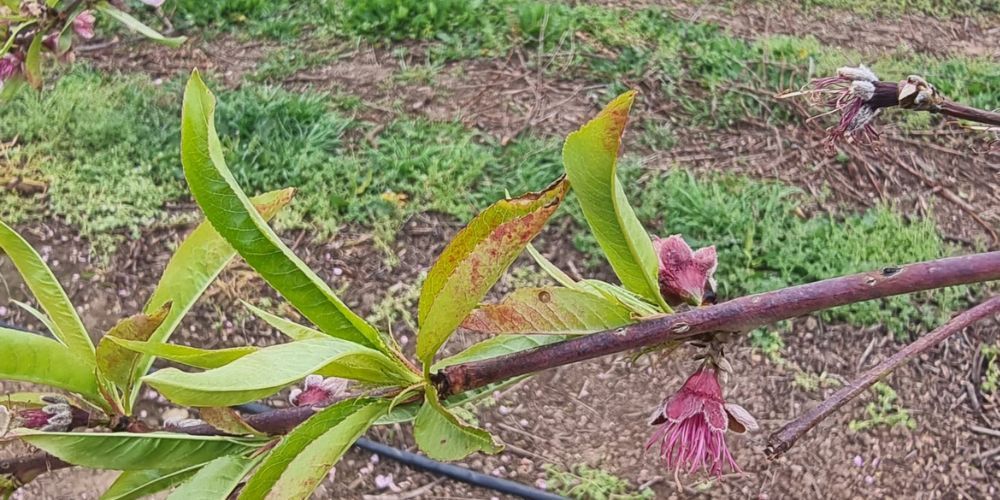
Bacteriosis, caused by the bacterium Xanthomonas arboricola pv. plums, spreads rapidly between plants in conditions of high humidity, wind and rain.
Symptoms of Bacteriosis
Fruits: Slightly protruding pustules with dark scabs and a yellow halo occur.
Branches and Trunks: Browning on branches and trunks, along with vegetative tips that appear weak, are characteristic signs of infection.
Treatment of Bacteriosis
For effective treatment of bacteriosis, we recommend a specific mixture:
Inex-a = 30 ml
Biobacter= 100 ml
Silver = 200 ml
This mixture, thanks to the combination of peroxide and silver, is able to stop the proliferation of the pathogen, blocking the infestation without leaving chemical residues. These products are environmentally friendly and dissolve quickly in contact with oxygen.
Prevention and Intervention
While for corineum and rust it is essential to intervene preventively during the winter phase, bacteriosis requires targeted treatment as soon as the first symptoms appear, especially on the youngest and most tender leaves.
Share this content


 Chronology
 Citrus fruits
 Turf
 Stone fruit
 Olive tree
 Ornamental
 Vegetables
 Actinidia (Kiwi)
 Screw
 Hobbies and insights
 Pome Fruit


