
Your cart
There are no more items in your cart
Paysandisia Archon: How to get rid of the palm butterfly?
Categories :
Chronology
, Ornamental
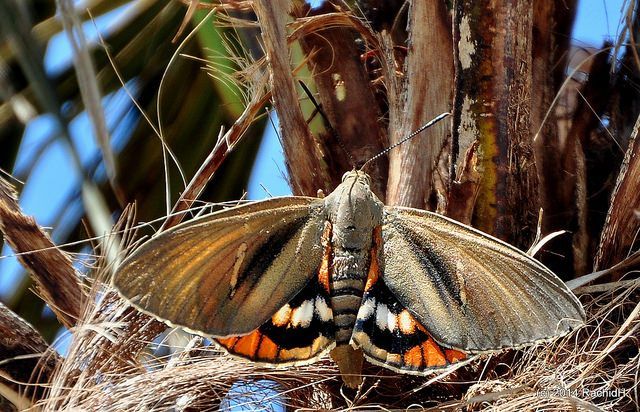
After the massacre of the red weevil, we find ourselves facing another very dangerous parasite of South American origin, which threatens our palm trees with increasing frequency: it is the palm butterfly (Paysandisia Archon).
Paysansidia Archon is a moth belonging to the Castniidae family, whose spread most likely occurred through the importation of Trithrinax palms starting from the 80s.
Recognizing the moth and dealing with it will be the two fundamental points that we will address in this article.
Index
How to recognize the palm butterfly
Paysandisia Archon: How to Delete It
Would you like to receive our advice? Subscribe to our Newsletter - 8% discount now for you
|
How to recognize the palm butterfly
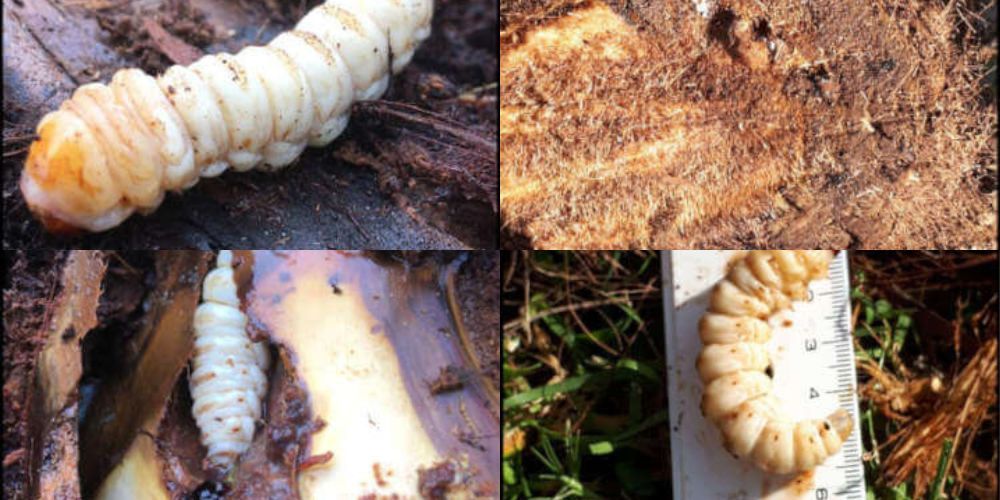
The palm moth shows, in its adult stage, as a large, completely harmless butterfly with multicolored wings. However, in the juvenile stage of caterpillar it is responsible for serious, often irreversible damage.
How does Paysandisia Archon work ?
The palm tree that houses this moth is literally hollowed out from inside the trunk. The insect lays its eggs at the base of the leaf stem and on the apical bud of the plant.
Usually, it completes one generation per year, but it is possible that some individuals can complete it in as little as two years.
How to recognize eggs, larvae and butterflies
The eggs have a fusiform shape, with a length of about 5 mm and varying in color from grayish-white to creamy. Their deposition takes place at the base of the leaf stem and on the apical shoot.
The newly hatched larva has a pinkish-orange color and a length of a few millimeters. It develops for about 11 months in the trunk and causes damage that leads to the death of the plant. As it grows, Paysandisia Archon digs tunnels in the rachis and stem.
The pupa has a yellowish-brown color and a length of about 5 cm; it is equipped with small and numerous spines on the abdominal segment. To facilitate flickering, it is positioned near the leaf rachis and protected with a cocoon composed of excrement, silk and plant fibers.
After the pupal phase, the insects flicker and become large butterflies . The hindwings are red with black and white spots, unlike the forewings which are olive in color.
How Paysandisia Archon manifests itself
At first, the attacked palm tree reveals few symptoms, except that of a general state of suffering, with yellowed and withered leaves until the appearance of real burn-like holes on them.
Once it reaches the terminal stage of the infestation, however, the plant has a real decay and, for this reason, it becomes essential to analyze it and intervene before it is too late.
With careful analysis in autumn, it is possible to observe the tunnels dug by the butterfly's larvae. It is important not to delay the check and always carry it out before summer, where the presence of empty cocoons will indicate that the flickering has already occurred.
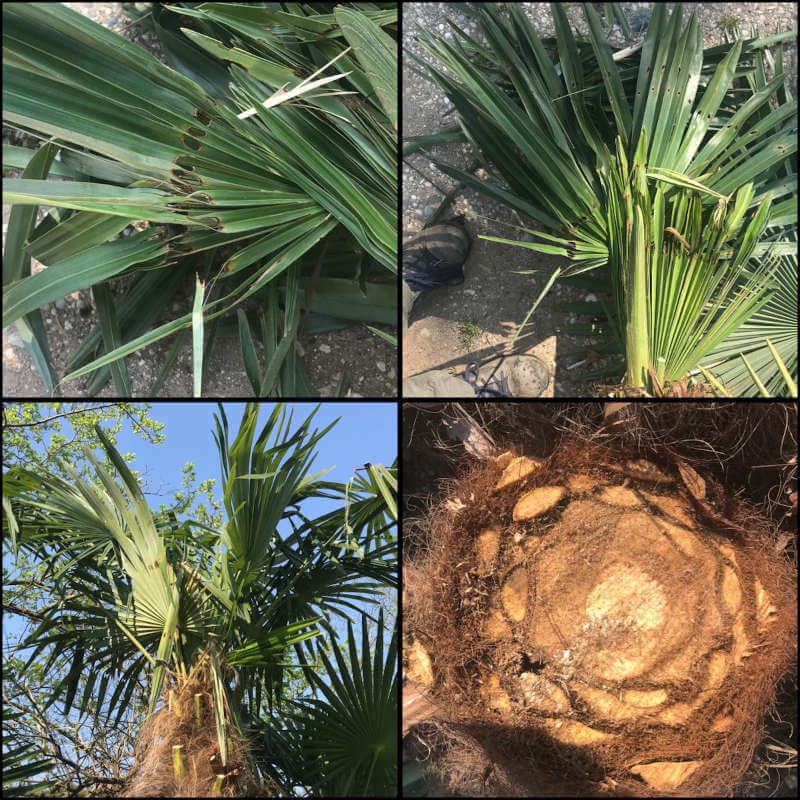
Photo courtesy of Rachid H

Paysandisia Archon: How to Delete It
The intervention involves inoculation with a lance connected to a backpack pump, irrigating the head of the palm. For a good control strategy, after identifying the presence of the parasite, it is advisable to start treating immediately.
Organic strategy:
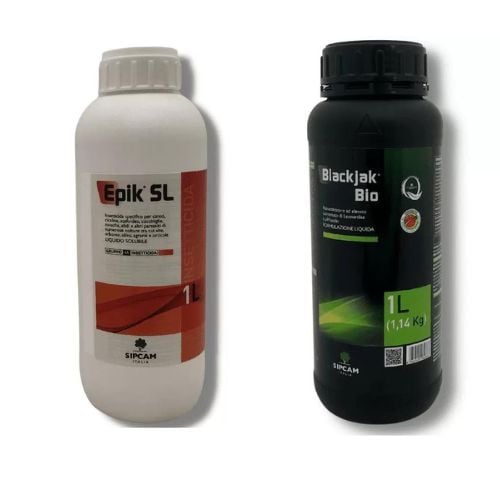
- Black Jack (dosage: 25 ml/10 lt)
- Xentari WG (dosage: 20-30 g/10 lt)
The order in which the products are inserted into the backpack pump is very important: the Black Jack must be inserted first and then the Xentari, to improve the activity of the molecules.
- Turi-L (without license - dosage: 100-200ml/hl)
Turi-L, in addition to bacterial cells, is composed of metabolites which, by coming into direct contact with Paysandisia Archon, anticipate the effectiveness of the product, ensuring an almost immediate action. The period of greatest activity of Paysandinia is from March to October, so it is necessary to carry out periodic treatments (every 20 days). Our advice is to always keep the apex of the plant wet, because it represents the point where the oviposition takes place, at a significant concentration of the product (200ml/hl). To optimize the effectiveness of Turi-L, we suggest acidifying the solution with Black Jack :
Strategy with the use of nematodes:
Another valid means of combating the palm butterfly consists in the use of entomopathogenic nematodes. The product we recommend is:
- Palmanem (carry out 2 treatments: one in early spring and the other in autumn)
Finally, it is necessary to remind our readers that the fight against the insect is mandatory and that, by law, plants that are dead or perishable due to the presence of Paysandisia Anchor must be cut and burned
Share this content


 Chronology
 Citrus fruits
 Turf
 Stone fruit
 Olive tree
 Ornamental
 Vegetables
 Actinidia (Kiwi)
 Screw
 Hobbies and insights
 Pome Fruit


