
Your cart
There are no more items in your cart
Hemp root rot: main symptoms and remedies
Categories :
Chronology
Rhizoctonia solani is the fungus responsible for root rot in hemp plants. Sustainable interventions are necessary for the prevention and care of the plant, in order to avoid damage to production and yield.
Index
Root rot in the cannabis plant
Root rot is a disease that manifests itself at the root level, preventing the plant from absorbing the nutrients necessary for growth and development, until it dies. But what does this disease depend on?
The main cause is the presence of fungi which, already inside the soil, attack young seedlings or seeds. Among the factors that contribute to the development of cannabis root rot, environmental factors play a decisive role: fungi thrive at temperatures between 20 and 35 °, so excessively hot temperatures cause spores to multiply, with the subsequent proliferation of pathogens, accelerating the rotting process.
Would you like to receive our advice? Subscribe to our Newsletter - 8% discount now for you
|
|
How to tell if there is root rot? Symptoms
.jpg)
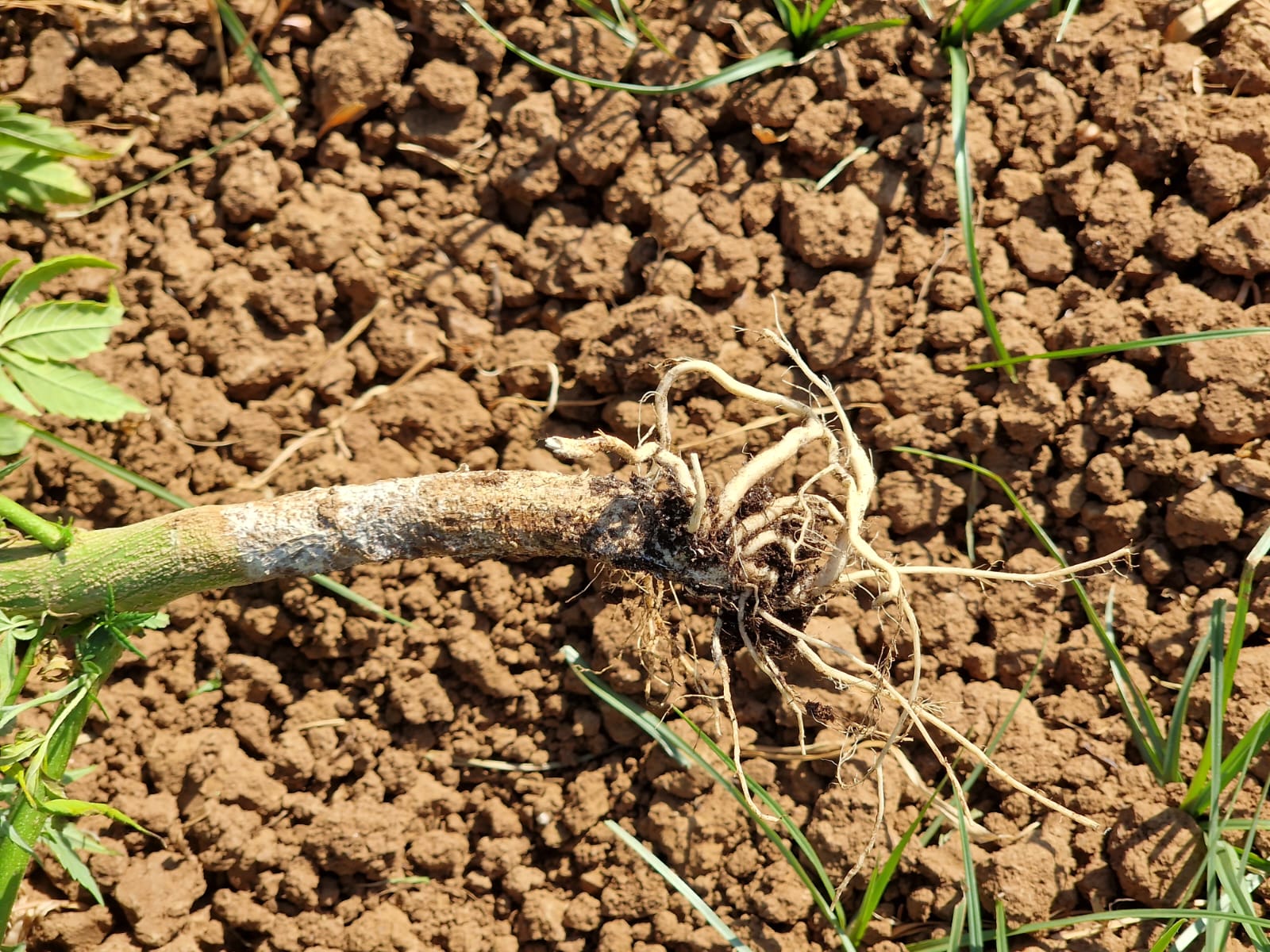
To be completely sure that it is rot, it will be necessary to check for the presence, at the level of the collar, of the whitish patina of the fungus. A clear sign of root rot is the stunted growth of the hemp plant.
An additional symptom, despite being non-specific, can occur on the leaves, which will have areas with yellowish-brown spots, curled edges and discolored tips. The older foliage will also tend to peel off completely, causing the cannabis plant to sag and collapse completely.
Root rot and irrigation
Flowing amounts of water are one of the possible reasons for the presence of rot. It will therefore be essential to ensure proper irrigation management, avoiding two specific practices:
- - provide an excessive amount of water: in this case, in fact, the roots could drown and cause root rot
- - prevent water changes, which cause possible rupture of the lymphatic vessels, which facilitates the formation of rot
The installation of multi-level probes in the root exploration zone will allow the moisture level and soil temperature to be calculated , detecting the actual water needs of the hemp plant.
With a view to a preventive strategy, in addition to crop rotation, it is possible to intervene in the fertigation phase by introducing mycorrhizae and trichoderma into the soil. By colonizing the rhizosphere, these micro-organisms enter into symbiosis with the root. In this way, they take away space, nutrients and water from Rhizoctonia solani (in case of its possible attack).
The product we recommend is:
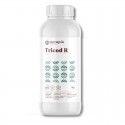
Tricod-R. Dosage: 2/2.5 kg per ha
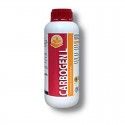
In the curative phase, our advice is to add a mycorrhiza activator to the previous treatment that accelerates its functioning mechanism. In this way, they will compete with Rhizoctonia solani, limiting its proliferation.
We should also add that in this specific phase Tricod-R is extremely functional in the activation of its third characteristic of hyper parasitism against the pathogen.
The strategy we suggest is:
Share this content


 Chronology
 Citrus fruits
 Turf
 Stone fruit
 Olive tree
 Ornamental
 Vegetables
 Actinidia (Kiwi)
 Screw
 Hobbies and insights
 Pome Fruit


