
Your cart
There are no more items in your cart
Chives: properties and uses
Categories :
, Chronology
Index
Characteristics of chives
Beneficial properties of chives
Uses in the kitchen
How to prepare planting for chives
Frequently asked questions about chives
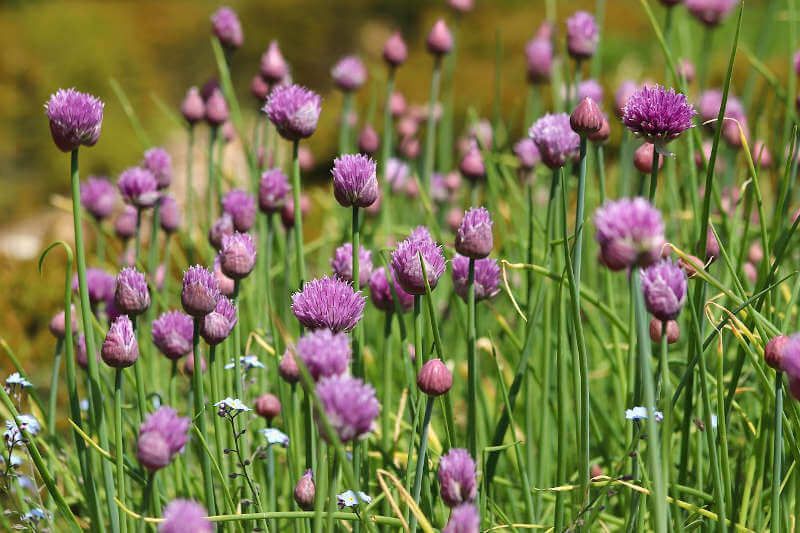 |
Chives (Allium schoenoprasum) is an aromatic plant belonging to the Liliaceae family, widely used in cooking for its delicate flavor and beneficial properties. This green aroma is easy to grow in gardens or pots and is a great addition to flavour dishes without overpowering the taste. But chives are not just a culinary ingredient: they boast numerous therapeutic properties, from digestive to antioxidant properties. In this article, we will explore its features, health benefits, and the different ways it can be used in detail.
1. Characteristics of chives
Chives are a perennial plant, which grows wild in Europe, Asia and North America. Its appearance is distinctive: thin tubular green stems that can reach 20-50 cm in height. Its bulbous roots resemble those of the onion, but unlike the latter, chives have a much milder, fresher, and slightly pungent flavor. The purple flowers that bloom in spring and summer are small and globular, also perfect for decorating dishes.
The plant is prized for its ability to repel certain insects, making it useful in organic farming as a "companion" plant for vegetable gardens and gardens. Thanks to its resistance to low temperatures, it can be grown in different climates, making it available all year round.
Would you like to receive our advice? Subscribe to our Newsletter - 8% discount now for you
|
|
2. Beneficial properties of chives
1. Digestive properties
One of the most well-known qualities of chives is its ability to promote digestion. Thanks to its content of sulfur compounds, similar to those found in garlic and onion, chives stimulate the production of gastric juices, facilitating the digestion of heavier and fat-rich foods. In addition, it helps reduce intestinal fermentation, limiting the formation of gas and counteracting abdominal bloating.
2. Rich in vitamins and minerals
Chives are an excellent source of essential vitamins , such as vitamin C, vitamin A and some of the B group (especially B9, or folic acid). These vitamins are crucial for maintaining an efficient immune system and for healthy skin and vision. Vitamin K, in which it is particularly rich, plays an important role in blood clotting and bone health.
There is also no shortage of minerals : iron, magnesium, calcium and potassium are all present in good quantities, contributing to the general well-being of the body. Potassium, for example, helps regulate blood pressure, while calcium is essential for bone and dental health.
3. Antioxidant properties
Chives contain powerful antioxidants such as quercetin and kaempferol, two flavonoids that fight free radicals in the body. These compounds can help reduce the risk of developing chronic diseases, such as cardiovascular disease and some forms of cancer. In addition, antioxidants help slow down cellular aging processes, promoting younger, brighter skin.
4. Antibacterial and antiviral action
Thanks to its sulfur compounds, chives also have an effective antibacterial and antiviral action, useful for preventing and fighting mild infections. Although to a lesser extent than garlic and onion, chives can be a valuable ally in strengthening the immune system, especially in periods of greater vulnerability such as winter.
5. Purifying properties
Chives have a diuretic and purifying effect, promoting the elimination of toxins through urine. This makes it useful for those who want to purify their body, helping to reduce water retention and prevent swelling.
3. Uses in the kitchen
1. Dressing for salads and cold dishes
One of the most common uses of chives is as a dressing for salads, both vegetable and legumes. Its delicate flavor goes perfectly with cucumbers, tomatoes and peppers, enriching salads with a fresh and pungent note. It can be used both fresh cut and dried, even if the latter loses part of its aroma.
In addition, it is excellent for flavoring cold dishes such as potato salads, omelettes or hard-boiled eggs, and in many fish-based recipes, where its delicate flavor does not cover the main ingredients.
2. Ingredients for soups and soups
Chives can also be used in soups and broths to give a touch of freshness. Added at the end of cooking, it retains its intense flavor, contrasting the sweetness of vegetables such as pumpkin or carrots. It is also an excellent accompaniment to legume-based soups, such as lentil or bean soup, where it enhances the taste of the other ingredients.
3. Sauces and condiments preparations
Another popular use of chives is in sauces. It can be used to prepare yogurt sauce, a fresh condiment perfect to accompany meat, fish or vegetable dishes. Simply mix yogurt, chopped chives, a little lemon and a pinch of salt to make a light and flavorful sauce.
Tartar sauce is another classic preparation that involves the use of this aromatic herb, together with gherkins and chopped capers. It is ideal as an accompaniment to fried or grilled fish, but also to meat dishes.
4. As a decoration for gourmet dishes
Due to its thread-like shape and bright green color, chives are also often used as a decorative element in gourmet dishes. The whole leaves can be used to tie vegetable or meat rolls, while the flowers add a pop of color and can be used to garnish soups, salads, or canapés.
4. How to prepare planting for chives
Planting chives requires careful soil preparation to ensure even germination and vigorous development. Here are the essential steps to get the most out of your crop:
Soil preparation: Before planting, work the soil to a depth of 15-20 cm to improve its structure and ensure good drainage. Remove any weeds and rocks, and level the soil.
Use of an organic fertilizer: To enrich the soil and promote optimal growth of chives, it is advisable to use Black Humus (if 5 kg packages are sufficient) or YaraSuna Rigoglio (in larger 25 kg packages). This organic fertilizer, rich in nutrients, mixed with mycorrhizae, beneficial fungi that help improve nutrient uptake and the plant's root system. The combination of Black Humus and mycorrhiza boosts root health, increasing resistance to environmental stress and improving the overall yield of the crop.
Sowing: Distribute the seeds in rows, keeping a distance of about 20 cm between the plants. Cover lightly with a layer of soil and water gently to keep the soil moist until germination, which takes about 2 weeks.
Why use Black Humus and Mycorrhizae?
The use of Black Humus and mycorrhiza promotes root development, increases the availability of nutrients and makes the plant more resistant to water and pathogenic stress. These elements improve soil quality and chive growth
5. Frequently Asked Questions About Chives
1. Can chives be grown at home?
Yes, chives are one of the easiest aromatic plants to grow at home. It can be planted both in the garden and in pots and requires little care: exposure to the sun, regular watering and good drainage are enough to make it grow luxuriantly.
2. When is the best time to harvest chives?
The ideal time to harvest chives is in spring and summer, when the stems are tender and full of flavor. However, the leaves can be cut off throughout the year, if the plant is grown in optimal conditions.
3. How to store fresh chives?
To store fresh chives , you can wrap it in a damp cloth and store it in the refrigerator, where it will keep for 2-3 days. Alternatively, it can be chopped and frozen, so that you always have fresh aromatic for your recipes.
4. Does dried chives have the same properties as fresh chives?
Dried chives lose much of their aroma and some of their nutritional properties, so it is preferable to use them fresh. However, if you don't have fresh chives available, dried chives can still be a valid alternative in the kitchen.
5. Does chives have contraindications?
Chives are generally safe for most people, but those with Liliaceae allergies or gastrointestinal problems may need to limit their use. In addition, excessive use can result in mild digestive upset.
6. Chive diseases and pests: how to prevent and treat them
Although chives (Allium schoenoprasum) are a hardy and generally resistant plant, it can be affected by various diseases and pests, especially in less than ideal environmental conditions. Below are the main phytosanitary problems that can afflict chives:
Leaf spots
One of the most common chive diseases is caused by fungi such as Alternaria leeks, which cause brown or black spots to appear on the leaves. These spots, often circular or irregular, mainly develop in humid environments. For treatment, we recommend the use of copper-based products, such as CIFOBLOK Plus, or Armicarb spray based on potassium bicarbonate.
Powdery mildew
Powdery mildew, a fungus that causes a whitish coating on the leaves, can also affect chives, especially if the humidity is high and the plant is poorly ventilated. It is important to remove the infected parts and use specific sulfur-based fungicides to prevent the spread of the pathogen.
Aphids
Aphids pose a threat to chives, especially in spring when the plant emits tender new shoots. These insects feed on the linfa, reducing the vitality of the plant. In case of infestations, organic insecticides such as CIFOTRIS Plus based on nettle or Soft Soap can be used.
Root rot
Chives can be prone to root rot in conditions of excessive humidity, caused by pathogenic fungi such as Pythium and Phytophthora. To prevent the problem, it is essential to ensure that the soil is well-drained. The use of mycorrhizal products, such as Micosat F UNO mini, can help strengthen the plant's root system and prevent the onset of soil diseases.
Snails and slugs
During rainy periods, slugs and slugs can attack chives, eating the leaves. To combat these pests, you can use repellent products such as Lumalene or Ferramol, which form a natural barrier around the plant.
Share this content









 Chronology
 Citrus fruits
 Turf
 Stone fruit
 Olive tree
 Ornamental
 Vegetables
 Actinidia (Kiwi)
 Screw
 Hobbies and insights
 Pome Fruit


