
Your cart
There are no more items in your cart
Winter fertilization of DRUPACEAE
Categories :
Chronology
, Stone fruit
Apricots, peaches, plums, cherries and almonds are called deciduous crops: in the winter period and until the vegetative recovery phase in spring, these crops enter the vegetative dormant phase.
However, even if apparently dormant, stone fruit plants still retain root, albeit reduced, activity.
Why fertilize stone fruits and why do it in winter, when the plants are still dormant?
In this article, we will try to explain the reason for this strategic choice, and then advise on which products are most suitable, how and when to provide them to your plants.
Index
The importance of winter fertilization for stone fruits
How to proceed with fertilization
***
***
The importance of winter fertilization for stone fruits
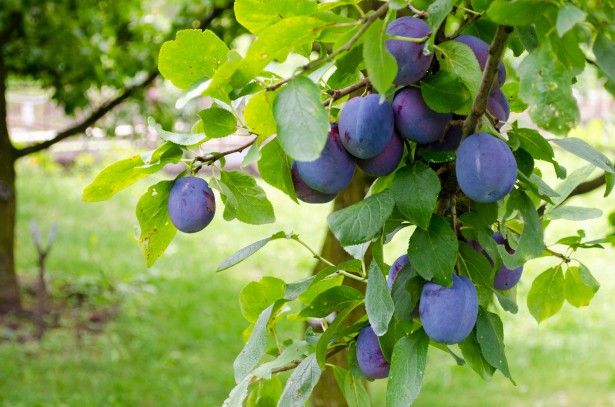
The activity of providing nutrients in the winter phase is determined by strategic conditions: providing the soil with nutrients in advance, in fact, will allow the latter to be readily available and easily assimilated, when the plant needs them in spring to carry out its phenological activities.
It is important to remember that during the flowering phase the plant faces a very delicate moment, because it consumes most of the nutritional reserves that it has accumulated between the months of August and November (more specifically, 70% of nitrogen is consumed and, consequently, phosphorus, calcium, potassium, magnesium and other microelements are also used).
If you were to fertilize the soil at this time, you would not be able to guarantee the stone fruit plants the nutritional support they need in flowering.
In fact, it takes a physically long period for the fertilizer to be absorbed by the roots and transferred to the aerial parts of stone fruit plants. In contrast, foliar fertilization is absorbed immediately.
What would it mean for the plant not to have the right nutritional elements in the flowering phase?
The insufficient endowment of macro-elements and micro-elements determines a prolonged flowering and a considerable scaling of the size of the fruit, which unfortunately subsequent fertilization will not be able to correct.
It is preferable to integrate the microelements that participate greatly in the good progress of flowering (in particular, boron, zinc, calcium and magnesium) also by foliar application.
... AUTHOR'S NOTES...
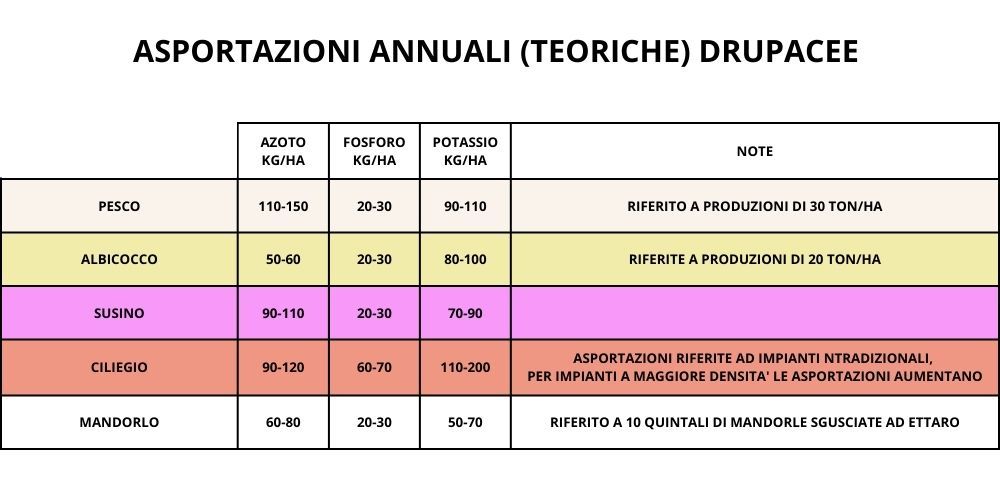
1. The first factor must be evaluated on the basis of the crop removal: that is, there are tables that indicate the annual nutritional requirements of crops to perform their biological functions.
2. it would be useful, at least every 5-6 years, to carry out soil analyses to determine the state of soil health.
***
Would you like to receive our advice? Subscribe to our Newsletter - 8% discount now for you
|
***
How to proceed with fertilizing stone fruits
Within this paragraph we will try to describe what we think is the most appropriate strategy to carry out for a satisfactory annual fertilization.
Organic matter is the main and essential element both for soil fertility and for increasing cation exchange (the possibility of elements present in the soil, that is, to be assimilated by the roots of our plants).
Precisely for this reason, our advice is always to provide, before anything else, organic matter to the soil. This is an activity to be carried out in the months of November / December, also because the organic substance (which is always advisable to bury) has a slower action and above all will prepare the plant to better assimilate the chemical elements that we will provide later:
- Orga-kem 10.5.5, dosage: 1.5-2 kg per plant
As you can see, in addition to 35% organic matter, with this intervention we also provide a nitrogen appetizer which, in organic form and buried, will last longer in the soil.
The actual supply of nutrients will be carried out in February, administering a controlled release NPK fertilizer with calcium and magnesium:
- Agromaster 10.10.16, dosage: 1kg per plant
In our opinion, a light burial would certainly be more useful. Nevertheless, the supplier of this product assures that the burying operation could be avoided, by virtue of the presence, in the composition of the product, of the substance "POLY'S", a membrane that releases nutrients only in conditions of favorable humidity and temperature.
In the event that you want to proceed with a fertilization allowed in organic farming, our advice is to use together ì:
- Polysulphate, dosage: 1kg per plant. It is a fertilizer that contains 4 essential nutrients for the plant: sulfur, potassium, magnesium and calcium
- Orga-kem 6.11.8, dosage: 1kg per plant
Share this content


 Chronology
 Citrus fruits
 Turf
 Stone fruit
 Olive tree
 Ornamental
 Vegetables
 Actinidia (Kiwi)
 Screw
 Hobbies and insights
 Pome Fruit


