
Your cart
There are no more items in your cart
Poplar bronzing (Marssonina brunnea)
Categories :
Chronology
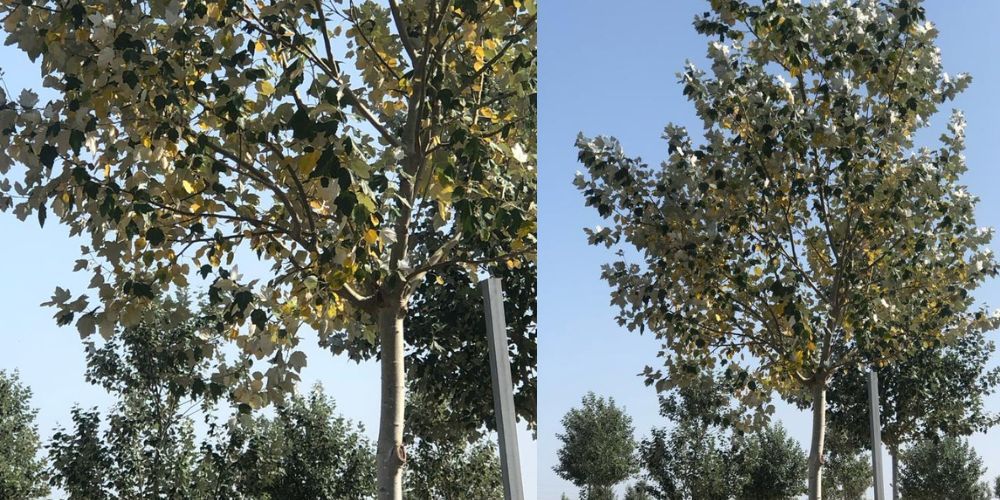
Poplar bronzing is a fungal disease, due to the attack of the pathogen Marssonnina brunnea (so called because of its conidal morphology)
Index
Brown marssonnina: the damage from poplar tanning
The primary infection with Marssonina of the poplar occurs in spring (with temperatures between 9 and 25°C), when the spores produced on the lesions of the twigs or on the infected fallen leaves, in turn infect the developing leaves. Although mortality from bronzing is very rare (unless the infection occurs for several consecutive years), the damage caused severely reduces both the growth and productivity of poplar trees, leading to significant ecological and environmental losses. On the one hand, in fact, the poplar grove will be more susceptible to other damage or contagion, on the other hand the production of wood will see a sharp reduction in the years immediately following the attack.
Brown Marssonina: the damage from poplar tanning
Poplars infected with Marssonina are symptomatic of small dead areas of the leaves (circular and oval and initially about 1 mm in diameter). With the spread of the infection (closely linked to hot and humid climatic conditions) the spots tend to enlarge, taking on a brownish-black color, resulting in premature defoliation. Especially from the beginning of August, defoliation can be very serious, if not completely complete and, despite the refoliation of the tree in late summer-early autumn, the new twigs will frequently tend to die.
Would you like to receive our advice? Subscribe to our Newsletter - 8% discount now for you
|
|
Removing or destroying diseased material from trees can help reduce infection. In addition, increasing the space between trees can create a microclimate that is less conducive to the spread of infection. In the prevention phase, especially in the event of an attack that has already occurred in previous years, our advice is to use:
Silacid (500gr/hq) which, thanks to its moisturizing and drying action, is able to make the poplar more resistant to a possible new attack by brown Marssonina.
However, once the infection has already occurred, the only solution is to proceed through targeted strategies. Our proposal is to use a specific blend, which makes use of 3 products:
Inex-A (30ml), increases the duration of effectiveness of the treatment, counteracting the washing action of rain + Biobacter (100 ml), able to sanitize and decontaminate the leaf from the presence of the pathogen + Silver , with a semi-curative and penetrating action (200 ml)
Share this content


 Chronology
 Citrus fruits
 Turf
 Stone fruit
 Olive tree
 Ornamental
 Vegetables
 Actinidia (Kiwi)
 Screw
 Hobbies and insights
 Pome Fruit


