
Your cart
There are no more items in your cart
How to fight fetal leafhopper on citrus fruits
Categories :
Chronology
, Citrus fruits
Index
Operations to be performed at the appearance of a fetus
Introduction
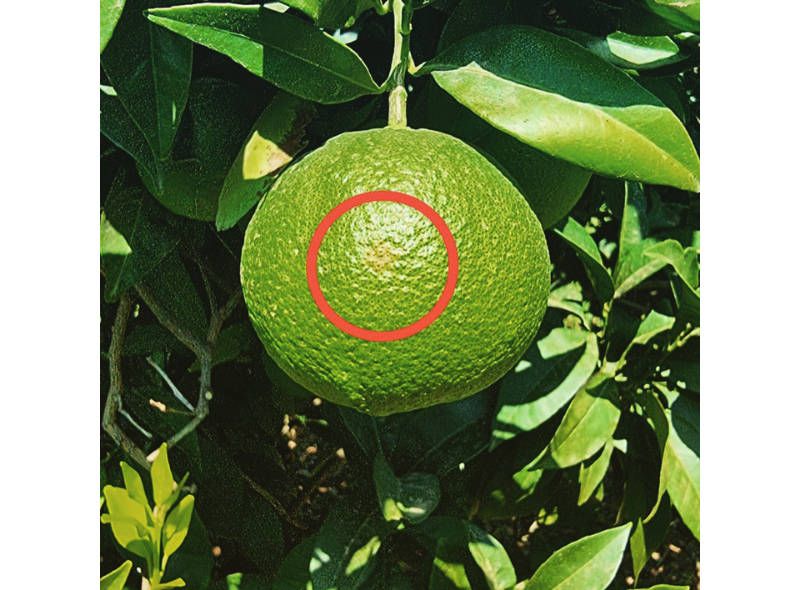
The green leafhopper (Asymmetrasca = Empoasca decedens) is a leafhopper insect, responsible for the parasitic "fetola" that attacks citrus fruits starting from the growth phase of the fruit and then especially when ripe.
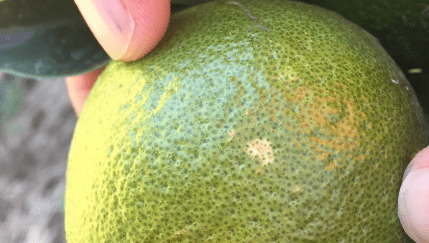
The damage caused by this parasite occurs on the fruits and is caused by trophic stings that lead to the formation of yellow spots as a result of the leakage of essential oils. These alterations, which are more frequent on mandarin, clementines and oranges, are called "fetola" and the symptoms greatly depreciate the fruit, and can be a gateway to fungal diseases such as Phytophthora and Anthracnose.
Would you like to receive our advice? Subscribe to our Newsletter - 8% discount now for you
|
Operations to be performed at the appearance of a fetus
The period in which fetal damage is seen is from the beginning of September onwards, for containment it is advisable to combine chemical control with agronomic control.
Agronomic control consists of weed control, on which leafhoppers carry out part of their biological cycle starting from spring.
September
Only in the case of the presence of fruits affected by fetola, carry out a foliar treatment with:
- Inex-A: 30 ml/hl
- HAIFA protek: 300 g/hl
- Karate zeon 1.5: 200 ml/hl
If necessary, after 15-20 days, repeat a treatment with:
- Trebon up : 50 ml/hl
In Organic Farming
- Mastro 50 : 300 g/hl
Knocking down and persistent, in case of the presence of whitefly you can also add 200 g of Tiovit Jet: Obviously they are contact products, so a good and uniform wetting of the hair is necessary.
OR
Asset five : 65 ml/hl (pyrethrum)
Asset Five, due to its low persistence, should be used several times when the presence of insects is seen.
Share this content







 Chronology
 Citrus fruits
 Turf
 Stone fruit
 Olive tree
 Ornamental
 Vegetables
 Actinidia (Kiwi)
 Screw
 Hobbies and insights
 Pome Fruit


