
Your cart
There are no more items in your cart
Sharka - Stone fruit pitting - Treatments
Categories :
Chronology
, Stone fruit
Index
Effects of the Sharka virus on stone fruits
Good agronomic practices against Sharka
Fighting the vectors of the Sharka virus
Use of copper to limit the virus
Alkalinization to limit the viability of the virus
Ancient defense practices against fungi and bacteria
Would you like to receive our advice? Subscribe to our Newsletter - 8% discount now for you
|
Sharka - Stone fruit pitting
Sharka is a virus that attacks the leaves, branches and fruits of all stone fruits. Scientifically PLUM POX VIRUS
Leaves and fruits affected by sharka virus:

Effects of the Sharka virus on stone fruits
The branches have a malform and stunted development, the leaves have halos of different colors, while the fruits, lumpy and exuberant, also have eruptions on the stones.
The fruits, if consumed, are not harmful to humans.
It is a pathology feared by growers because there are no means of control, but despite the fact that sharka has been present in our country for over 50 years, Italy is one of the great producers of apricots in the world.
Good agronomic practices against Sharka
We can say, from experience, that good agronomic practices with careful insecticide defense, adequate nutrition, and interventions with certain copper-based products and alkalizing products, strongly limit the danger of the virus.
Fighting the vectors of the Sharka virus
Viruses, it is well known, like many diseases, easily and preferably attack weak and debilitated hosts, and make use of adequate vectors to be able to spread, so fighting aphids, whiteflies, mites and leafhoppers is a necessary practice to limit the spread of the virus, and to avoid states of weakness of the plant.
Use of copper to limit the virus
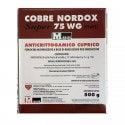
The use of copper has a limiting action on the viability of the virus, in particular some compounds such as copper sulphate pentahydrate, tribasic copper sulphate, copper oxide, cuprous oxide.
Alkalinization to limit the viability of the virus
Viruses, bacteria and fungi live and develop in an environment that tends to be acidic, so alkalizing their environment is a useful practice to limit their vitality. For this purpose, plants can be sprayed with alkalizing products such as potassium bicarbonate, sodium bicarbonate, sodium hypochlorite. The same result is obtained by spraying the plants with foliar fertilizers such as K BOMBER, rich in potassium, strongly alkaline (Ph 12) which combine the alkalizing action with a remarkable nutritional action, where the high potassium content increases the sugar content in the fruits and leaves and increases the resistance of the plant to abiotic stresses, such as drought, high and low temperatures.
Ancient defense practices against fungi and bacteria
In the past, the practice of brushing the trunks with copper sulphate and lime, or with lime alone, was widely used, which greatly limited the attacks of fungi, bacteria and various parasites, it was carried out twice a year, at the fall of the leaves and in the middle of winter. Many farmers are returning to this ancient practice and the benefits are evident. Evident on stone fruits, evident on olive trees against peacock's eye and mange.
Share this content


 Chronology
 Citrus fruits
 Turf
 Stone fruit
 Olive tree
 Ornamental
 Vegetables
 Actinidia (Kiwi)
 Screw
 Hobbies and insights
 Pome Fruit


