
Your cart
There are no more items in your cart
How to Keep Sansevieria at Home
Categories :
Chronology
, Ornamental
Index
Characteristics of Sansevieria
How to Grow Sansevieria at Home
Recommended Products for Sansevieria Repotting
Common Pathologies and Problems
FAQ (Frequently Asked Questions) About Sansevieria Care

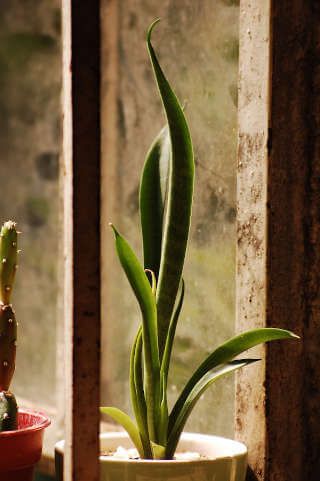
Sansevieria , also known as mother-in-law's tongue, is one of the most popular houseplants due to its resistance and ability to improve air quality. Native to the tropical regions of Africa and Asia, this plant adapts perfectly to domestic environments, requiring very little care. In the following article, we will explore how to care for Sansevieria at home, analyzing its needs for light, water, nutrients, and other essential conditions.
Characteristics of Sansevieria
Sansevieria trifasciata, one of the most common varieties, is distinguished by its stiff and fleshy leaves, arranged vertically and often bordered with yellow. There are many other varieties, each with unique characteristics, such as Sansevieria cylindrica and Sansevieria Hahnii.
Benefits of Sansevieria
- Air purification: It is famous for its ability to absorb carbon dioxide and release oxygen even at night.
- Low maintenance: Ideal for those who don't have a green thumb.
- Adaptability: Easily adapts to different light and humidity conditions.
How to Grow Sansevieria at Home
1. Exposure and Light
Sansevieria is extremely versatile and can grow in both direct light and partial shade. However, to achieve more vibrant and lush leaves, it is advisable to place it in an area with bright indirect light.
- Direct light: Promotes faster growth but can burn leaves if too intense.
- Low light: Growth will be slower, but the plant still remains healthy.
2. Watering
One of the most important characteristics of Sansevieria is its tolerance to drought. It is preferable to subject the plant to water stress rather than overwatering.
- Frequency: Water only when the soil is completely dry. In winter, further reduce watering.
- Standing water: Avoid leaving water in the saucer to prevent root rot.
3. Soil and Repotting
How to Repot Sansevieria
Sansevieria does not require frequent repotting and can be repotted every 2-3 years, preferably in spring, when the conditions are more favorable for its adaptation. During this operation, it is essential to protect the roots from injury, which could facilitate the entry of pathogens.
To help the plant overcome transplant stress and enhance its resistance, it is recommended to add a mycorrhizal product to the substrate. Mycorrhizae establish a symbiosis with the roots, improving nutrient uptake and protecting the plant from fungal infections. Recommended Products for Sansevieria RepottingMycorrhizae Powder: Ideal for invigorating the root system and stimulating healthy growth. A product like Micosat F Uno Mini is perfect for protecting the roots and improving water and nutrient absorption. Soil for Succulents: A specific mix such as Universal Soil with Perlite ensures optimal drainage, preventing dangerous water accumulations. Biostimulants for transplantation: The use of a biostimulant such as Eutrofit used in a mixture with water in common irrigations can help reduce post-transplant stress and promote rapid and vigorous growth of new roots. Adopting these precautions and using the right products will ensure your Sansevieria has a long, lush and stress-free life. |
Would you like to receive our advice? Subscribe to our Newsletter - 8% discount now for you
|
4. Nutrition
Although not particularly demanding in terms of fertilizers, Sansevieria benefits from light fertilization during the growing season (spring and summer).
- Fertilizer Type: A liquid fertilizer for succulents such as Granverde Cifo for houseplants diluted at half dose is sufficient.
- Frequency: Once a month.
Common Pathologies and Problems
Despite its resistance, Sansevieria can be subject to some problems:
1. Root Rot
- Causes: Overwatering or poorly draining soil.
- Remedies: Reduce watering and use a more draining soil, in this the use of Blumat a probe to measure the right soil moisture can be extremely helpful.
2. Spots on the Leaves
- Causes: Exposure to intense direct light or temperature changes.
- Remedies: Move the plant to a location with indirect light and stable temperatures.
3. Yellowing or soft leaves
- Causes: Overwatering or exposure to cold.
- Remedies: Cut off damaged parts and adjust irrigation.
FAQ (Frequently Asked Questions) About Sansevieria Care
1. Can Sansevieria grow in the bathroom?
Yes, thanks to its ability to tolerate moisture and indirect light. However, it is important to make sure that it is not exposed to waterlogging.
2. Is Sansevieria toxic to pets?
Yes, the leaves contain saponins, which can be toxic to cats and dogs if ingested.
3. How much does Sansevieria grow?
Growth depends on variety and conditions. It can reach up to 1 meter in height.
4. Can I multiply Sansevieria?
Yes, multiplication can be done by dividing rhizomes or leaf cuttings.
5. Does Sansevieria bloom?
Yes, although rarely at home. The flowers are small, white and fragrant.
Share this content





 Chronology
 Citrus fruits
 Turf
 Stone fruit
 Olive tree
 Ornamental
 Vegetables
 Actinidia (Kiwi)
 Screw
 Hobbies and insights
 Pome Fruit


