
Your cart
There are no more items in your cart
Jupiter's beard: characteristics and cultivation of Drosanthemum hispidum
Categories :
Chronology
, Ornamental
Index
Characteristics of Drosanthemum hispidum
Cultivation of Drosanthemum hispidum
Natural defense against insects that attack the Jupiter's Beard
Defense against fungal diseases affecting the Jupiter Beard
Suggestions for disease management
FAQ (Frequently Asked Questions) about Drosanthemum hispidum
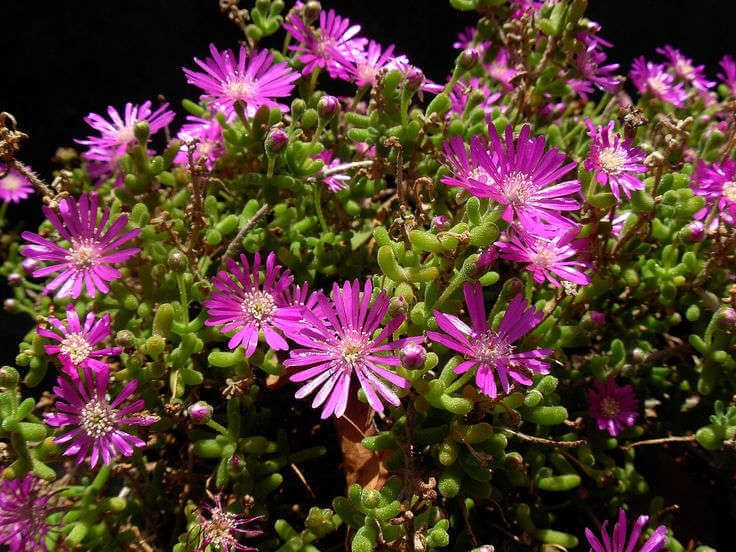
Drosanthemum hispidum, commonly known as Jupiter's beard, is a perennial succulent plant highly prized for its ornamental properties and its resistance to arid environments. Native to the South African regions, this plant has spread to many countries thanks to its ability to adapt to Mediterranean climates. The name "Drosanthemum" comes from Greek and means "dewy flower", due to the tiny water cells that line the leaves and stems, giving them a brilliant, dew-like appearance.
Characteristics of Drosanthemum hispidum
Drosanthemum hispidum belongs to the Aizoaceae family , a family of succulent plants that includes several decorative species. This plant stands out for some fundamental characteristics:
- Stem and leaves: The leaves are fleshy, bright green in color, and covered with a light down that gives them a velvety appearance. The semi-woody, branched stems extend horizontally, making it ideal for covering large areas or rock gardens. The plant's prostrate growth makes it perfect for those looking for great ground cover.
- Flowers: The flowers of the Jupiter Beard are the real selling point. They bloom abundantly during the warm months, usually from spring through autumn, and range in color from pink to purple, with a white or yellow center. The flowers open during the day, closing at nightfall or on cloudy days.
- Hardiness: Drosanthemum hispidum is known for its drought tolerance, making it perfect for arid and coastal gardens. This plant is capable of accumulating water in its fleshy leaves, which allows it to survive for long periods without watering. It is also particularly resistant to wind and salinity, making it ideal for coastal areas.
- Natural habitat: In its original habitat, this plant grows on poor, sandy or rocky soils, often in sunbathed areas.
Cultivation of Drosanthemum hispidum
Exposure and climate
For optimal growth, Drosanthemum hispidum requires a sunny location. This plant loves direct sunlight and tolerates heat well, making it ideal for Mediterranean gardens. Areas with mild winters and hot summers are perfect for this plant. It does not tolerate persistent frosts well; For this reason, in colder regions it is advisable to grow it in pots, so that you can protect it during the winter months by bringing it to sheltered environments.
Terrain
The ideal soil for Drosanthemum hispidum should be well-drained. Waterlogging can cause root rot and compromise the health of the plant. An ideal mix of soil could include sand, gravel, and a substrate specifically designed for succulent plants. Either way, it's important to make sure the soil isn't holding too much moisture.
Irrigation
One of the main characteristics of Drosanthemum hispidum is its resistance to drought. For this reason, it is important not to overwater. During the summer season, irrigation can be carried out every 10-15 days, while in winter it is advisable to drastically reduce the water supply. Succulent plants, in fact, are more susceptible to stagnation during the cold season, a period in which metabolic activity slows down.
Fertilization
Despite being a hardy and hardy plant, Jupiter's beard can benefit from moderate fertilization during the growing season (spring and summer). We recommend the use of a specific fertilizer for succulents, with a low nitrogen content, every 4-6 weeks. Too much nitrogen fertilizer can cause excessive leaf growth to the detriment of flowering.
Defense
The Jupiter's Beard, known for its vibrant blooms, can be prone to insect infestations and fungal disease attacks. To keep it healthy and thriving, it is possible to adopt a biological defense, using natural products that respect the environment and the health of the plant. In this guide, we will see the best strategies to manage these problems, with effective and easy-to-apply solutions, perfect even for those with less experience.
Would you like to receive our advice? Subscribe to our Newsletter - 8% discount now for you
|
|
Natural defense against insects that attack the Jupiter's Beard
Aphids and other pests can slow the growth of Jupiter's beard, damaging leaves and flowers. However, there are natural remedies that allow you to protect the plant without the use of chemicals.
- Ready-to-use products: If you have few plants or prefer a quick and simple solution, you can opt for CIFOTRIS BIO, a ready-made organic product that acts against both insects and fungal diseases. It is practical to apply, does not require dilution and guarantees immediate results.
- Products to be diluted: For those who have a larger garden or many plants, a valid alternative is nettle extract, which offers an effective repellent action against aphids and other pests. Dilute the product as directed on the label and spray it regularly to prevent infestations on a large leaf surface.
Defense against fungal diseases affecting the Jupiter Beard
Fungal diseases such as powdery mildew and rust can affect the Jupiter's beard, especially in moist environments. It is essential to intervene promptly with targeted treatments, using organic products to limit the damage.
- Ready-to-use products: For those looking for a practical and immediate product, Armicarb Spray is an organic fungicide based on sodium bicarbonate, perfect for eliminating fungal spores from the leaves and flowers of Plumbago. It is simple to use and very effective in combating fungal diseases.
- Products to be diluted: If you grow Jupiter's Beard in a large space, we recommend a copper and sulfur-based fungicide such as Copper Sulfur Ferticus 3, to be diluted at a dose of 30 ml per 10 liters of water. This product is ideal for preventing and treating fungal diseases on plants grown in open ground, ensuring complete and prolonged protection.
Suggestions for disease management
Few plants or potted plants: Use ready-to-use products such as CIFOTRIS BIO for insect protection and Armicarb Spray to fight fungus.
Plants in the ground: Opt for diluted solutions such as nettle extract, and Copper Sulfur Ferticus 3, which are more effective on large surfaces.
By adopting these organic strategies, you can protect your Jupiter beard from insects and fungi in a natural way, ensuring healthy and vigorous plants throughout the season.
Pruning and maintenance
Pruning Drosanthemum hispidum is generally unnecessary, but it can be helpful to keep the plant tidy and to remove any dry or damaged parts. This practice should preferably be carried out at the end of flowering, to avoid compromising the production of new buds.
Multiplication
Drosanthemum hispidum can be easily multiplied by cuttings. This method is the easiest and quickest way to get new plants. Cuttings can be taken in spring or summer, preferably from side branches. Simply let them air dry for a couple of days before planting them in a sandy, well-drained medium.
FAQ (Frequently Asked Questions) about Drosanthemum hispidum
1. When is the best time to plant Jupiter's beard?
The ideal time to plant Drosanthemum hispidum is in the spring, when temperatures are milder. This allows the plant to acclimatize and develop a strong root system before the arrival of summer.
2. How tall does Drosanthemum hispidum grow?
Jupiter's Beard is a low-growing succulent plant. It can reach a maximum height of 10-15 cm, while its stems can extend horizontally for over 50 cm, making it perfect as a ground cover plant.
3. Can Jupiter's Beard be grown in pots?
Absolutely yes. Drosanthemum hispidum is also well suited to growing in pots, as long as its needs in terms of sun exposure and soil drainage are respected. It is advisable to use a terracotta pot with drainage holes to avoid waterlogging.
4. How does the plant defend itself from pests?
Drosanthemum hispidum is a hardy plant, but it can be attacked by aphids or mealybugs. To prevent these attacks, it is advisable to monitor the plant regularly and intervene promptly with natural products such as neem oil or potassium soap.
5. Is it possible to grow Jupiter's beard in cold climates?
Drosanthemum hispidum does not tolerate cold temperatures well. In regions with cold winters, the plant must be protected from frost. If grown in pots, you can move it to a greenhouse or sheltered environment during the winter.
Share this content




 Chronology
 Citrus fruits
 Turf
 Stone fruit
 Olive tree
 Ornamental
 Vegetables
 Actinidia (Kiwi)
 Screw
 Hobbies and insights
 Pome Fruit


