
Your cart
There are no more items in your cart
Oleander: An Elegant and Resistant Shrub
Categories :
Chronology
, Ornamental
Index
Botanical characteristics
Nutritional Needs of Oleander
Main Problems and Diseases
Growing and Growing Oleander in Pots: Strategies and Tips
FAQ (Frequently Asked Questions) about Oleander
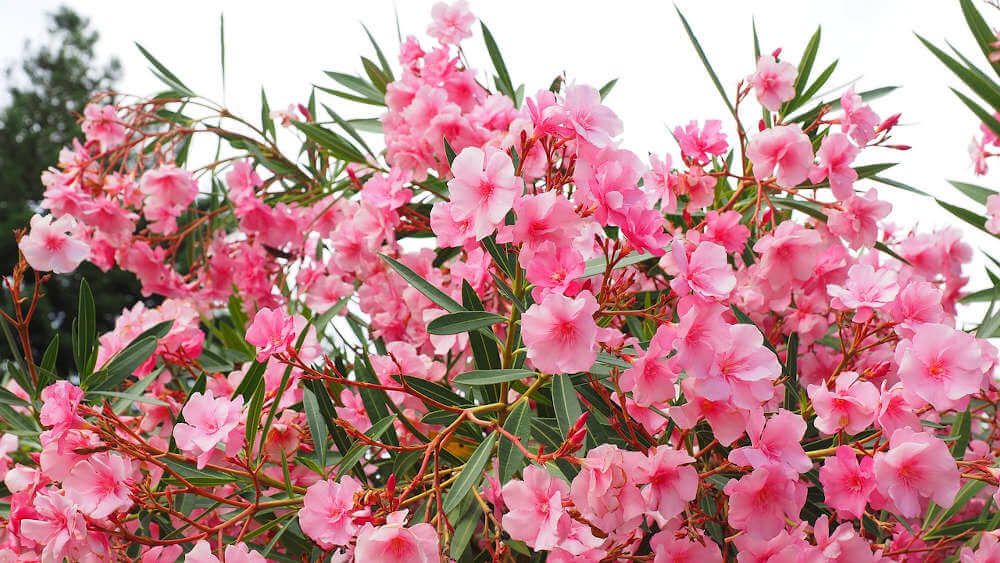
The oleander (Nerium oleander) is a shrubby plant that is widespread in the Mediterranean regions, known for its beauty and ability to adapt to different types of environments. It is characterized by evergreen leaves and brightly colored flowers, ranging from white to pink to deep red. Due to its ornamental properties, oleander is widely used in both private gardens and public spaces.
Introduction
The oleander is native to Mediterranean and subtropical regions. Its ability to withstand harsh weather conditions, such as drought and salty wind, makes it an ideal plant for growing in coastal areas and areas with mild winters. Despite being an ornamental shrub, the oleander has some toxic characteristics due to the presence of oleandrin, a cardiac glucoside that makes the entire plant, from the leaves to the flowers, highly poisonous.
Botanical characteristics
Oleander belongs to the Apocynaceae family and is an evergreen plant. Its height can vary from 1 to 6 meters, depending on the environmental conditions and cultivation techniques. The leaves are long, lanceolate and dark green in color, while the flowers are grouped in terminal inflorescences that bloom in spring and summer. The colors of oleander flowers can range from white to yellow, pale pink to bright red, offering a wide range of colors for ornamental use.
Cultivation Systems
The oleander can be grown both in pots and in the ground. Here are some basic tips for its cultivation:
- Exposure: The oleander prefers a sunny and warm location. It can also tolerate partial shade, but flowering will be less abundant.
- Soil: The plant adapts to different types of soil, as long as they are well-drained. Oleander tolerates poor, sandy soils, but grows best in fertile soils rich in organic matter.
- Irrigation: Drought-tolerant, oleander needs regular watering during the growth and flowering phase. In severe drought conditions, it is advisable to increase the frequency of watering to promote optimal development.
- Fertilization: The plant benefits from periodic fertilization, especially during spring and summer, to stimulate abundant flowering.
Multiplication and Propagation
The propagation of the oleander takes place mainly by cuttings. This method is simple and effective and consists of taking a portion of a semi-woody branch during spring or summer. The cutting must then be immersed in a substrate of sand and peat, kept constantly moist until rooting.
Would you like to receive our advice? Subscribe to our Newsletter - 8% discount now for you
|
|
Nutritional Needs of Oleander
The oleander is a plant that, while adapting to poor soils, benefits from a fertile and well-nourished soil. Fertilization is therefore an important aspect of achieving lush flowering and healthy growth. Here are some tips on the nutritional needs of oleander:
- Nitrogen (N): Stimulates vegetative growth. A nitrogen deficiency can cause yellowing of the leaves.
- Phosphorus (P): Promotes root development and flowering. The supply of phosphorus is essential during the growth phase.
- Potassium (K): Strengthens the plant's tissues, increasing its resistance to diseases and pests.
During the spring period, it is recommended to use a balanced fertilizer (NPK) to ensure healthy growth and abundant flowering.
Main Problems and Diseases
The oleander is generally a robust plant, but it can be subject to several phytosanitary problems:
- Cochineal: An insect that can damage the leaves and branches of the oleander. It is advisable to treat the plant with specific products or with a solution of water and Marseille soap.
- Sooty mold: A black patina that develops on the leaves due to the activity of insects such as aphids. Removing insect pests is crucial to prevent this problem.
- Bacterial cancer: A disease that causes tumors to form on the branches and trunk. In the presence of this pathology, it is necessary to remove the affected parts and treat the plant with antibacterial products.
Accelerating Oleander Growth as a Separator or Divider: Recommended Strategies
The oleander is often used as an ornamental plant to create natural barriers or dividers in gardens, roads and parks, due to its resistance and ability to quickly form thick hedges. If your goal is to accelerate the growth of these plants, there are several effective strategies you can adopt to achieve vigorous and even growth.
1. Regular fertilization
Nutrition is crucial for stimulating rapid growth. To get the most out of it, I recommend using a balanced fertilizer with a balanced ratio of nitrogen, phosphorus and potassium (NPK), such as an Organic Fruit and Vegetable 15.5.5 organo-mineral NPK fertilizer. This type of fertilizer promotes vegetative development, particularly during the active growth phase of the plant. Apply it every 4-6 weeks in spring and early summer, always following the doses recommended on the label.
Alternatively, you can use an organic fertilizer rich in organic matter, which in addition to nourishing the oleander improves soil quality and promotes root growth.
2. Frequent and Controlled Watering
Although oleander is a drought-tolerant plant, it is important to provide good watering for rapid growth, especially in the first few years of life. It is advisable to irrigate frequently, keeping the soil moist, but avoiding stagnant water that can cause root rot. During the summer months, make sure to provide water consistently, especially on hot days.
If the oleander is planted in containers, pay even more attention to watering, as the pots tend to dry out more quickly than in open soil.
3. Foliar Treatment to Repel Insects and Strengthen Defenses
To protect the oleander from insect attacks, which can slow down growth, it is advisable to carry out foliar treatments with nettle products and white soybean oil. Nettle has strengthening properties, stimulates the plant's natural defenses and can improve resistance against diseases. White soybean oil acts as a repellent for several insect pests, suffocating pests such as aphids and mealybugs, which can weaken the plant. These treatments not only protect, but contribute to more vigorous and healthy growth.
Recommended dosage:
Nettle extract: 50 ml in 10 liters of water.
White soybean oil: 30 ml in 10 liters of water.
Apply the foliar treatment once every 2-3 weeks during the warm months, to ensure constant protection.
Growing and Growing Oleander in Pots: Strategies and Tips
The oleander is a plant that is valued not only for its beauty, but also for its ability to adapt to different environments. Growing an oleander in pots can be a perfect choice for those with limited space, such as terraces or balconies. However, to achieve healthy and lush growth, you need to follow some specific strategies, which differ slightly from growing in open ground.
Fertilization for Oleander in Pots
When it comes to potted oleander, the use of granular fertilizers is not recommended. The main reason for this is that granular fertilizers release nutrients more slowly and could accumulate in the substrate, creating imbalances in the plant's nutrition. For this reason, we recommend opting for liquid fertilizers, which are easier to dose and integrate better with irrigation water.
An example of an ideal liquid fertilizer for potted oleander is Algatron, an algae-based biostimulant that improves growth and strengthens the plant. Simply mix it with the irrigation water following the recommended doses (generally 20-30 ml per 10 liters of water) and apply it every 2-3 weeks during the growing season.
Irrigation and Drainage
Potted oleander needs regular watering, but you must be careful to avoid waterlogging. Make sure the pot has a good drainage system to avoid root problems, such as root rot. During the warmer months, it's important to keep the soil slightly moist at all times, but allow the substrate to dry out slightly between waterings.
Potted development: foliar treatments
Potted oleander can also benefit from foliar treatments to protect the plant from pests and strengthen its natural defenses. I recommend using a blend of nettle extract and white soybean oil, two natural products that can also be safely applied to balcony plants. Nettle extract helps stimulate growth and strengthen the plant's defenses, while white soybean oil acts as a repellent against aphids, mealybugs, and other harmful insects.
Substrate Support and Periodic Displacement
Oleander grown in pots may need periodic substrate replacements to ensure a good nutrient supply. Once a year, during the spring, it is useful to partially renew the soil to give the plant a fresh and fertile environment.
Additionally, to promote even growth, consider rotating the pot periodically so that the plant receives the same amount of light on all sides.
FAQ (Frequently Asked Questions) about Oleander
1. Is oleander toxic?
Yes, all parts of the oleander contain toxic substances, especially oleandrin. Accidental ingestion can cause severe intoxication in both humans and pets.
2. When does the oleander bloom?
The oleander blooms mainly in spring and summer, but in favorable climatic conditions it can continue flowering until autumn.
3. How do you prune oleander?
Oleander pruning should be done in late winter or early spring. It is advisable to remove dry branches and shorten those that are too long to promote more compact growth and abundant flowering.
4. What is the best soil for oleander?
The oleander prefers well-drained soil, rich in organic matter. Also tolerating sandy and calcareous soils, it adapts to different types of soils.
5. How to protect oleander from the cold?
In areas prone to harsh winters, it is advisable to protect the oleander with non-woven fabric or move the potted plants to a sheltered location.
Share this content



 Chronology
 Citrus fruits
 Turf
 Stone fruit
 Olive tree
 Ornamental
 Vegetables
 Actinidia (Kiwi)
 Screw
 Hobbies and insights
 Pome Fruit


