
Your cart
There are no more items in your cart
Lavender: Cultivation, Characteristics and Nutritional Needs
Categories :
, Chronology
Index
Botanical characteristics of Lavender
Ideal Soil and Climate
Lavender Propagation
Cultivation care
Diseases and Pests
Nutritional Needs and Soil Quality
FAQ (Frequently Asked Questions) about Lavender
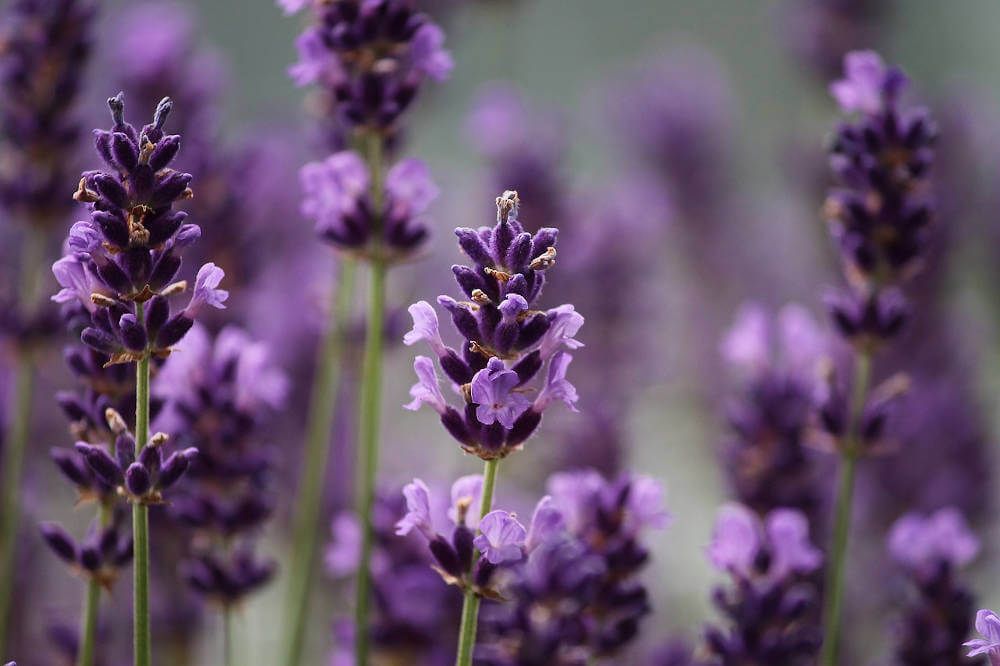
Lavender is one of the most loved and cultivated plants both for ornamental purposes and for its herbal and therapeutic uses. Belonging to the Lamiaceae family, this dicotyledonous spermatophyte plant is known for its characteristic scent and multiple applications that make it extremely versatile. Lavender (genus Lavandula) includes several species, among which the best known are the Lavandula angustifolia (true lavender or officinal lavender) and the Lavandula latifolia. Native to the Mediterranean basin, lavender adapts well to temperate climates, where it can best express its qualities.
Botanical characteristics of Lavender
Lavender is a shrubby perennial , which can reach heights between 30 and 80 cm, depending on the species and growing conditions. It has opposite leaves, grayish-green in color, covered with a light down. The flowers are gathered in terminal spikes, and their color varies from blue to purple, with shades of white or pinkish in some varieties. The most precious part of lavender are the flowers, from which the essential oils used in perfumery, cosmetics and natural medicine are extracted.
Cultivation of Lavender
Ideal Soil and Climate
Lavender prefers light, well-drained soils, with an alkaline pH (between 6.5 and 8). Soils that are too compact and clayey can cause stagnation of water, which is harmful to the plant's root system. To improve drainage, you can add sand or gravel to the soil before planting.
Lavender is a xerophytic plant, able to withstand long periods of drought. Its ideal habitat is characterized by temperate climates, with mild winters and hot, dry summers. It resists well to low temperatures, down to -15°C, but fears excessively humid winters, which can promote the appearance of mold and pathogenic fungi.
Lavender Propagation
The multiplication of lavender can take place by seed, cutting, or division of the tufts. Sowing is a rather slow method and is mainly used to obtain new varieties. Cuttings, on the other hand, are the most widespread and practical technique. Semi-woody branches are taken in summer, about 10 cm long, and rooted in a substrate composed of sand and peat in equal parts.
Once rooted, the new seedlings can be transferred to the ground or in pots. It is important to choose a sunny location and make sure that there is a space of at least 40-50 cm between plants to ensure good air circulation.
Cultivation care
Lavender is a hardy plant that requires little care once it is well established. However, to achieve abundant and long-lasting flowering, it is necessary to adopt some fundamental agronomic practices:
Irrigation: Despite its resistance to drought, lavender needs moderate irrigation in the rooting phases and during particularly hot and dry periods. It is important to avoid waterlogging, which can cause root rot.
Fertilization: Lavender does not have high nutrient requirements. Before planting, it is advisable to enrich the soil with mature compost or well-decomposed manure. During the growing season, it is possible to fertilize lightly with a phosphorus and potassium-based fertilizer, avoiding excess nitrogen that would favor excessive vegetative development to the detriment of flowering.
Pruning: Pruning is essential to maintain the compact shape of the plant and encourage the production of new flower shoots. It is carried out at the end of flowering, cutting the branches by about a third of their length, but without reaching the woody part.
Would you like to receive our advice? Subscribe to our Newsletter - 8% discount now for you
|
Problems in Lavender Cultivation
Diseases and Pests
Lavender, despite being a rustic plant, can be subject to various phytosanitary problems:
Root rot: Caused by fungi such as Phytophthora spp. and Rhizoctonia spp., it is the most common problem in lavender crops, especially in soils that are too compact and moist. To prevent this, it is essential to ensure good soil drainage. A good prevention strategy with mycorrhiza-based products such as Tricod R in fertigation, with 2 interventions in the early spring period and repeated at the end of summer, will support a good strong and healthy root system, with the use of a natural and organic product.
Mold and powdery mildew: In conditions of high humidity, fungal diseases such as gray mold (Botrytis cinerea) and powdery mildew can develop, which manifest themselves with the presence of whitish spots on leaves and flowers. Prevention includes the use of moderate irrigation, avoiding wetting the leaves, we recommend the periodic use of Zeolite to make the leaf surface less humid and difficult to attack fungal.
Aphids and mealybugs: These insects can attack the buds and flowers of lavender. In case of infestations, it is possible to intervene with organic products based on neem oil (or Hunter SW for professional use), soft soap or nettle extract.
Nutritional Needs and Soil Quality
Lavender is a plant that adapts well to poor and alkaline soils. However, to ensure optimal development and abundant flowering, attention must be paid to nutritional management.
We recommend fertilizing plants in the ground with Vigor Top , a granular organo-mineral fertilizer specific to meet the nutritional needs of lavender, and which contains:
Nitrogen (N): An excess of nitrogen can promote vegetative development at the expense of flower production and essential oil. It is important to maintain an adequate balance, avoiding excessive fertilization.
Phosphorus (P) and Potassium (K): They promote root development and flower production. Lavender responds well to the supply of organic fertilizers, such as compost and mature manure, which slowly release nutrients.
Calcium (Ca) and Magnesium (Mg): Essential for maintaining a good soil pH and for the synthesis of essential oils. If the soil is too acidic, it may be necessary to add lime to increase the pH.
FAQ (Frequently Asked Questions) about Lavender
1. When is the best time to harvest lavender?
Lavender is generally harvested in summer, when the flower spikes are fully developed, but the flowers have not yet fully bloomed. This is the time when the concentration of essential oils is at its highest.
2. Can lavender be grown in pots?
Yes, lavender lends itself well to growing in pots, as long as the container is large enough (at least 30 cm in diameter) and equipped with holes for drainage. It is important to use a light, well-drained substrate.
3. How long does a lavender plant live?
Lavender is a long-lived plant, which can live up to 10-15 years if grown in optimal conditions and pruned regularly. Over time, however, it tends to lignify and reduce flower production.
4. Is it possible to multiply lavender by cuttings?
Yes, multiplication by cuttings is the most effective method of propagating lavender. The cuttings are taken in summer, from semi-woody branches, and put to root in a sandy substrate.
5. How is lavender used in cooking?
Lavender flowers are edible and can be used to flavor desserts, herbal teas, jams and even savory dishes. It is important to use organic flowers, not treated with pesticides.
Share this content







 Chronology
 Citrus fruits
 Turf
 Stone fruit
 Olive tree
 Ornamental
 Vegetables
 Actinidia (Kiwi)
 Screw
 Hobbies and insights
 Pome Fruit


