
Your cart
There are no more items in your cart
How to get rid of Drosophila suzukii fruit flies
Categories :
, Chronology
, Vegetables
Index
Biological control of the fruit fly
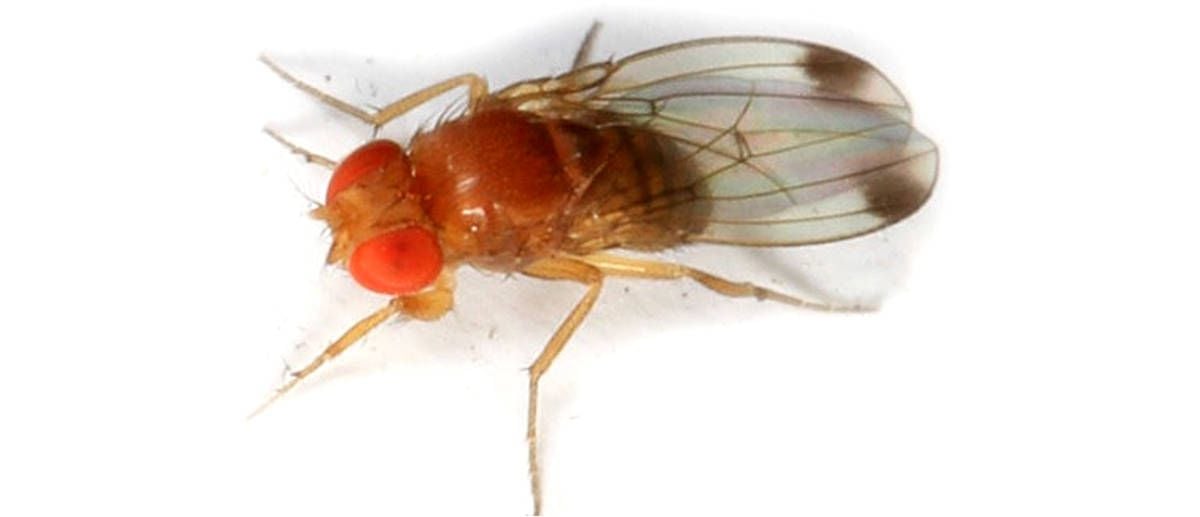
Fruit flies Drosophila suzukii
What treatments to carry out to defend against Drosophila Suzukii
Biological control of the fruit fly
Strawberry field
In recent years, we have experienced many problems with the fruit fly Drosophila suzukii.
To limit chemical treatments and lower their residues on the fruits, after having ascertained their ineffectiveness, we decided to install DROSOSAN traps by KOPPERT.

Fruit flies Drosophila suzukii
The fruit flies Drosophila suzukii find a favorable environment between 15 and 30 degrees.
The female fruit fly Drosophila suzukii (which also attacks cherry trees and grapes and other crops, especially red) lays eggs on the fruits ready for harvesting, as it has a very robust egg-depositor, which is able to pierce the non-rotten fruits.
It follows that at the time of harvesting the problem is not noticeable.
Unfortunately, it will be noticed shortly after, upon arrival on the markets, where the product will degrade quickly, due to the larva inside the fruit.
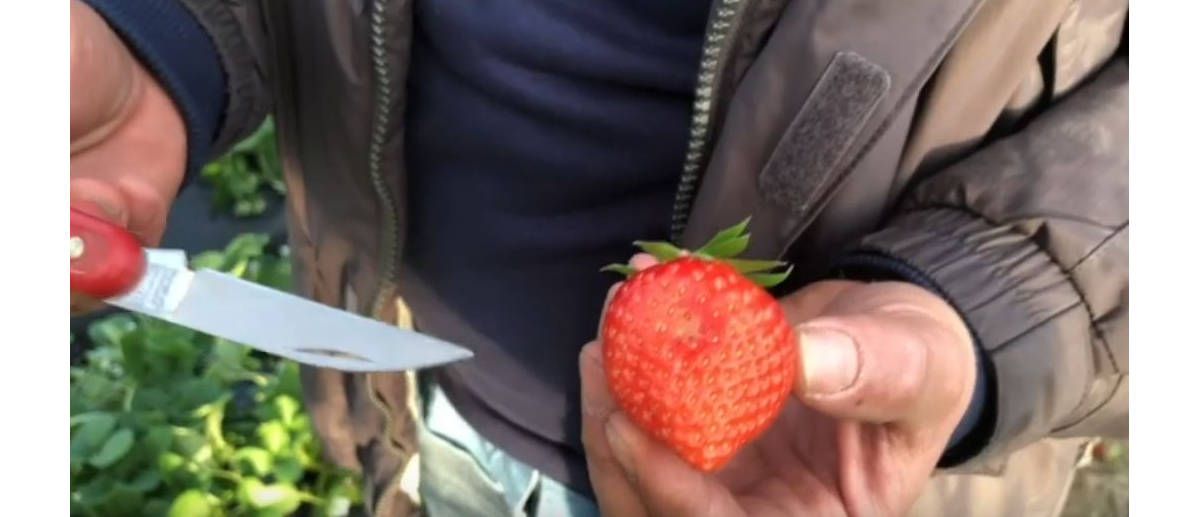
The female lays many eggs, several times a year and the generations follow one another very quickly. The result is an arduous struggle, difficult to win, especially with chemical interventions.
Would you like to receive our advice? Subscribe to our Newsletter - 8% discount now for you
|
The recommended trap
With the DROSOSAN trap of the KOPPERT we have greatly limited the attacks of this insect and obtained excellent results.
In the trap it is necessary to insert a specific attractant liquid for Drosophila suzukii, effective for both males and females.
It will be necessary to constantly monitor the traps because when the trap is full (and fills up quickly) it will be necessary to replace the liquid, to ensure that the trap is always 100% efficient.
The recommended number of traps is about 40 per hectare on strawberry and raspberry.
What treatments to carry out to defend against Drosophila Suzukii
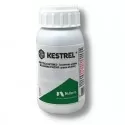
Currently, there are no active ingredients that report Drosophila as an adversity treated on the label, but from some tests carried out, we have seen that a fair result is also obtained from the use of Decis Evo, Laser and even Kestrel.
Bearing in mind that the fight against the midge is mainly adulticidal, we realized that the greatest effectiveness for success is in the "timing" in which the interventions are carried out, in fact, given the speed of reproduction of the insect, we have noticed that it will be appropriate to treat after 5-7 days alternating the active ingredients, acidifying the solution.
Share this content





 Chronology
 Citrus fruits
 Turf
 Stone fruit
 Olive tree
 Ornamental
 Vegetables
 Actinidia (Kiwi)
 Screw
 Hobbies and insights
 Pome Fruit


