
Your cart
There are no more items in your cart
How to fight the red spider mite in your homes? Here are some useful remedies
Categories :
Chronology
Index
Tetranychus urticae vs Trombidium holosericeum
Why fear this little mite?
Where do spider mites come from?
How to eliminate the red spider mite from balconies, marble, terraces and windows?
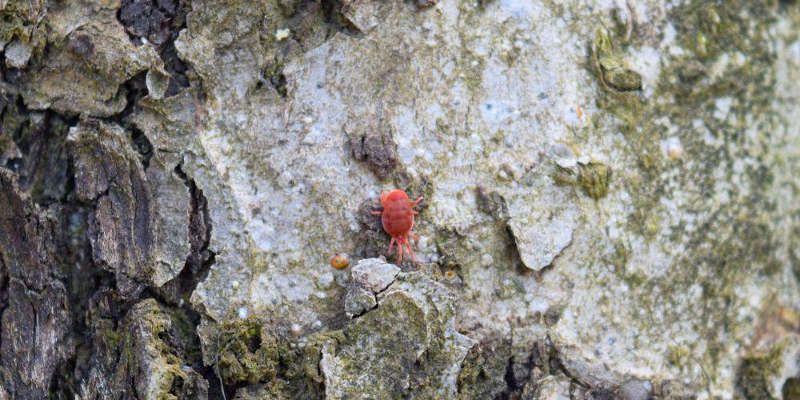
When you hear about spider mites, you immediately think of the damage that these tiny mites (scientifically known as Tetranychus urticae) can cause to our balcony plants, ornamental plants or our vegetables, causing holes in the leaves, decreasing their color or producing cobwebs.
In reality, the red spider mite that invades your homes during these summer periods, colonizing your balconies or walking on your windows has nothing to do with the Tetranychus urticae, nor with the damage it can cause.
How to recognize the differences and how to eliminate the red spider mite from your terraces?
Would you like to receive our advice? Subscribe to our Newsletter - 8% discount now for you
|
|
Let's correctly identify spider mites:
1. Tetranychus urticae vs Trombidium holosericeum
Usually, during spring and summer, you can find the walls of your houses or outdoor environments invaded by very small individuals, similar to insects, bright red in color and a maximum of two millimeters long. Especially if there are ornamental plants in these domestic spaces, then you can be frightened, thinking that you are in the presence of a Tetranychus urticae, commonly called red spider mite and very dangerous for the well-being of vegetables and plants in general.
In reality, the spider mites you see have nothing in common with plant mites. What are the differences?
Tetranychus urticae is a polyphagous mite, invisible to the naked eye, capable of infecting most fruit plants, vegetables, ornamental and herbaceous tree plants, causing numerous damages. In this case, the main problem of the red spider mite is related to its larvae which, when they start feeding on the plant, take away its nutrient, causing holes in the leaves.
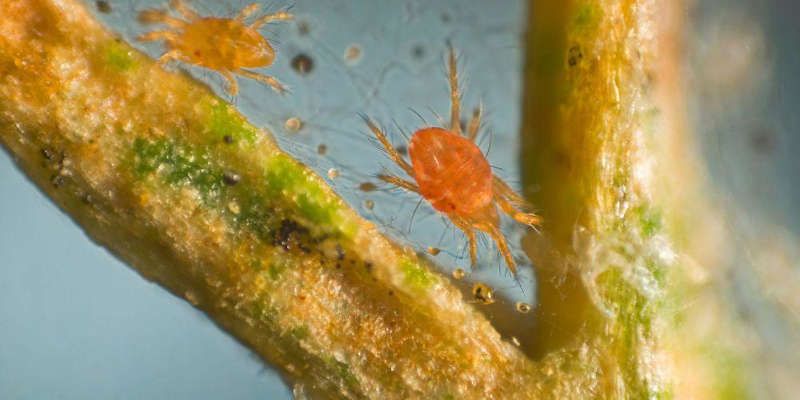
The Trombidium holosericeum, the red spider mite that you can often see outside your homes, despite its very small size (1-2 mm, with a maximum of 5 mm) is visible to the naked eye. Its body is covered with thick bright red hair and is absolutely harmless to plants, people and animals. Contrary to what one might think, feeding on larvae and insects harmful to plants, Trombidium holosericeum could be considered an excellent ally.
2. Why fear this little mite?
The only negative characteristic of Trombidium holsericeum is given by the intense red pigment (hemolymph), which comes out when the red spider mite is crushed. The hemolymph machine almost indelibly clothes, walls and any type of home décor.
3. Where do spider mites come from?
During the winter months, these tiny mites tend to hide in walls, cracks in walls or wooden window frames. With the arrival of summer, as temperatures rise, red spider mites come out en masse from their hiding places, positioning themselves in the most sunlit places . In the northern regions, the appearance of Trombidium holsericeum begins in March (it is possible to see these small red spider mites even in February, but only in case of excessively mild temperatures). However, their highest presence is found in the months of May, June and July, on sunny days and almost always during the morning hours.
4. How to eliminate the red spider mite from balconies, marble, terraces and windows?
Which product to use to fight the red spider mite? In this case, chemical control is not among the most recommended choices. Trombidium holosericium, in fact, is not really an insect, but an arachnid. Therefore, the use of chemicals, in addition to being harmful to the environment, would be ineffective and could contribute to the increase in the spread of the red spider mite. Arachnids, in fact, adapt very quickly to chemical threats and develop numerous immunities to pesticides.
Therefore, in the case of continuous and massive presence of red spider mites, we advise you to intervene organically , through nettle-based repellent products.
For small surfaces, the product we recommend is:
- Cifotris Bio nettle extract
In the event that the area to be protected is larger, the product we recommend is:
Share this content



 Chronology
 Citrus fruits
 Turf
 Stone fruit
 Olive tree
 Ornamental
 Vegetables
 Actinidia (Kiwi)
 Screw
 Hobbies and insights
 Pome Fruit


