
Your cart
There are no more items in your cart
The Garden Hedge: the correct management
Categories :
Chronology
, Ornamental
, Turf
Index
The advice of the landscape agronomist
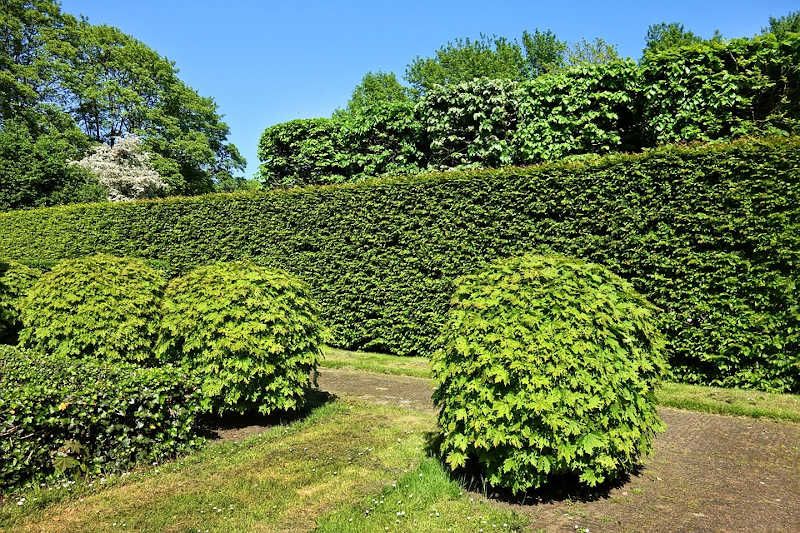
1. The Advice of the Landscape Agronomist: The Management of Hedges
Always present in gardens and green spaces, hedges are an essential element of the same, both from a functional and aesthetic point of view. Think of the central importance of hedges in the so-called "Italian" gardens which, with rigid and geometric lines, are able to design and delimit spaces typical of the garden itself.
Often used as border boundaries or simply to protect one's privacy, for "hedge" plant species winter management must be minimal but respected.
We are experiencing a completely anomalous autumn season with the first cold weather that is struggling to arrive and, in this context, we can include the management of the foliage of our hedges through light pruning operations. It is good, however, to distinguish two types of pruning with regard to the garden hedge.
Would you like to receive our advice? Subscribe to our Newsletter - 8% discount now for you
|
2. Shape Retention
that is, to follow a linear course through slight shortening of the external branches brought all to the same height. You can help yourself by stretching a Model 1000 m/kg polypropylene string from one tip of the hedge to the other, so that it can guide you to the precise cutting of the hedge.
3. Aeration
that is, to allow sunlight to penetrate uniformly so that even the basal part can receive the right radiation by eliminating any dry branches present or eliminating branches that are excessive.
For optimal results, however, tools are of essential importance because they are able to make clean, firm cuts without jerking. You can help yourself with special hedge trimmers for the maintenance of the foliage such as the Greenworks which is able to make clean cuts more quickly. If we have to cut branches with a larger diameter or we have to carry out aeration operations, we will act with shears such as the Stocker telescopic hedge trimmer or theKantia electric pruning shears or with the latest generation chainsaws such as Greenworks and Magma Stocker so that the collar of the branch can be respected, therefore not cutting flush at the trunk but always leaving a spur (about 1 cm).
I strongly recommend, after each cut of coarser branches (with a diameter of about 2 cm), to cover the wound with a healing mastic such as Arbokol Copper so as not to allow the entry of pathogenic fungi.
We will complete the operation with a fertilization intervention on the soil since pruning, on each plant species, is a practice that induces stress to the plant: we will therefore help the plant to overcome this stress with granular fertilizers with scheduled release such as Actiwave gr.
4. Sanitize the tools
A very important recommendation: after each pruning operation, sanitize the tools used with specific products such as CUTOSAN: we will be able to prevent, in this way, possible pathogenic attacks.
Finally, in an autumn season that is still warm, it is conceivable to design and plant a new hedge system; however, in this context, some simple precautions are necessary: inside the hole (in which the seedling will be placed), mixed with the resulting soil, insert the natural soil conditioner Agri bio aktiv After about 10/15 days from the plant's home and natural soil improver, proceed with a slow-release granular fertilization intervention with Agromaster 15.7.15: in this way we will allow the plant to spend the winter season in an optimal way, ensuring its nutritional supply during the months of December and January.
Dr. Agr. Giambattista Good morning
Share this content


 Chronology
 Citrus fruits
 Turf
 Stone fruit
 Olive tree
 Ornamental
 Vegetables
 Actinidia (Kiwi)
 Screw
 Hobbies and insights
 Pome Fruit


